
Project Meratas
FinTech | Interaction Design | UI Design | UX Research
Company: Meratas/Career-Bond
Role: UX Designer
Focus: Redesigning a FinTech loan platform to increase user trust and improve conversion through clarity and transparency.
Deliverable: Research-backed UX proposal presented to client stakeholders.
Project Earthwin
Environmental | UX/UI Design | Advanced Prototyping | UX Research
Company: Earthwin
Role: UX Designer
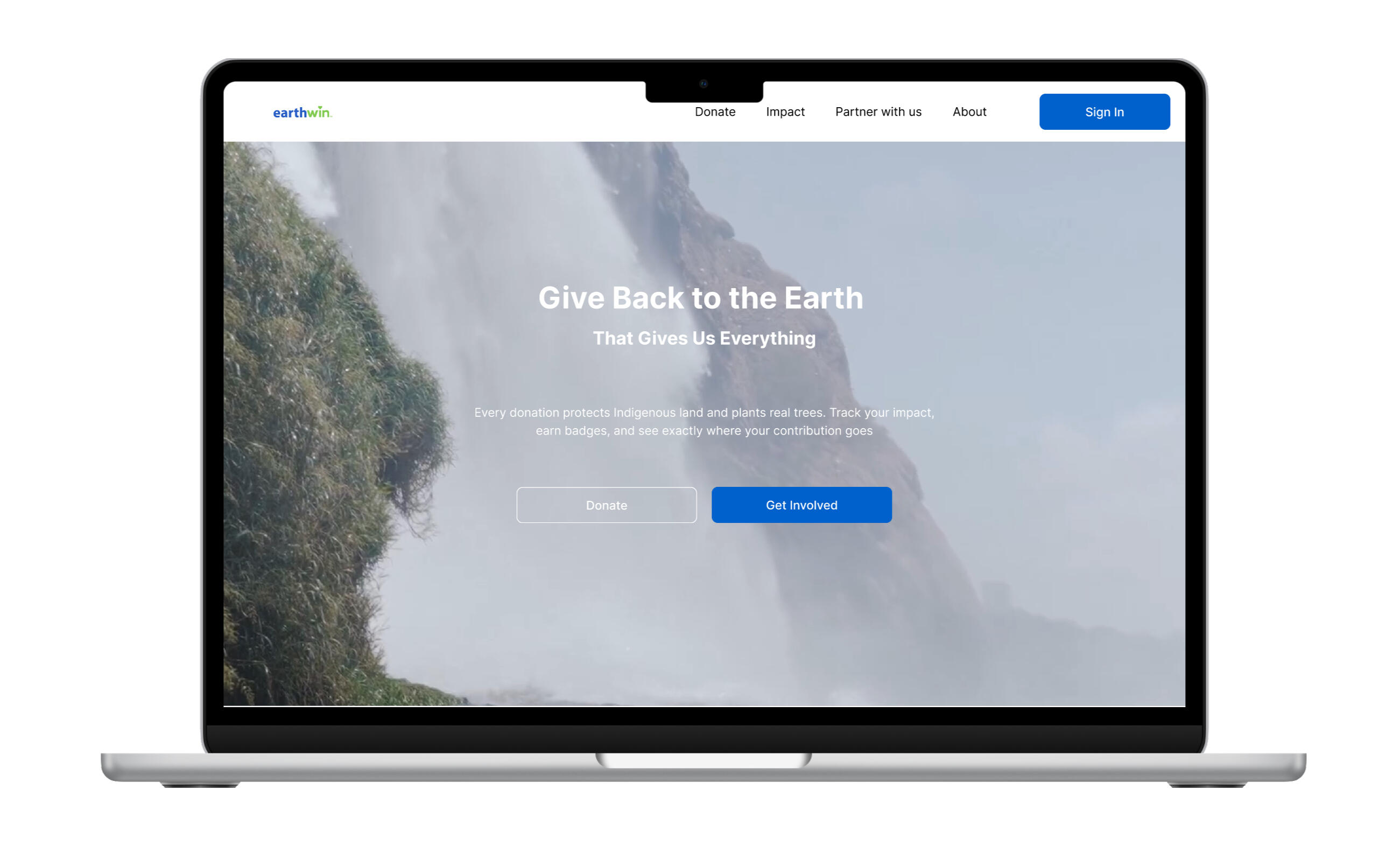
Focus: Redesigned Earthwin's post-donation experience using web-based gamification and behavioral psychology to address a post-donation drop-off pattern observed across user interviews.
Project Desi9n-1-1
AR-Lidar-Interior Design | UX Research | Advanced Research | Interaction Design
Company: Desi9n-1-1
Role: UX Researcher
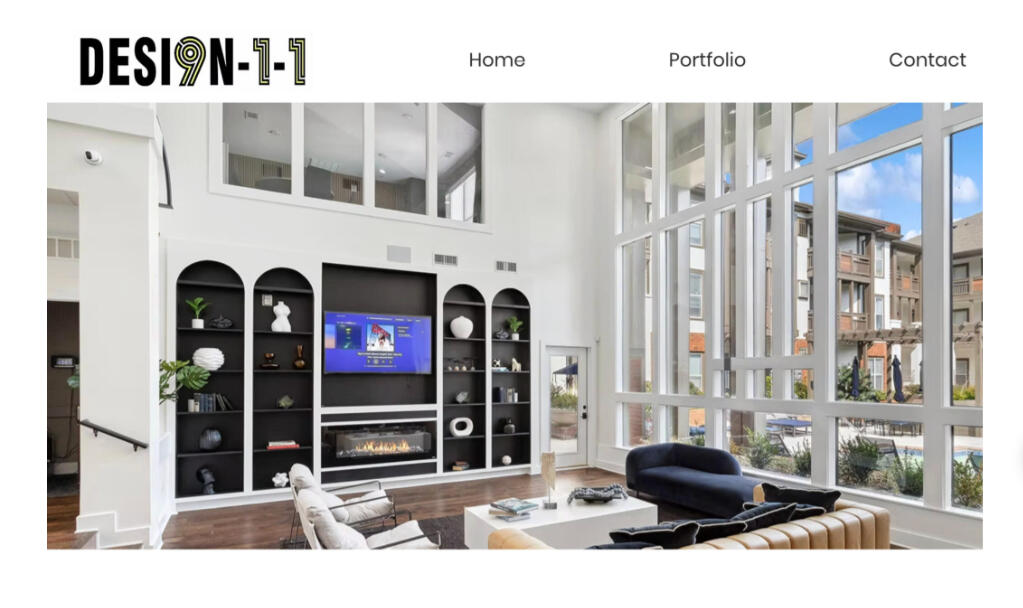
Focus: Investigating user trust and adoption for an AR-based LiDAR wellness scanner.
Deliverable: Comprehensive research report and MVP recommendations.
Project Abstract State
Art | Product Design | Branding | Editorial |UX/UI Design
Company: Abstract State
Role: Founder & Product Designer
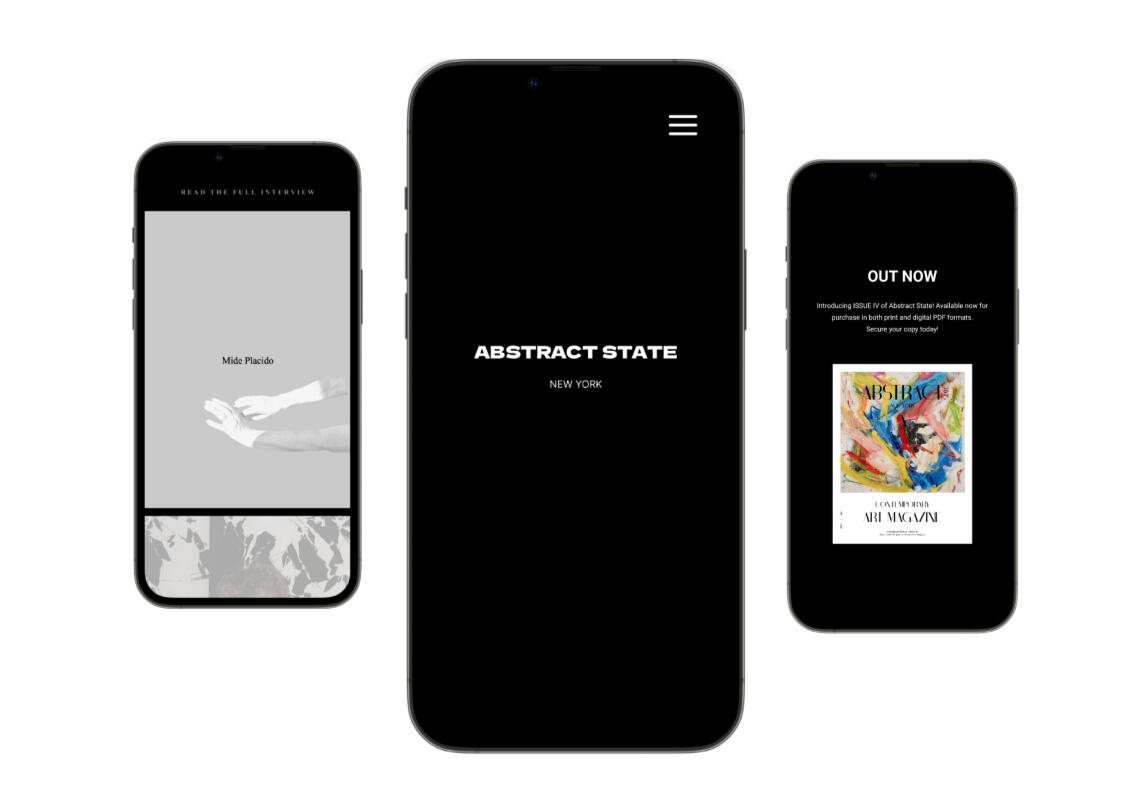
Focus: Contemporary art magazine + digital platform (brand, editorial, website, e-commerce).
Deliverable: Quarterly print & digital issues; integrated website and shop.
Abstract State
Art | Product Design | Branding | Editorial | UX/UI
This project explored how AR and LiDAR can enhance human awareness of indoor environmental health. The study examined how data visualization can make invisible toxins visible, understandable and actionable, bridging the gap between data and personal design decisions. Research with 60+ participants produced a validated MVP roadmap: mobile-first, backed by scientific evidence, and focused on pinpointing toxin sources.
⚡ AT A GLANCE
Role: • Role: UX Researcher & Strategist • Deliverable: Strategic MVP roadmap + AR concept validation
Research4 user interviews, 2 tech professionals, 1 business professional, 1 environmental enthusiast.
ChallengeNo post-donation experience existed. Users donated and had no reason to return.
SolutionRedesigned post-donation flow with impact tracking and eco-challenges.
Impact3/4 users trusted the platform more when impact was visible.
| 12+ | 3/4 | 4/4 |
|---|---|---|
| Navigation Redundancies Identified | Users Exited After Donating | Asked "Where does my money go?" |
Desi9n-1-1
AR LiDAR Interior Design | Research Project
This project explored how AR and LiDAR can enhance human awareness of indoor environmental health. The study examined how data visualization can make invisible toxins visible, understandable and actionable, bridging the gap between data and personal design decisions. Research with 60+ participants produced a validated MVP roadmap: mobile-first, backed by scientific evidence, and focused on pinpointing toxin sources.
⚡ AT A GLANCE
Role: • Role: UX Researcher & Strategist • Deliverable: Strategic MVP roadmap + AR concept validation
Research
• 60+ participants, mixed methods (card sorting, photo elicitation, journey mapping)
Challenge
Users lack compact tools to identify which furniture causes poor air quality
Solution
Strategic MVP roadmap prioritizing mobile-first, scientific evidence, and source identification
Impact
100% mobile preference validated; defined 3-pillar adoption framework for AR health tech
| 100% | 60+ | 44% |
|---|---|---|
| Mobile Preference | Research Participants | Use No Health Tools |
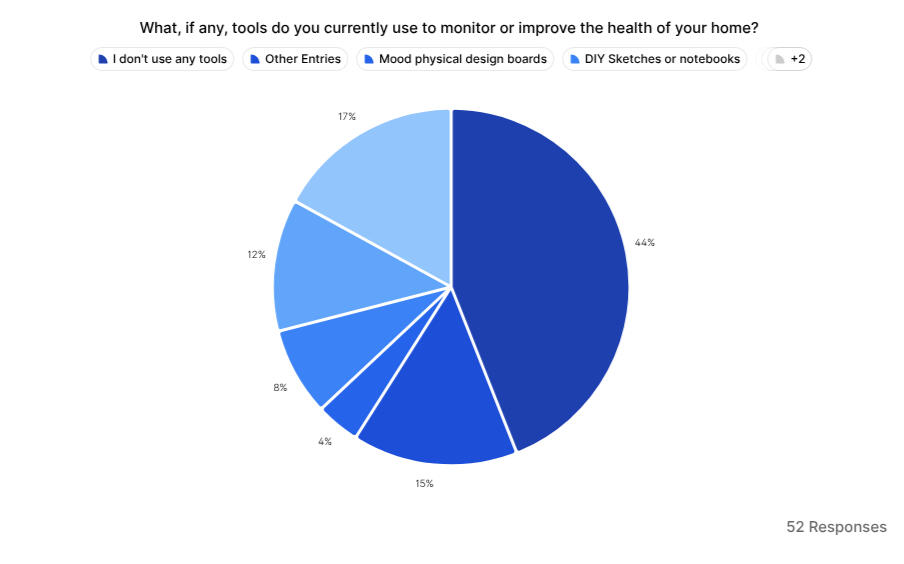
| All participants chose smartphones over tablets or AR glasses | 9 surveys + 2 in-depth interviews + 50+ group survey | Gap in current wellness monitoring solutions |
The Challenge
Indoor air quality monitoring faces three critical barriers
preventing user adoption and actionable decision-making:Problem 1: The Source Gap (User Pain Point)
Users lack compact tools to identify which specific furniture
or design elements are causing poor air quality. Existing
solutions show aggregate data but don't pinpoint the toxin
source.Problem 2: The Awareness Gap (Market Opportunity)
44% of surveyed users use NO tools to monitor home health,
despite growing wellness awareness. Current solutions prioritize
aesthetics over actionable health intelligence.Problem 3: The Trust Gap (Adoption Barrier)
Users distrust AI-generated health alerts without scientific
backing or expert validation, creating resistance to new
monitoring technologies.
Understanding the User
Through Mixed-Methods Research we studied behavior, trust, and adoption factors.Participant BreakdownTech & Design Professionals: The largest group, critical for testing assumptions on AR/LIDAR adoption (6 participants).Wellness-Focused Homeowners: The core target market, focused on health outcomes (3 participants).Interior Design Enthusiasts: Focused on aesthetics and style integration (2 participants).
| 2 | 9 | 50+ | 60+ |
|---|---|---|---|
| In-depth interviews | Individual Survey | Group Survey | Total Research Participants |
Research Approach
Methods used:• Card Sorting → Feature and trust-factor prioritization• Photo Elicitation → Space psychology & visual preferences• Journey Mapping → Reactions to air-quality alerts and decision flows• Surveys + Interviews → 60+ participants
Central Research Question
What would you do if your smart device alerted you about poor air quality?
This question became the foundation for understanding user behavior, device preferences, and trust dynamics.
Key Strategic Insights
Finding 1: Trust Requires Scientific Evidence Users rely on scientific data and expert validation (not AI alone) to trust health alerts. Transparency is non-negotiable for adoption.
→ Solves Problem 3 (Trust Gap)
Finding 2: 100% Mobile-First Preference. All participants chose smartphones over tablets or AR glasses,proving the need for a mobile-first strategy.
→ Solves Problem 1 (Compact Tool Need)
Finding 3: Predictable User Behavior Pattern Alerts trigger immediate response: Identify Source → Research Solutions → Consult Professionals. Design must support this natural flow.
→ Solves Problem 2 (Actionable Intelligence)
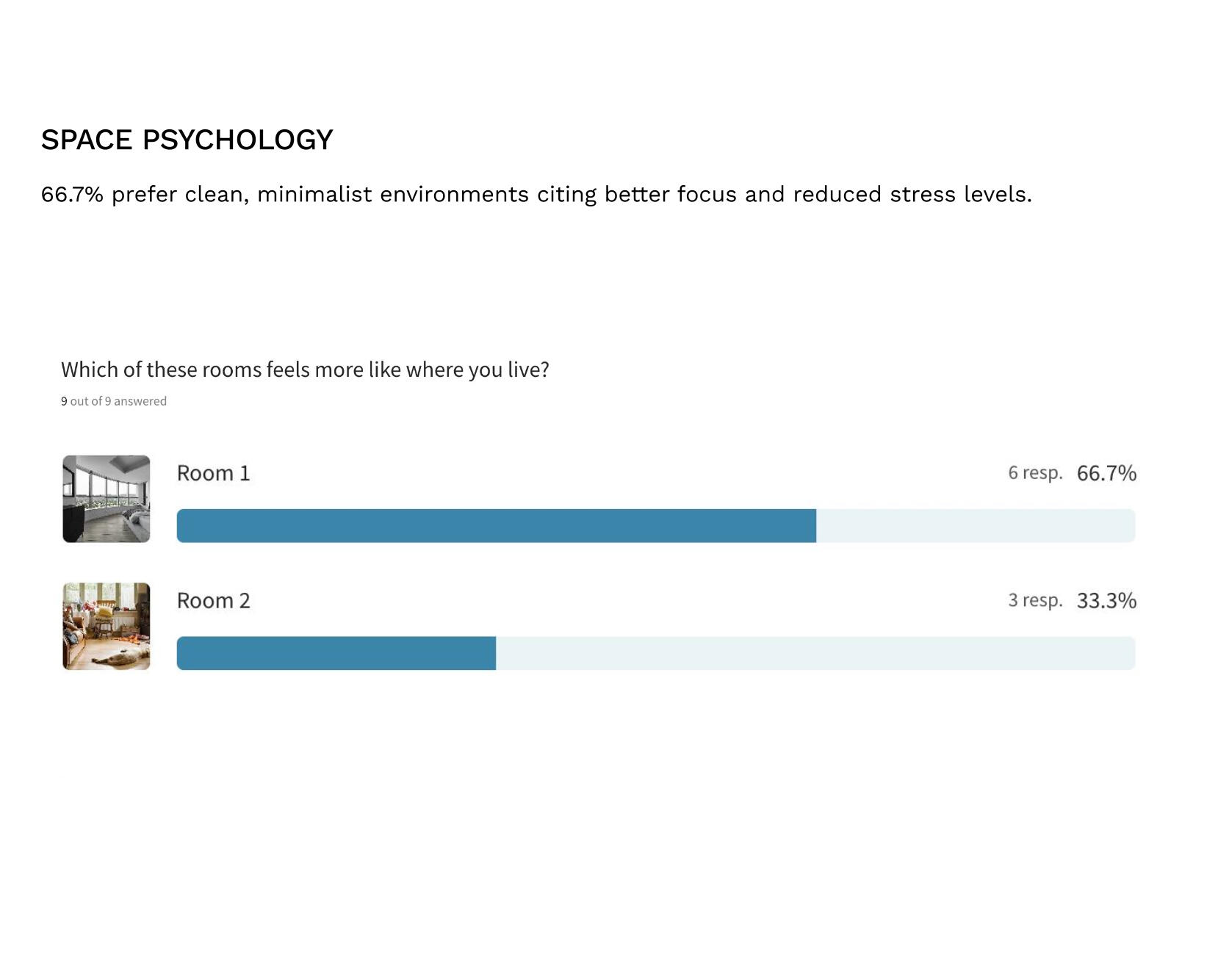
Finding 4: Minimalist Aesthetics = Trust 66.7% preferred minimalist environments, linking clean visual design to wellness perception and control.
→ Informs Visual Strategy
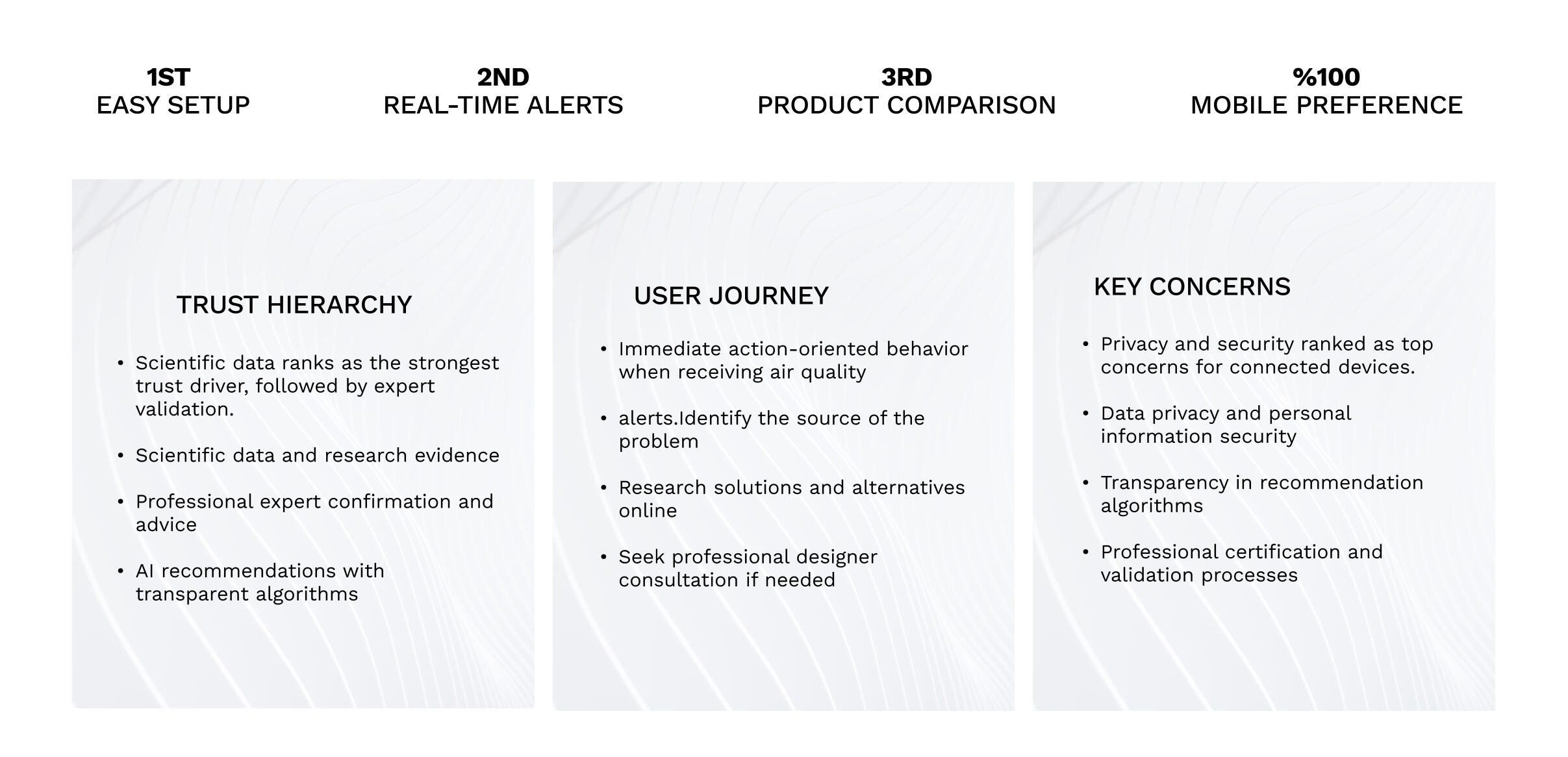
Strong Mobile Preference
100% of participants chose smartphones over tablets or AR glasses, proving the need for a Mobile-First strategy..
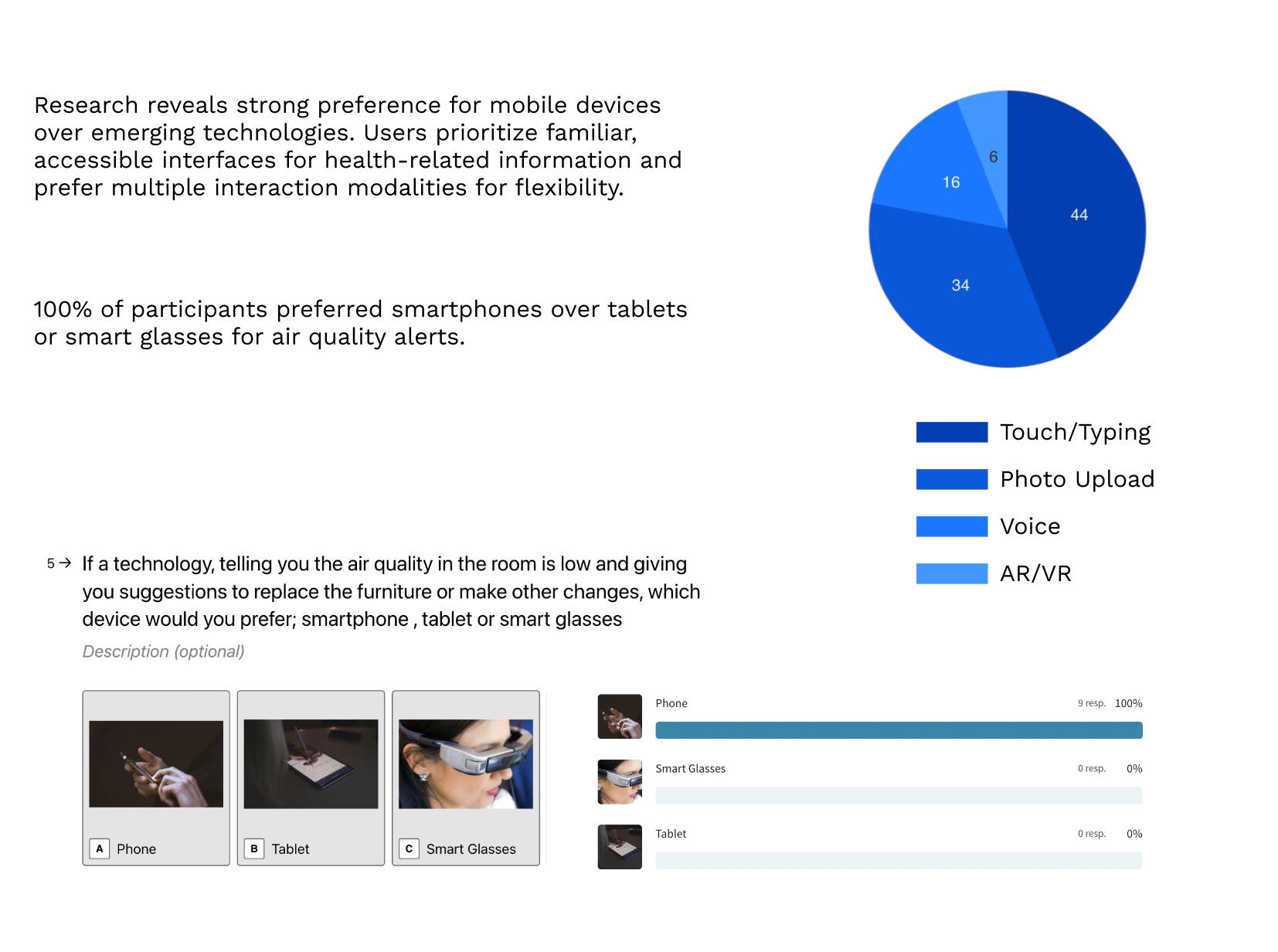
Behavior Orientation
Alerts trigger a predictable, immediate response: Identify Source, Research Solutions, Consult Professionals.
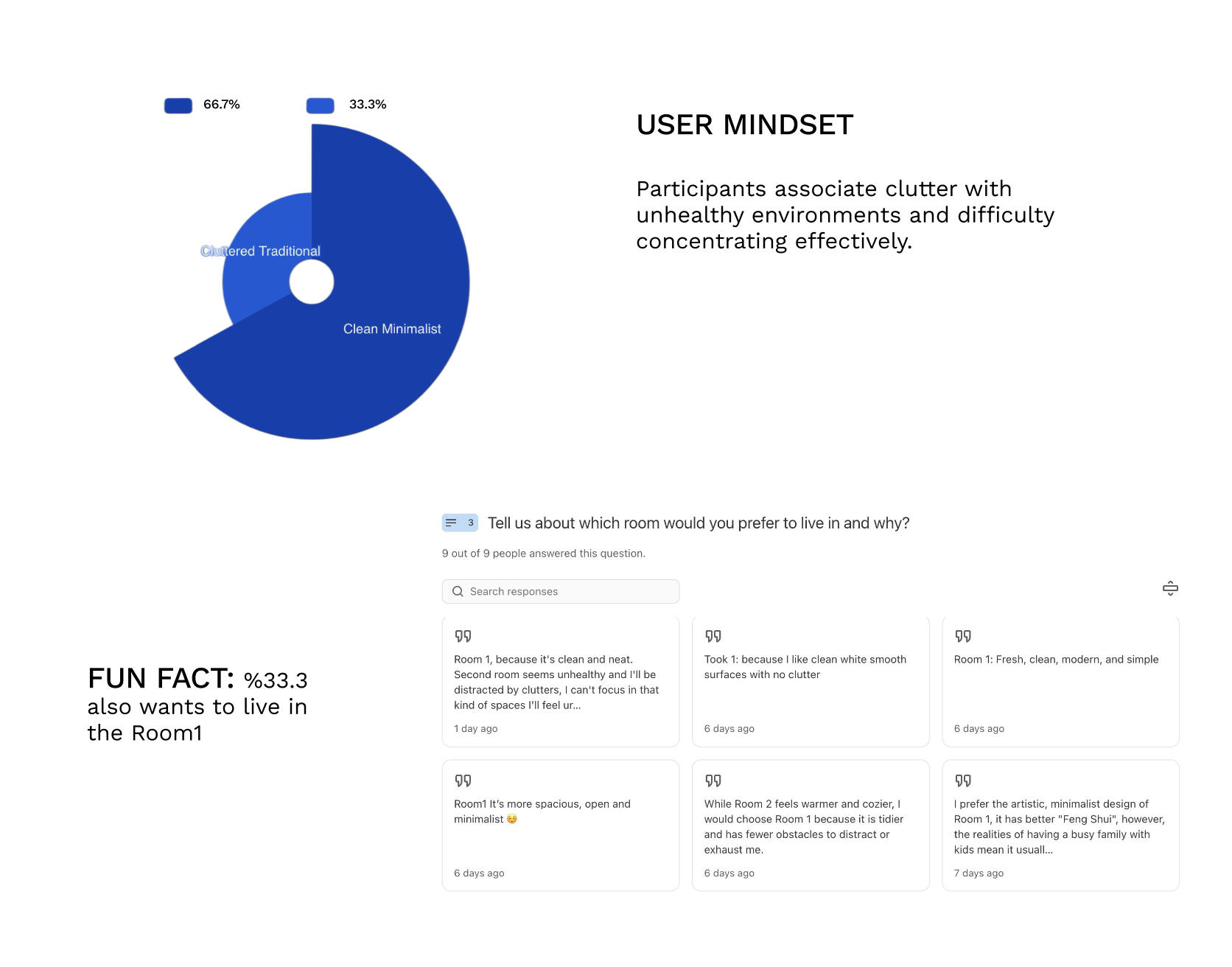
Space Psychology
66.7% preferred minimalist environments, linking clean design to wellness and control.
Strategic MVP & Design Implications
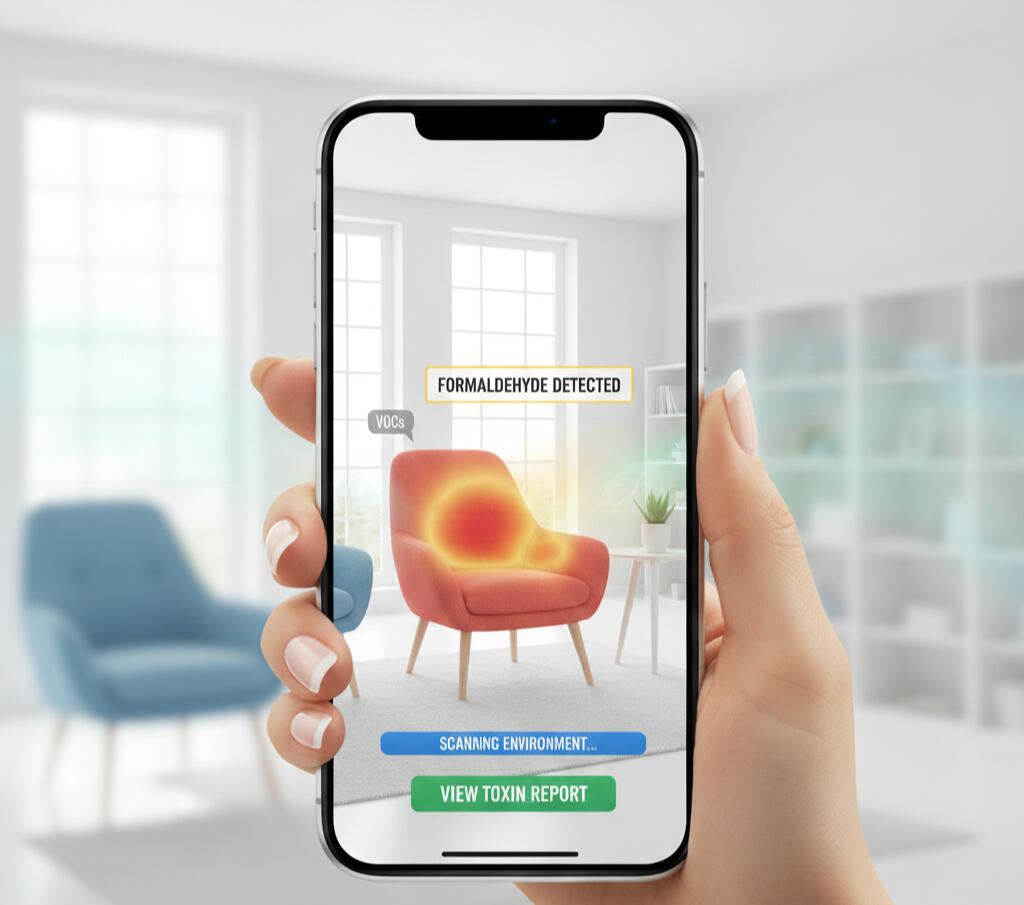
Based on research findings, the strategic recommendations directly address each identified barrier:Strategic Recommendations for MVP→ Solves Problem 1 (Source Gap): AR-LiDAR pinpoints toxin source in furniture.→ Solves Problem 2 (Market Gap): Mobile-first approach targets 44% non-adopters.→ Solves Problem 3 (Trust Gap): Scientific evidence + expert validation frameworkResearch exposed a clear direction for Tanit's MVP, focusing on three core pillars: Mobile-First, Trust Through Evidence, and Comparison Features.
Conclusion & Next Steps
This 7-week research cycle revealed that trust, transparency, and simplicity shape adoption of complex technologies. By merging behavioral psychology with LiDAR data, the platform transforms air-quality monitoring into an active decision-making support tool.Implementation Roadmap: Next steps include creating an interactive mobile prototype focused on the Scan, Diagnose, Act user flow, followed by prototype validation with environmental experts and AR testing in real homes.
Earthwin
Environmental | Advanced Prototyping | Behavioral Design
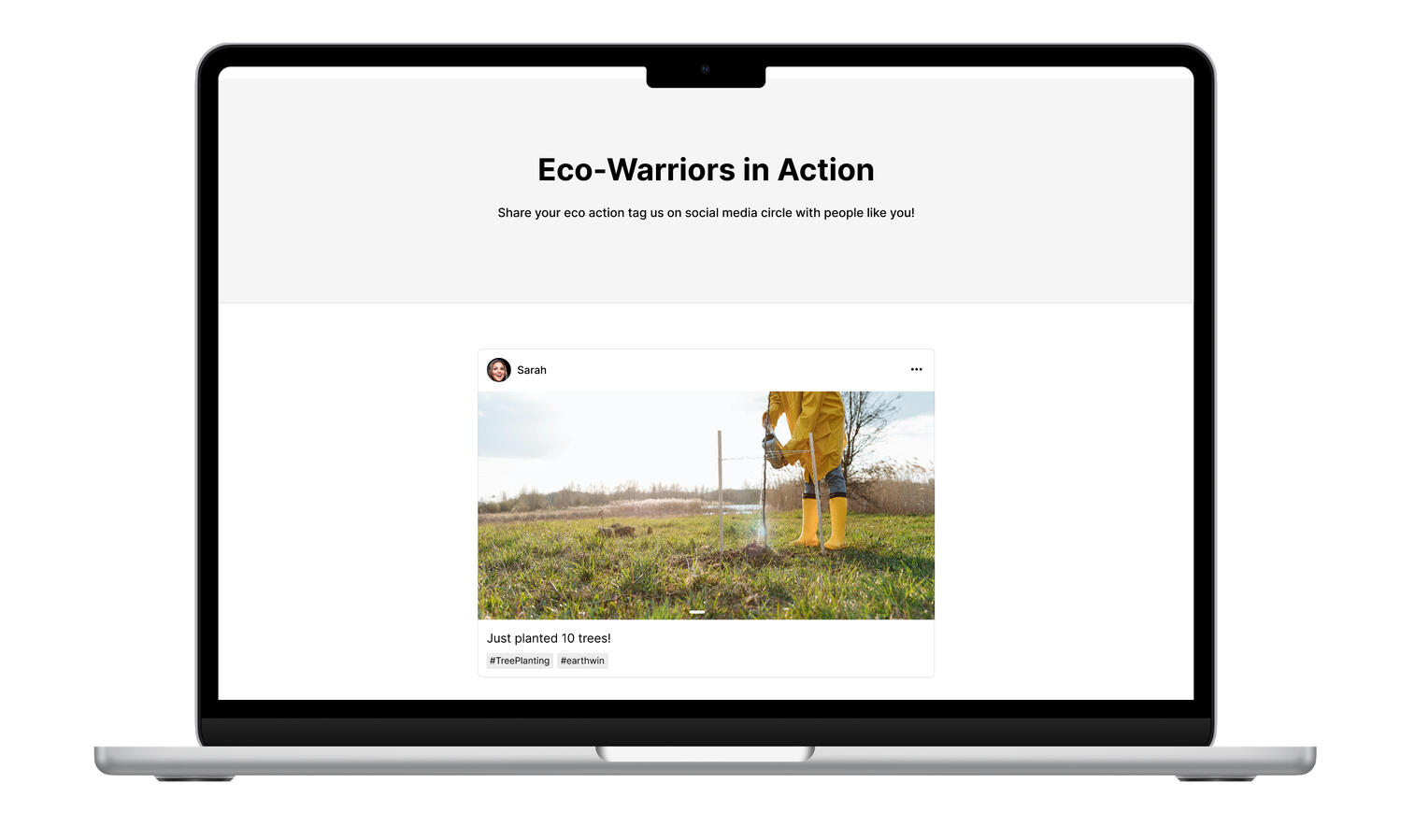
Project Goal: Improve post-donation engagement and trust on the Earthwin platform by testing whether high-visibility impact tracking and feedback loops could address the post-donation drop-off pattern observed across user interviews. In prototype testing, session time increased from around 3 minutes to 10–15 minutes, and 3 of 4 users said visible impact tracking increased their trust in the platform
⚡ AT A GLANCE
Deliverable: High-fidelity prototype with post-donation flow and impact tracking
Role: UX Designer • Behavioral Design
Timeline: 7-week client-driven project
Research4 user interviews, 2 tech professionals, 1 business professional, 1 environmental enthusiast.
ChallengeNo post-donation experience existed. Users donated and had no reason to return.
SolutionRedesigned post-donation flow with impact tracking and eco-challenges.
Impact3/4 users trusted the platform more when impact was visible.
| 12+ | 3/4 | 4/4 |
|---|---|---|
| Navigation Redundancies Identified | Users Exited After Donating | Asked "Where does my money go?" |
The Challenge
Problem 1: Invisible Impact
Users couldn't track where their money went after donating.
"I'd do something if I could actually see it matter" (4/4 mentioned)Problem 2: No Reason to Return
The client brief confirmed there was no single place for users to see the impact of their actions. After donating, users had no impact confirmation, no next step, and no reason to return.Problem 3: Navigation Redundancy & Cognitive Overload
Heuristic analysis revealed 12+ redundancies. The "Earthwin Challenge" was marketed as interactive but was a static YouTube video.
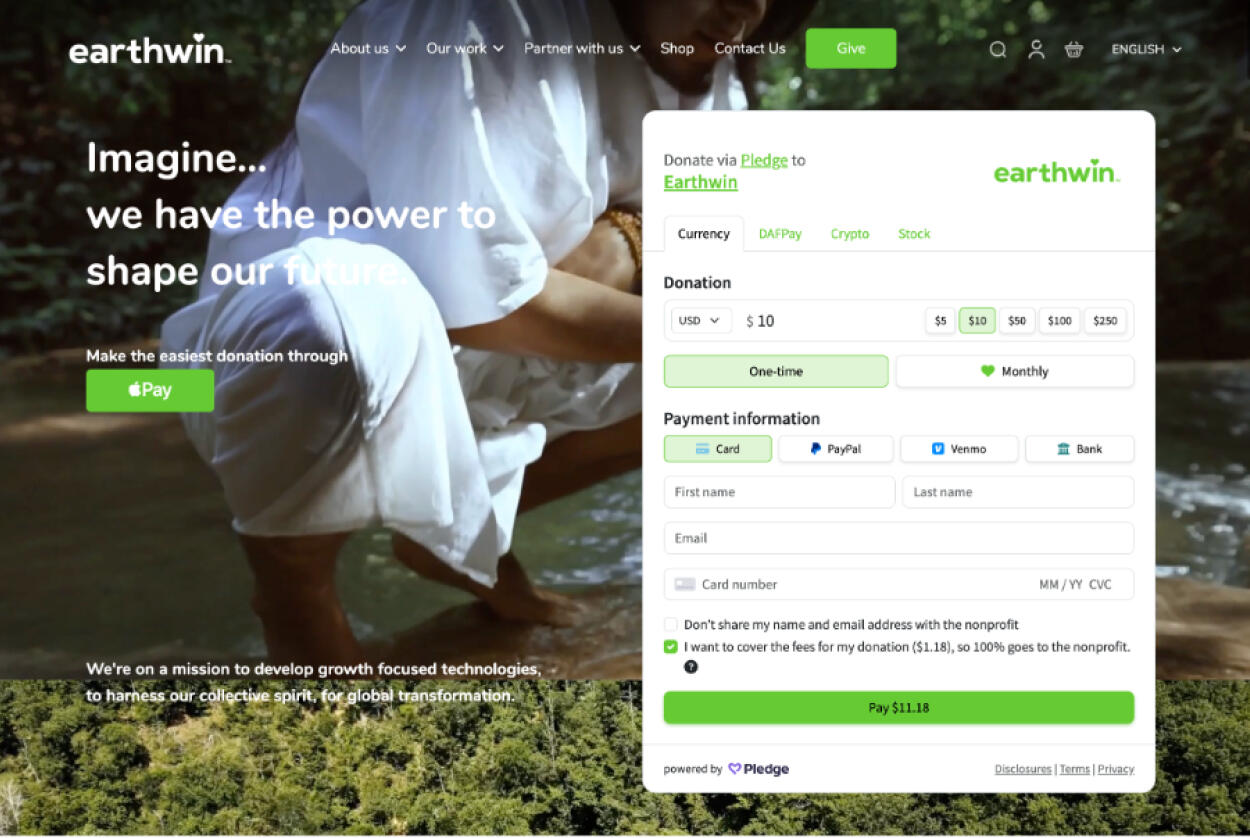
The existing donation experience powered by a third-party platform (Pledge), with no Earthwin-branded confirmation, no impact tracking, and no next step after payment.
Our Approach
With a broken post-donation experience and no behavioral loop to bring users back, I used a research-driven design process focused on reducing friction rather than adding feature complexity.
The goal: Design a post-donation experience that shows users exactly where their money went and gives them a reason to return.
1. Map Behavioral Psychology
I used the 'forest fire' scenario as an interview prompt to understand how users respond to environmental urgency, and used those responses to inform the engagement system design.2. Translate Research into Design
I translated research findings into clear user-facing solutions:
• Post-Donation Screen: Immediate impact confirmation
• Eco-Challenges: Reason to return and engage
• Impact Dashboard: Long-term progress tracking3. Test & Iterate
Each screen was validated through usability feedback to ensure it reduced cognitive load and improved clarity rather than introducing complexity.
Understand The Business: The Eco-Cycle
The core business objective was to ensure long-term participation through a verifiable funding model. Based on user research, I designed an engagement loop that connects every platform touchpoint into a continuous cycle.Discover (Homepage) → Give (Donation) → See Impact (Post-Donation) → Earn & Track (Dashboard) → Challenge (Eco-Challenges) → Share (Volunteer)This model ensures every interaction connects to the next, turning a one-time donation into an ongoing relationship with the platform.
Understand The User
Interviews showed that users care about environmental causes but disengage when they cannot see visible outcomes from their actions. When asked about their donation experience, users specifically asked: 'Where does my money go?' and 'Did it actually do anything?
The Key Quote:
“I’d do something if I could actually see it matter.”
This quote directly informed the core design decision: make impact visible immediately after every donation.
Research MethodologyI conducted in-depth interviews with 4 participants• 2 professionals in technology
• 1 business professional
• 1 environmental enthusiastThe goal was to identify behavioral friction points and disengagement patterns on the existing platform.
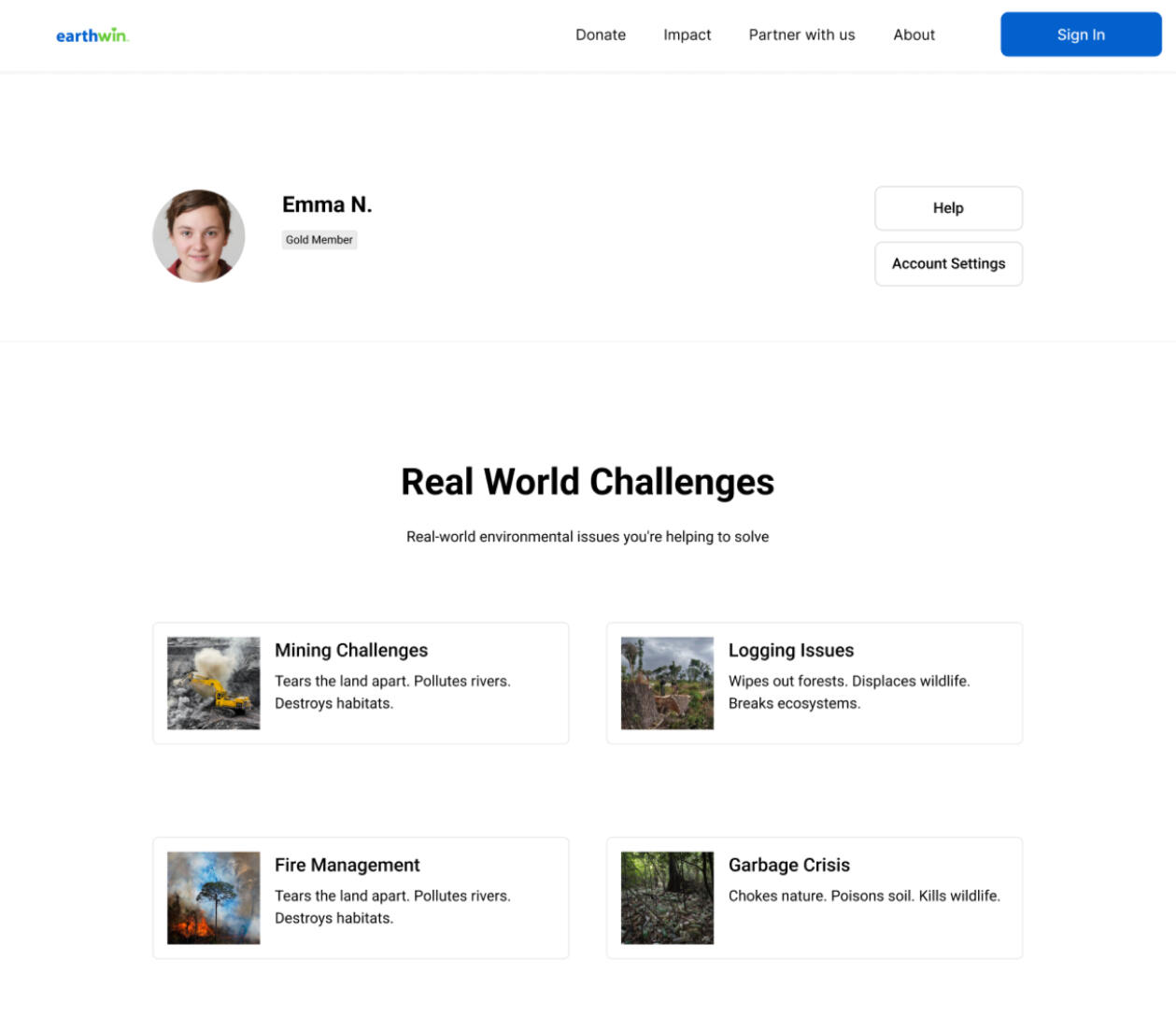
What users needed but couldn't find
Primary Friction DriversNavigation redundancy and missing transparency features caused early exits: "Donate" button appeared 4 times on one page - users clicked different versions expecting different outcomes.Every user asked: "Where does my money actually go?"
All users checked email for detailed receipts - found only generic confirmations.
Failed Engagement AttemptUsers clicked "Earthwin Challenge" expecting a game → found a YouTube video instead. All users expected interactive challenges. Homepage promised interactive challenges but none existed:"I thought I'd be playing something, not watching a video."
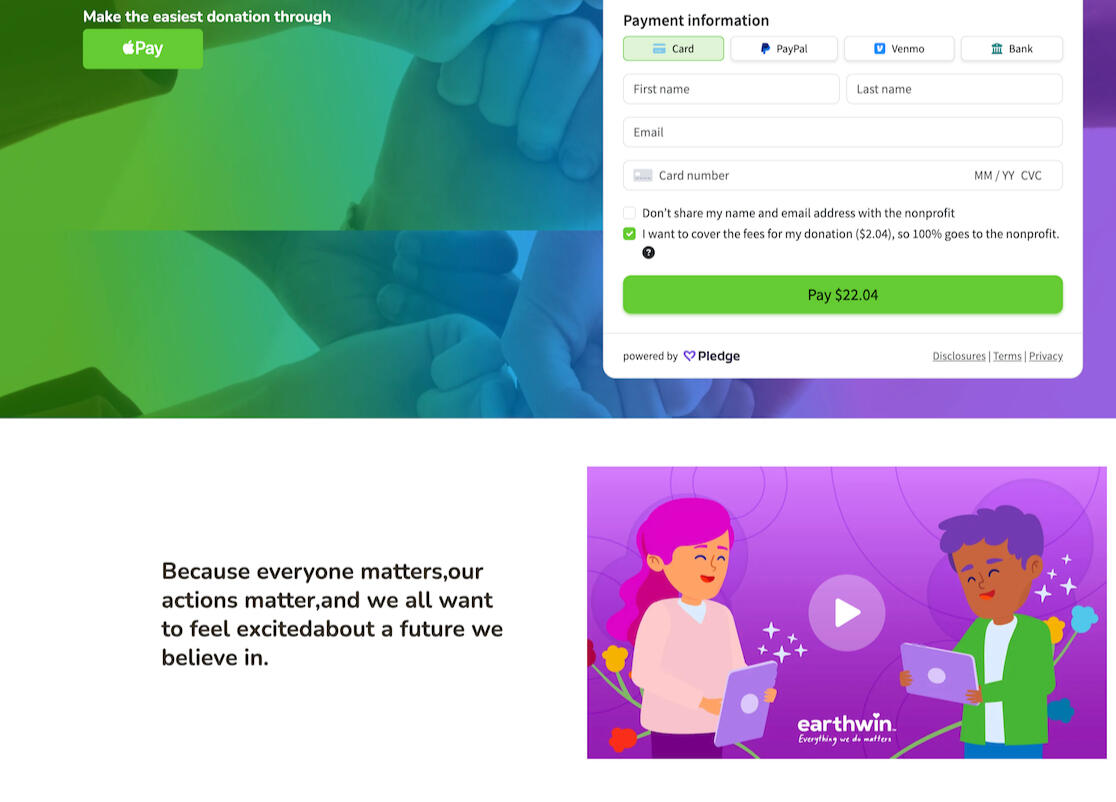
the original website challenge section
Behavior BreakdownCurrent Usage PatternUsers treated Earthwin as a one-time transaction, not an ongoing experience.
4/4 users: Homepage → Donate → Exit (under 3 minutes)
0/4 created accounts or returned
3/4 closed tab immediately after donatingPrimary Drop-Off PointAfter donation, users searched for impact proof but found nothing:
3 users expected a confirmation page with "what happens next"
2 users checked email for detailed receipts (found only payment confirmation)
1 user clicked "Our Work" looking for their contribution tracking"I donated $20, but then what? There's no way to see if it did anything."
Key Diagnostic QuestionThe primary line of inquiry focused on identifying and channeling intense emotional responses: "What would you do if you saw someone starting a fire in a forest?"Finding: Users responded with immediate anger and urgency, 'I would call the police', 'I would stop that person.' This revealed strong emotional drive to act on environmental issues, but no platform outlet existed to channel that urgency into meaningful, trackable contributions. This directly informed the design decision to build immediate, visible impact confirmation into the post-donation experience.
From Observation to OpportunityThe pattern across all 4 participants: users wanted to stay engaged, but the platform had no infrastructure for ongoing participation.The disconnect:❌ No impact tracking
❌ No reason to return
❌ No proof their donation matteredThis behavioral evidence informed the hypothesis: if users could see their impact immediately after donating and had a reason to return, one-time donors could become repeat participants.
Understand The Platform
Information Architecture & Platform Design: The existing Earthwin website buried strong ideas under cluttered navigation and repetitive pages. The platform had no post-donation experience, no impact tracking, and no engagement loop these needed to be designed from scratch.
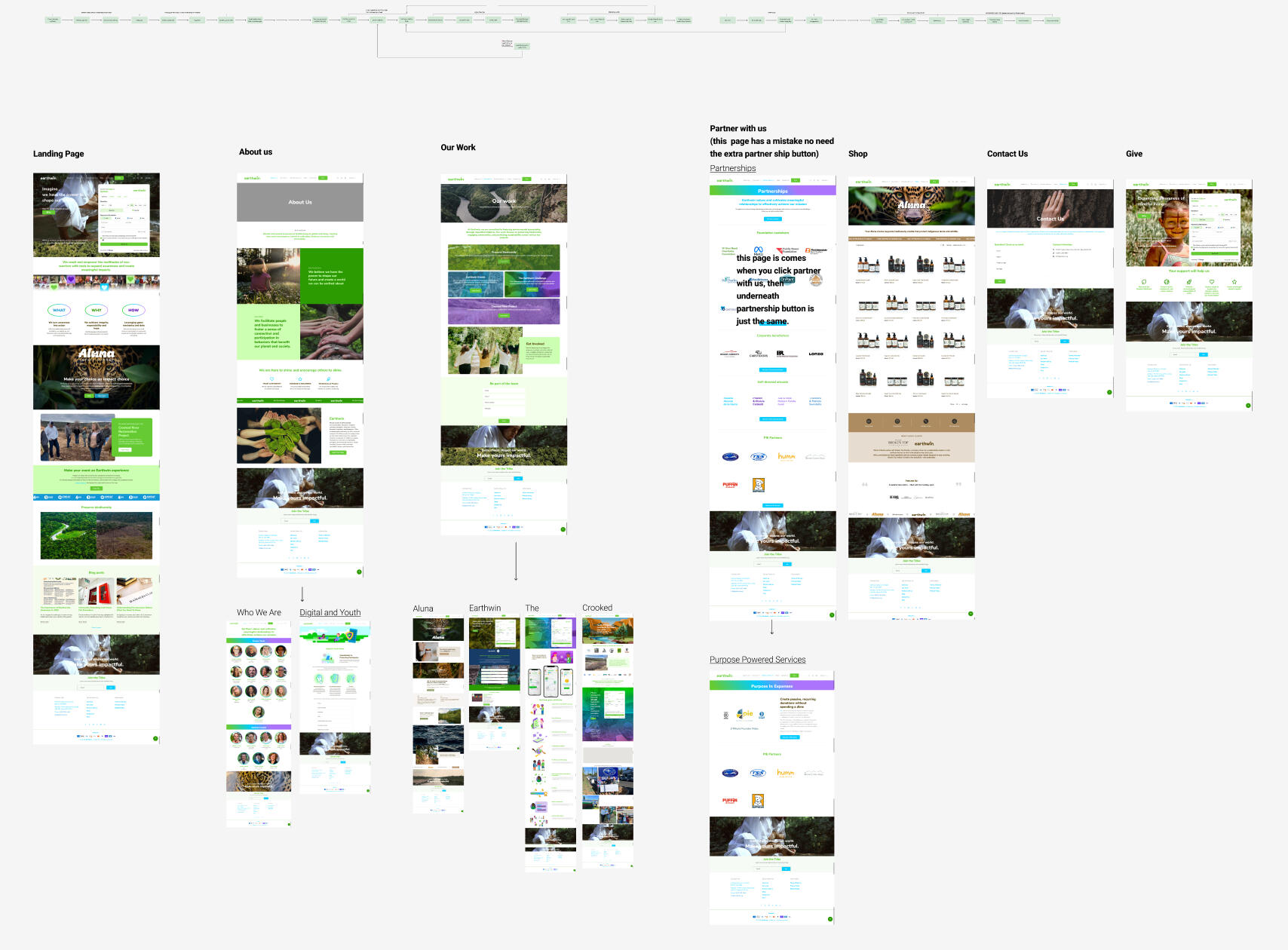
The Problem: Heuristic & Structural Flaws
During heuristic analysis, I identified a recurring issue: redundant navigation and cognitive overload. The existing structure violated principles like “Recognition Rather Than Recall” and “Aesthetic and Minimalist Design,” overwhelming users and obscuring the platform’s core message.
Design EvolutionFrom Audit to Architecture I identified 12+ navigation redundancies in the original layout.My early wireframes focused on establishing the linear Eco-Cycle to reduce cognitive load. Auditing the existing platform revealed no post-donation experience, users donated and landed on a third-party page with no feedback, no tracking, and no path forward. The redesign builds everything that was missingThe final high-fidelity design integrates transparent impact tracking and behavioral engagement into a seamless, trust-based interface.
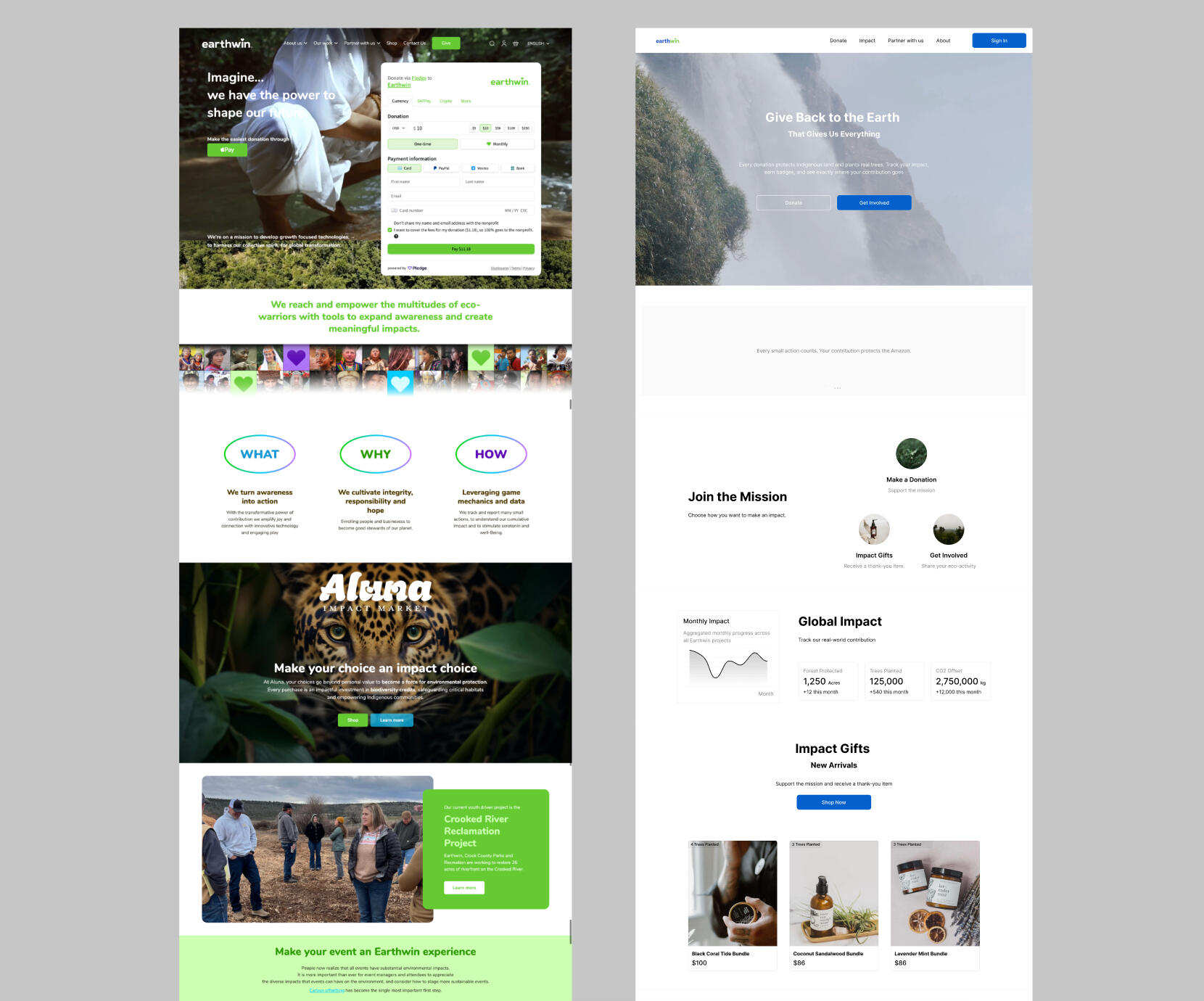
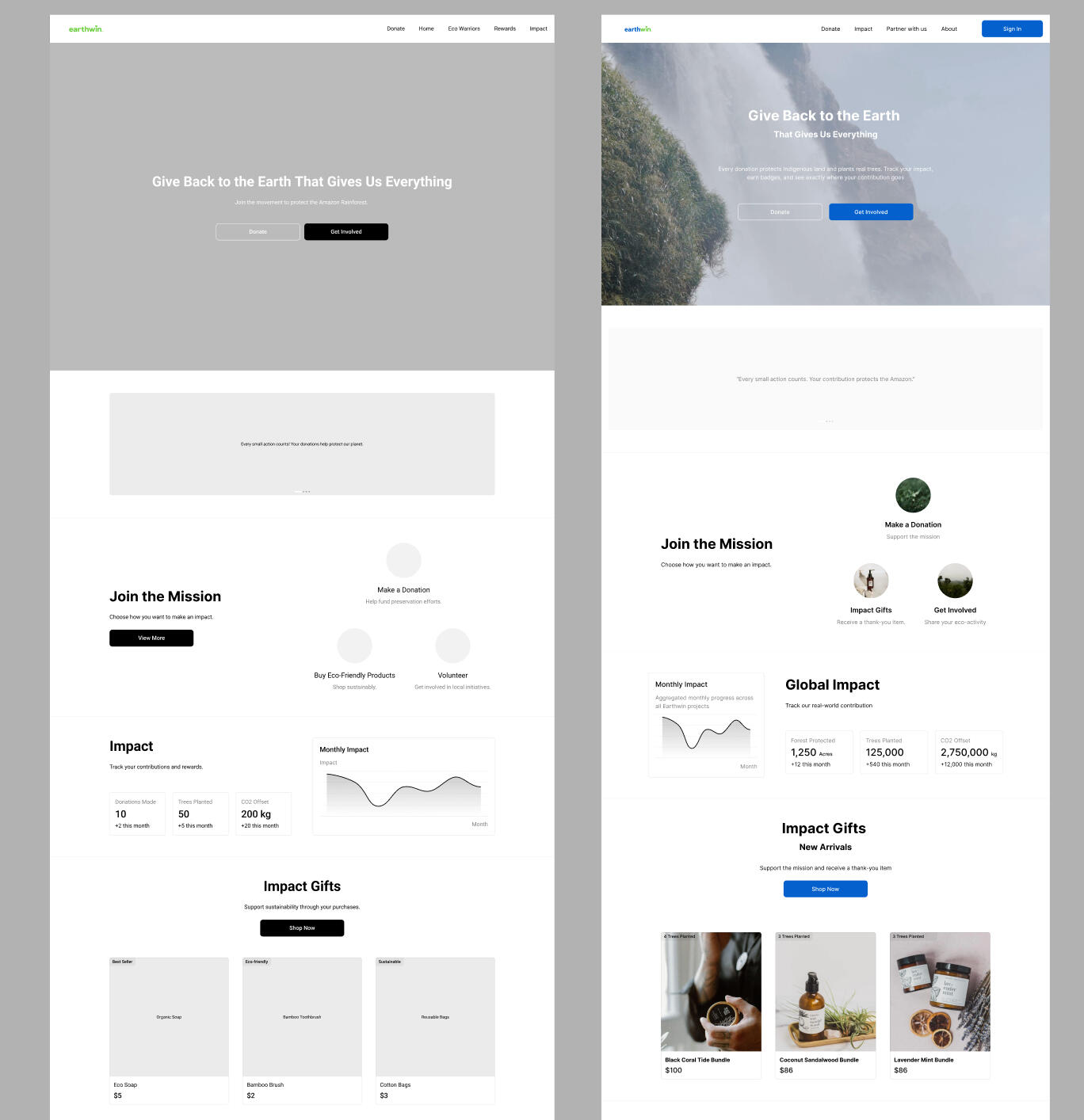
Design Assumptions & HypothesesBased on observed behavior patterns, I formed three testable assumptions:Hypothesis 1: If users receive visible proof of impact instead of a static donation receipt, they will be more likely to return to the platform.Hypothesis 2: If actions feel cumulative (progress tracking + eco-challenges) rather than isolated one-time donations, user retention will increaseHypothesis 3: If feedback loops are immediate and verified, perceived trust in the platform will increase.
The Solution
The redesign focused on fixing the broken post-donation experience and establishing a clear hierarchy to support three interconnected layers: Gamify Impact, Reward Participation, and Prove Contribution.
Client Requirements, Research-Driven DesignThe client requested gamification, a token system, and blockchain verification. Research and feasibility analysis showed these technologies were too costly and complex to implement and validate for a nonprofit at this stage. Web-based gamification addressed the same user needs at a scale the organization could actually build and maintain.
Feature 1:
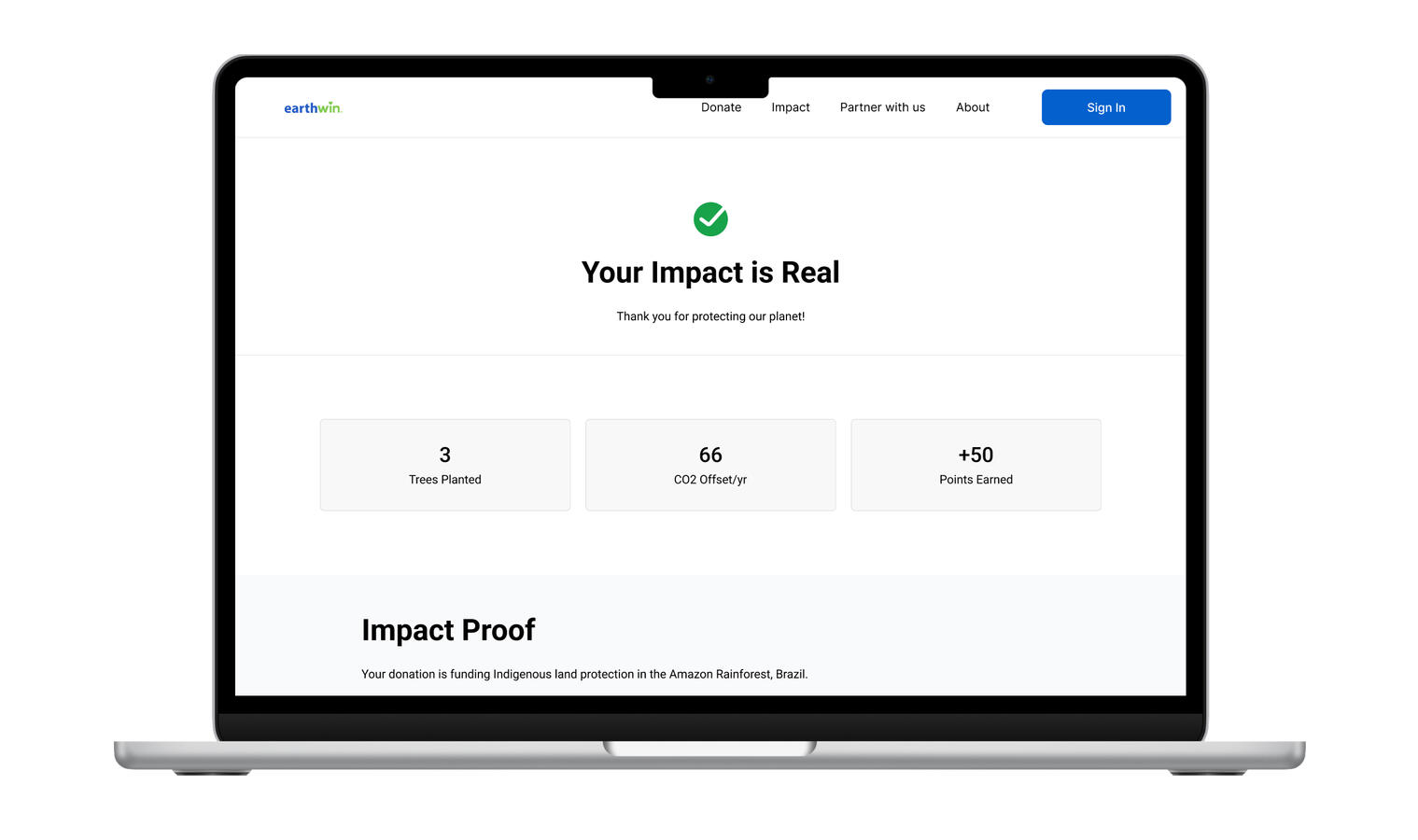
Post-Donation Confirmation
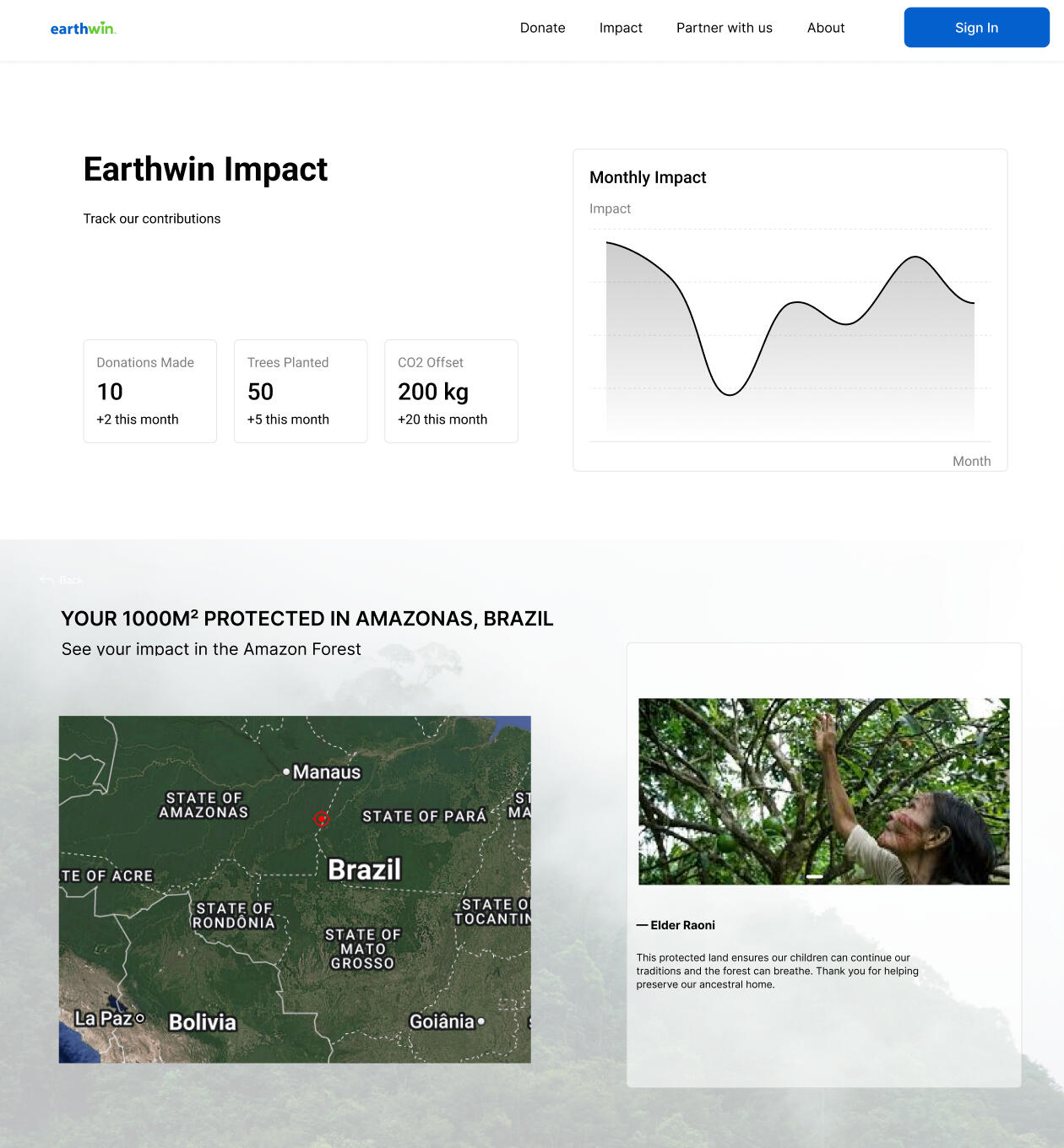
Converts the dead-end receipt into visible proof of impact with real stats.
→ Solves Problem 1: Low engagement
Feature 2:
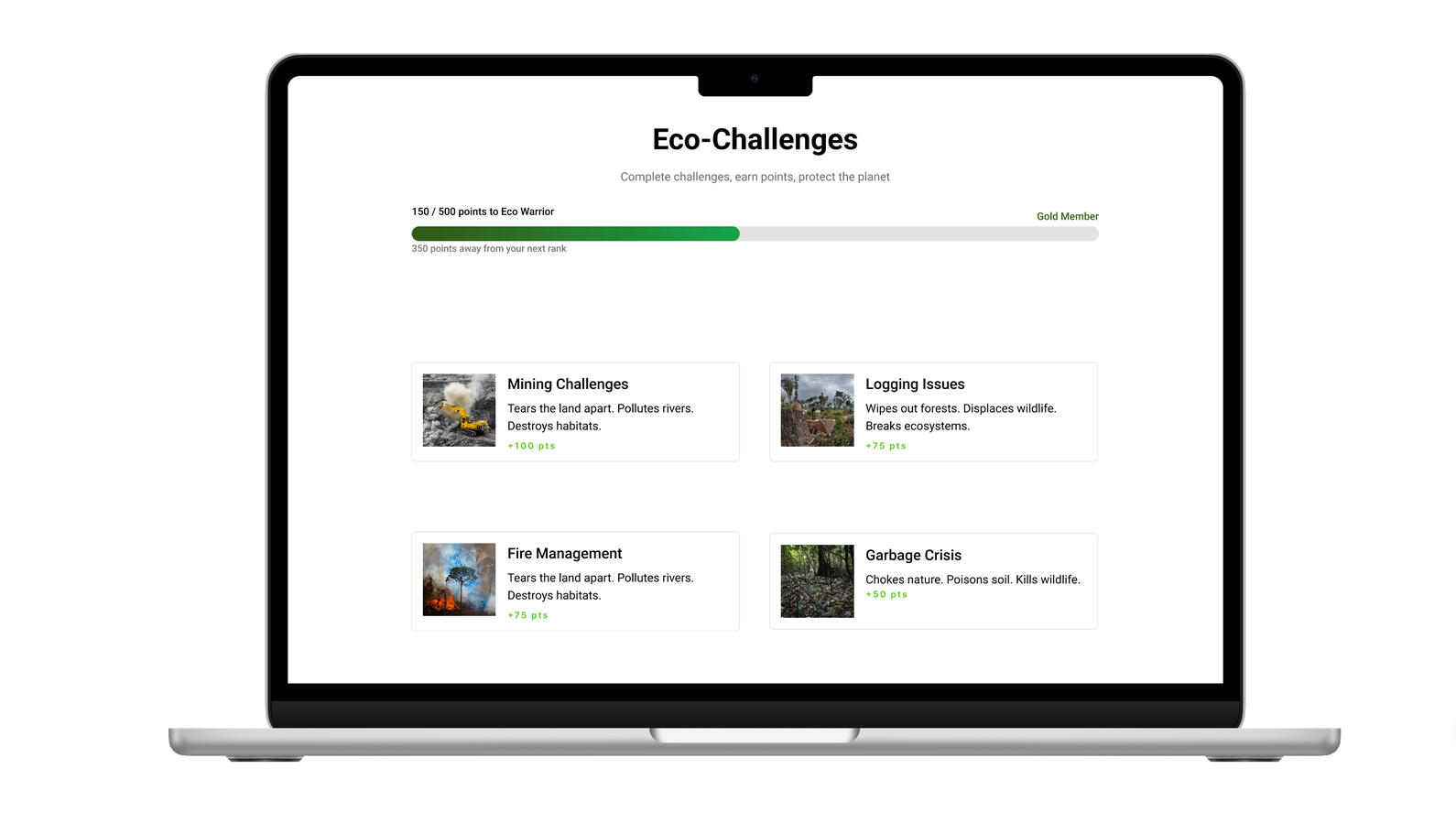
Points & Eco-Challenges
Points act as progress currency, rewarding donations and eco-actions.
→ Solves Problems 1 & 2: Sustained participation
Feature 3:
Transparent Impact Tracking
Real-world contribution data visible on the dashboard and impact page.
→ Solves Problems 2 & 3: Trust & transparency
Flow & Structure
The user journey follows a clear rhythm: Discover → Act & Earn → Prove → Share. Each step connects to the next, turning a one-time donation into an ongoing relationship with the platform.

Discover →

Act & Earn →

Prove →

Share
User Interface Design
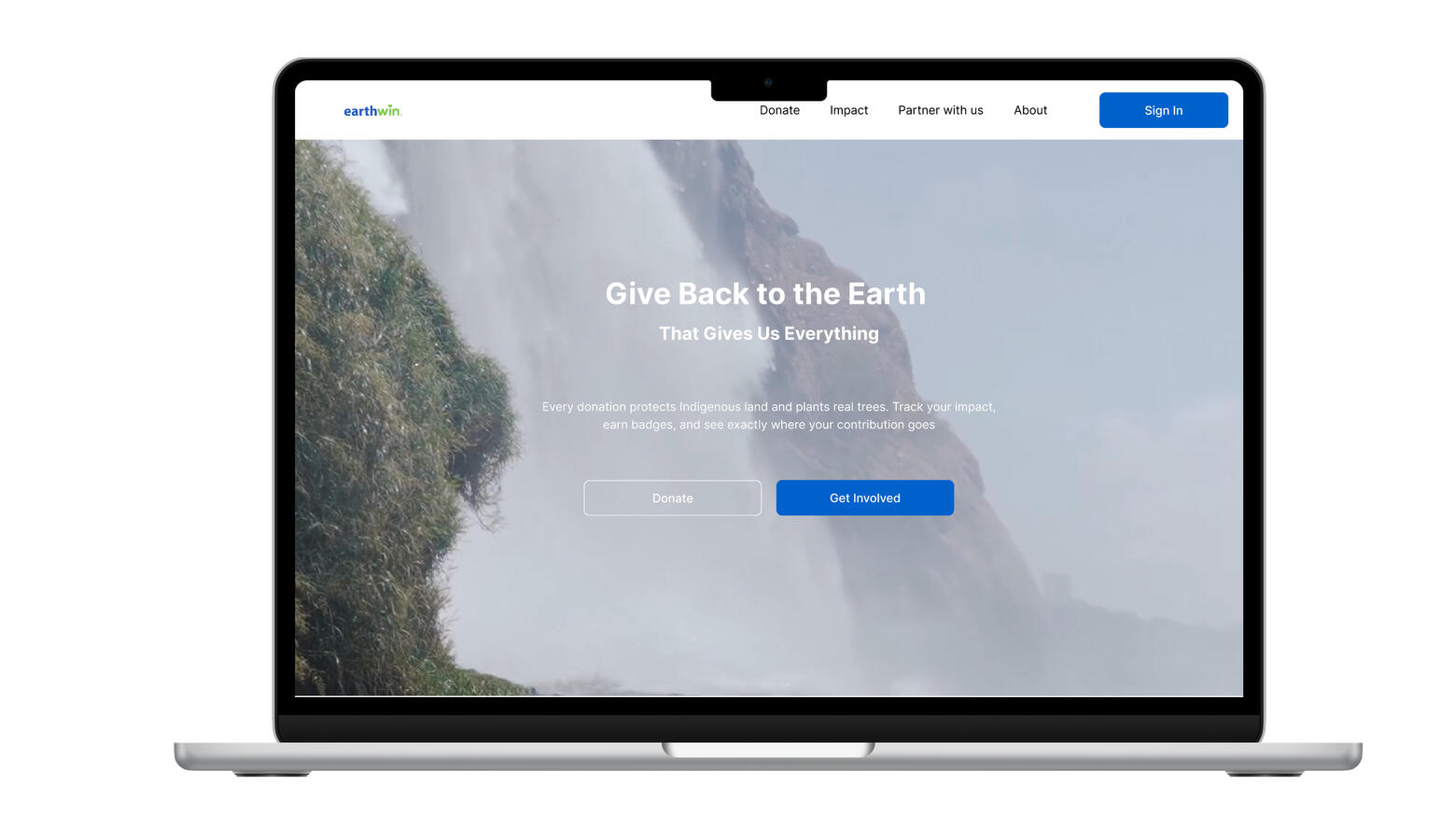
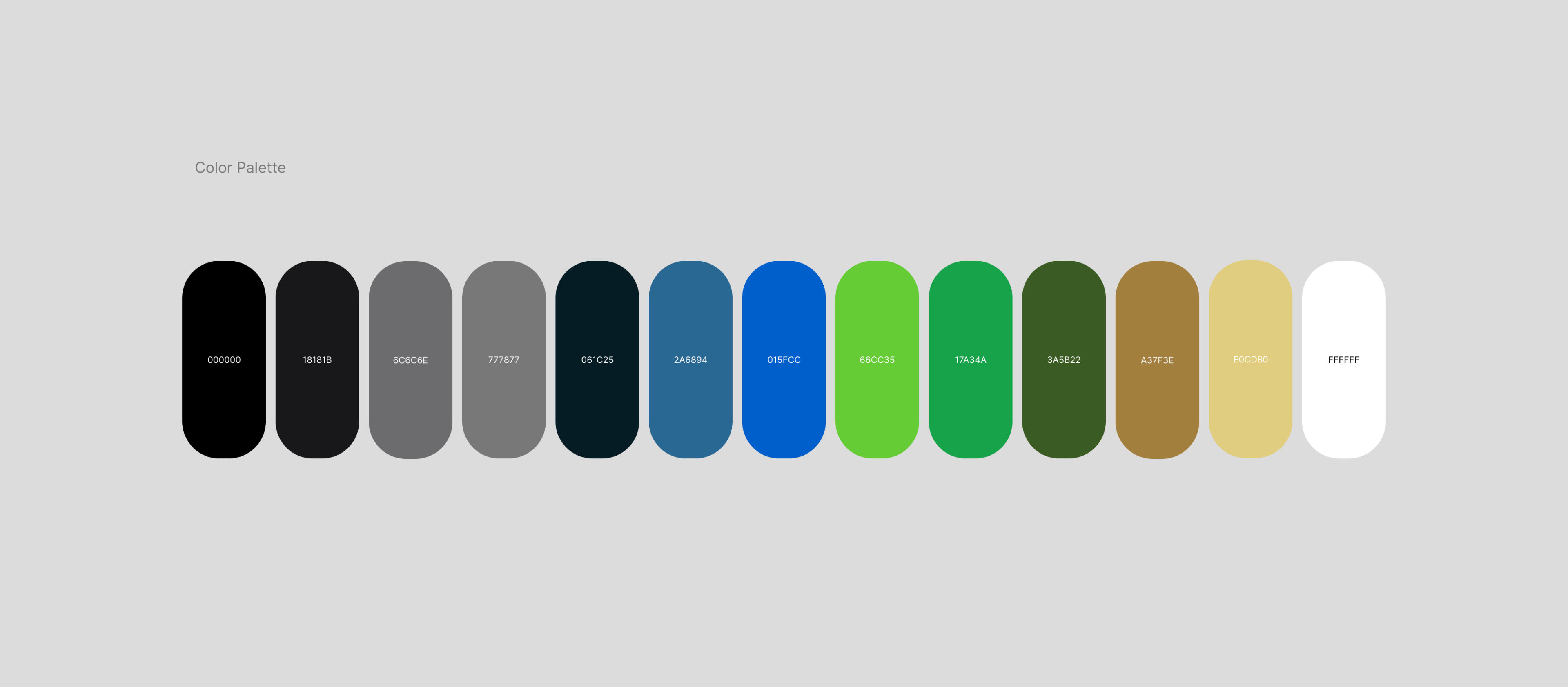
Earthwin's interface uses greens for environmental action, blues for trust and clarity, dark neutrals for credibility, and earth tones for warmth, each color reinforcing the platform's mission."
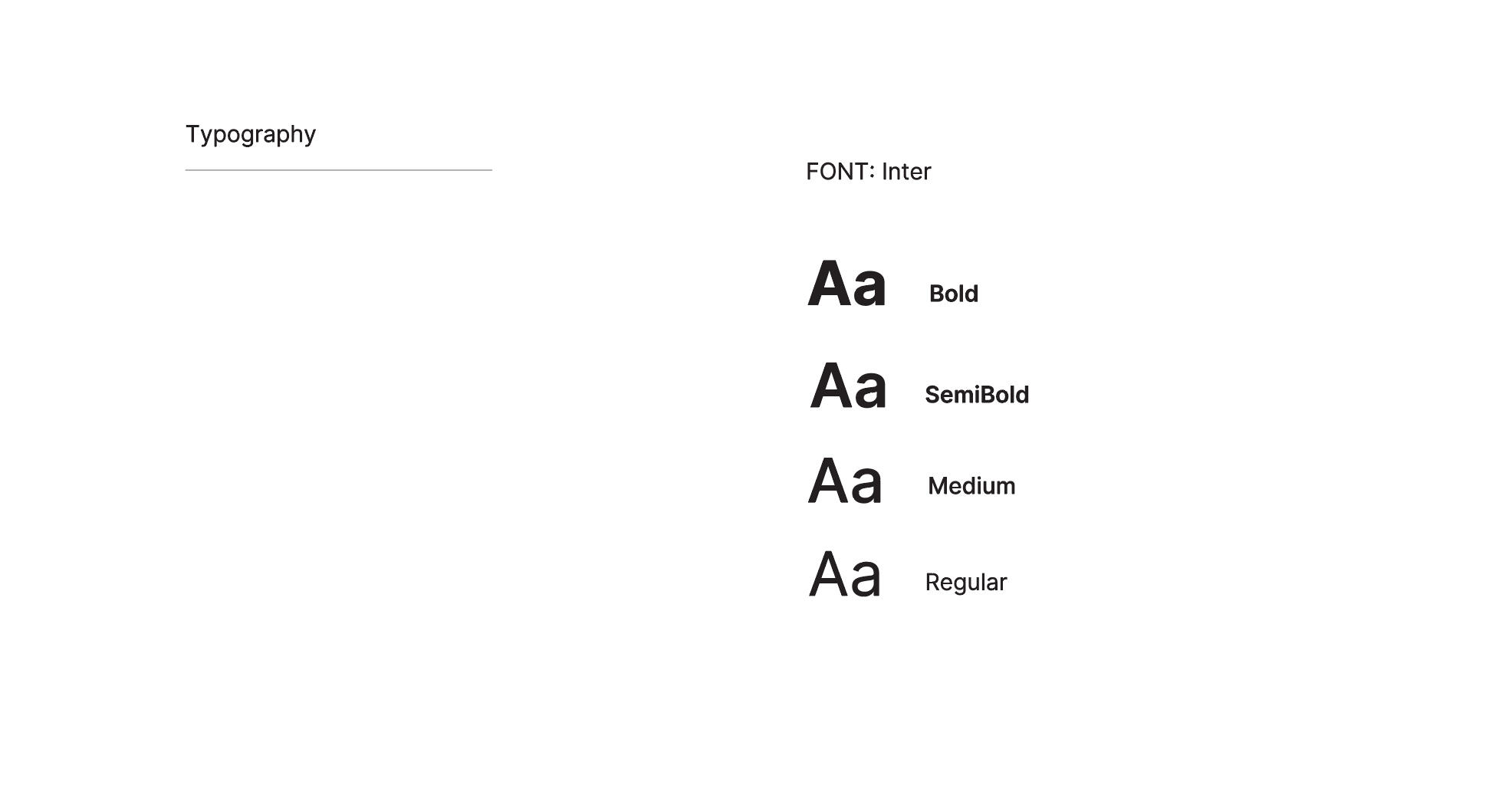
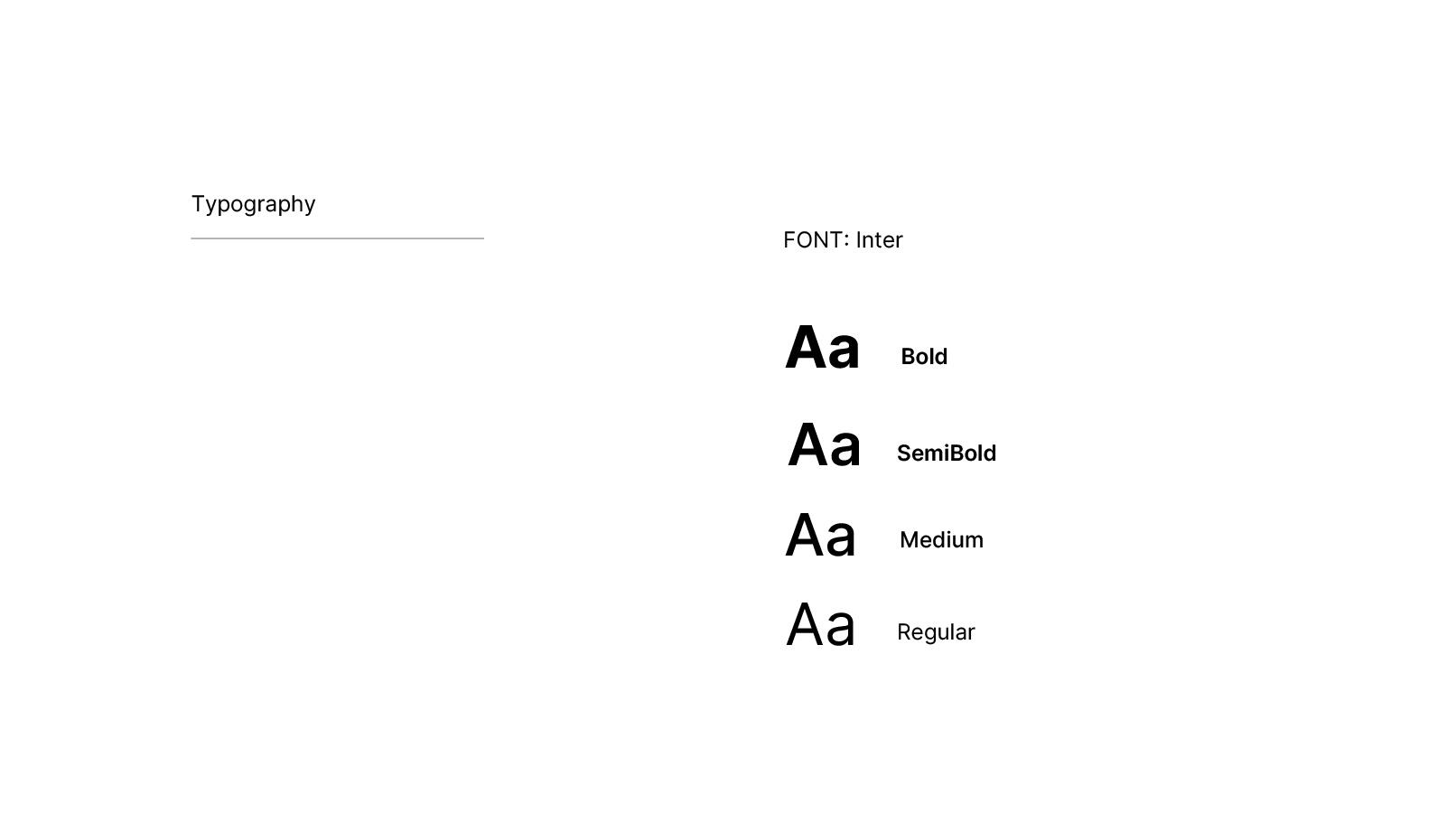
Typography uses Inter, chosen for its clarity and digital precision, ensuring readability across mobile and dashboard interfaces. Font weights (Bold, SemiBold, Medium, Regular) visually guide attention through the experience: action → impact → proof → reward.
Results & Impact
Usability Testing OutcomesTrust Validation
3/4 users stated that viewing contribution history increased their confidence in the platform.Retention Signal
2/4 participants said they would return specifically to check progress on tracked environmental impact. (vs. 0/4 on the original donation-only flow)Engagement Improvement
With eco-challenges and impact tracking, session time increased from ~3 minutes to 10–15 minutes during prototype testing.Technology Validation
4/4 users understood the points-to-impact connection without explanation, confirming that engagement mechanics could be simplified without losing value.Design Iteration
Based on user confusion around abstract rewards, I pivoted from a generic points system to a contribution timeline with visible impact data to reduce cognitive load.
Meratas / Career-Bond
Fintech | UX Fundamentals Project
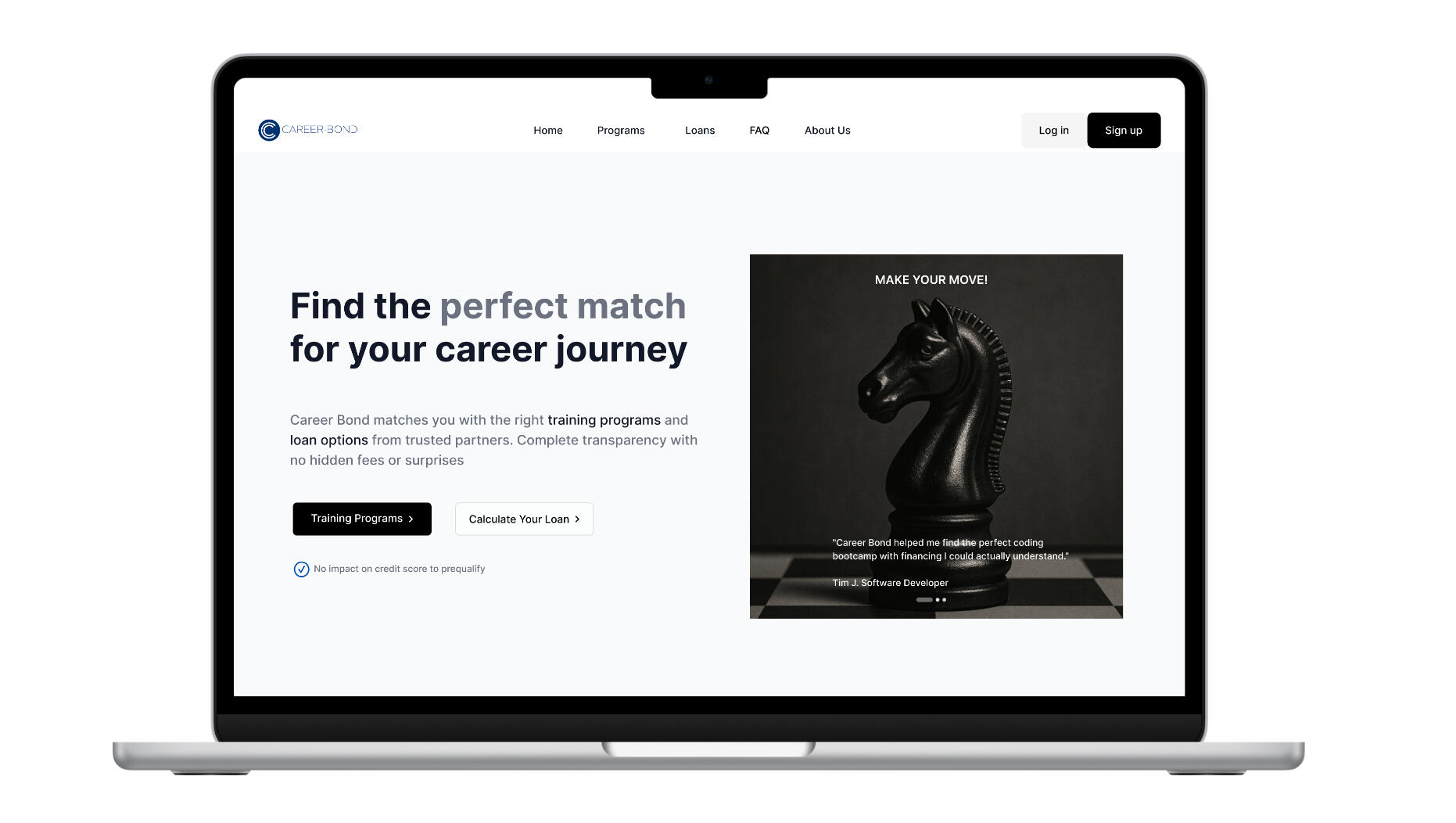
Career-Bond (formerly Meratas) is a fintech platform helping students finance education through flexible loan programs. This project focused on improving trust and clarity during the loan exploration and application experience. The redesigned flow, anchored by a live loan calculator, was described as "clear, honest, easy" by all 4 testers.
⚡ AT A GLANCE
Role: UX Designer • Deliverable: Research-backed UX proposal + interactive prototype
Research
• 4 user interviews (30 min)
• 2 usability testing rounds
Challenge
•40% distrust from hidden fees
• 30% drop-offs from confusing
• Decision paralysis
Solution
• Interactive calculator (new)
• 3-step transparent flow
• Simplified navigation
Impact
• "Clear, honest, easy" (4/4 testers)
• Cognitive load reduction
• Prototype delivered to stakeholders
The Challenge
Career-Bond's original platform presented complex loan details that overwhelmed users and lowered conversion rates during the application process. Many students found repayment breakdowns confusing and distrusted hidden costs. The challenge was to create a transparent, trustworthy experience that builds confidence from discovery to completion.
Problem 1:
Hidden Fee Distrust (40% of users)
The platform didn't show costs upfront. Users had to search for financial information, causing distrust and abandonment.
Problem 2:
Confusing Repayment Terms (30% drop-off)
Repayment breakdowns were unclear, making it difficult for students to understand what they'd actually owe.
Problem 3:
Decision Paralysis
Complex loan details overwhelmed users during the application process without clear guidance on what mattered most.
Our Approach
I began by asking a simple question
“Where is this trust issue coming from?”
I explored how small daily experiences shape user psychology around money and transparency.
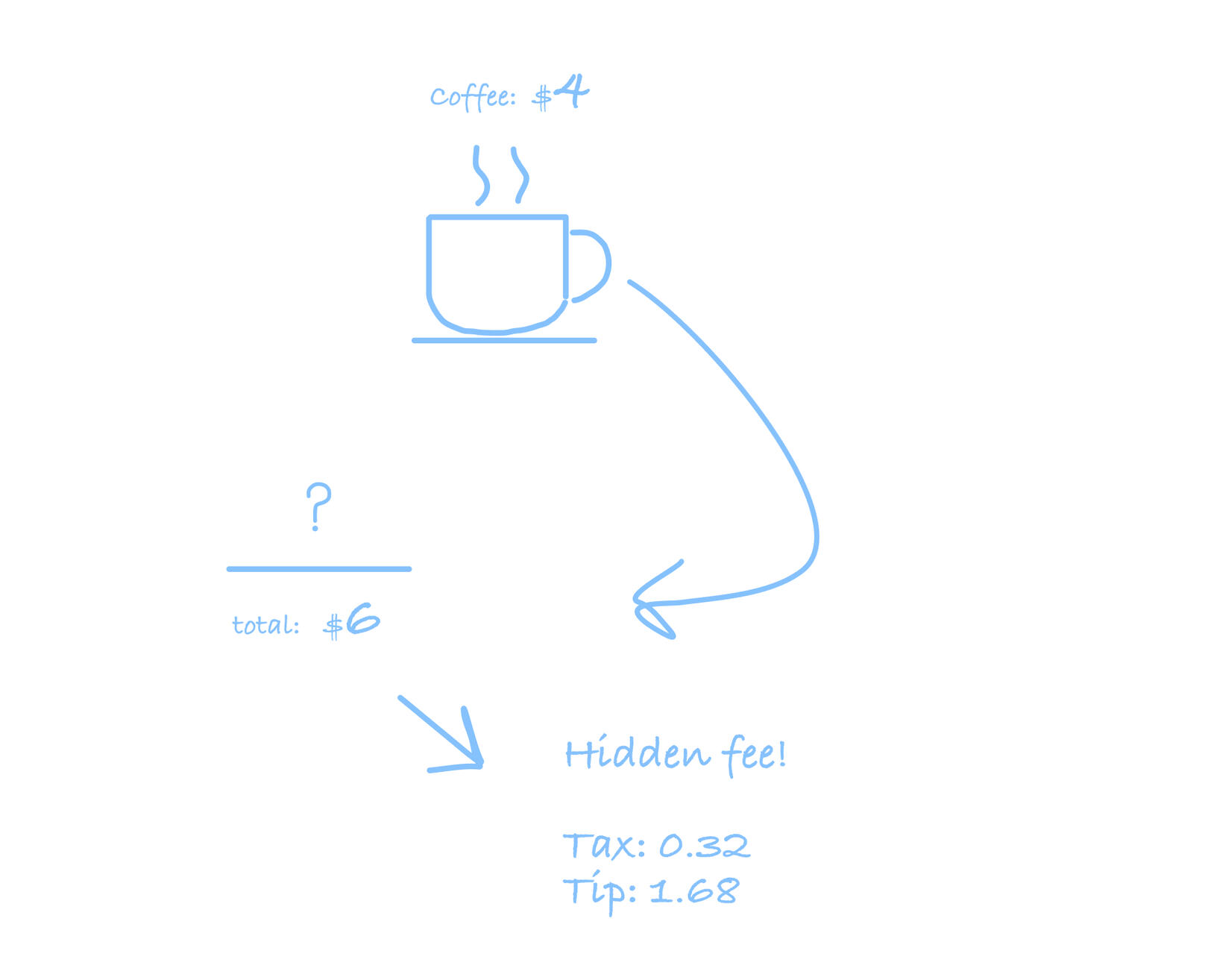
In the U.S., a coffee labeled $4 often ends up costing $6 after tax and tip. This constant mismatch between expectation and reality subconsciously teaches people "not to trust what they see" especially in bigger financial decisions like loans. This insight became the foundation of my design approach: transparency builds trust.
Teaching society not to trust what they see!
Understand The Business
During the rebrand from Meratas to Career-Bond, stakeholders aimed to increase application completion and communicate transparency as a core brand value. The UX needed to improve conversion during the application process, simplify decision-making, and reinforce credibility across every touchpoint.
Rebrand Goals:
Clarity, trust, and smoother application flow.
Understand The User
Through in-depth interviews with 4 people 2 new Master’s graduates (24 & 26 y.o.) funding bootcamps
2 career-switchers (31 & 38 y.o.) moving into tech, (30 min each) and 2 rounds of usability testing with prospective students."Exact script questions (top 3)-What’s your biggest concern when going through financial processes like this?
-Is there anything you wish these platforms offered that they currently don’t?
-What would make that process easier or more reassuring?
KEY USER INSIGHTS1. Hidden fees were the top distrust driver, raised by 3 of 4 participants
2. All 4 participants struggled to interpret the repayment breakdown before committing
3. Lack of cost transparency created decision paralysis
I uncovered three core problems they faced, applicants reported;
1.Uncertainty around total cost and repayment details.
2. Many expected hidden fees and hesitated to proceed without seeing clear numbers first.
3. Trust and clarity emerged as the primary barriers to completion.
Understand The Platform
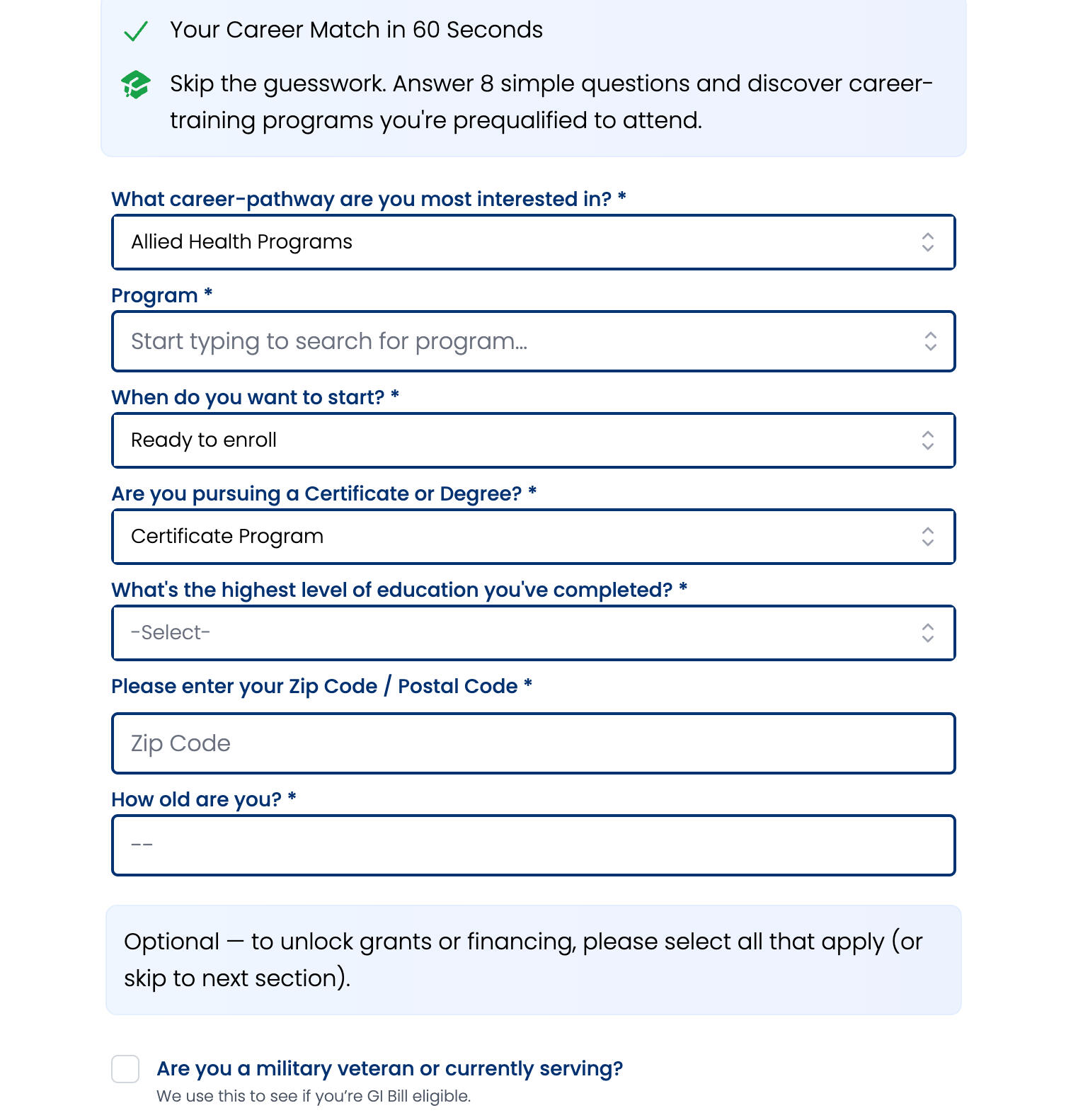
Before defining solutions, I mapped the existing CareerBond website to analyze how users moved through the loan discovery flow. Despite multiple entry points (“Apply Now,” “Tech Careers,” “Allied Health,” “Business Programs”), every button led to the same pre-qualification form regardless of intent or category.
Before
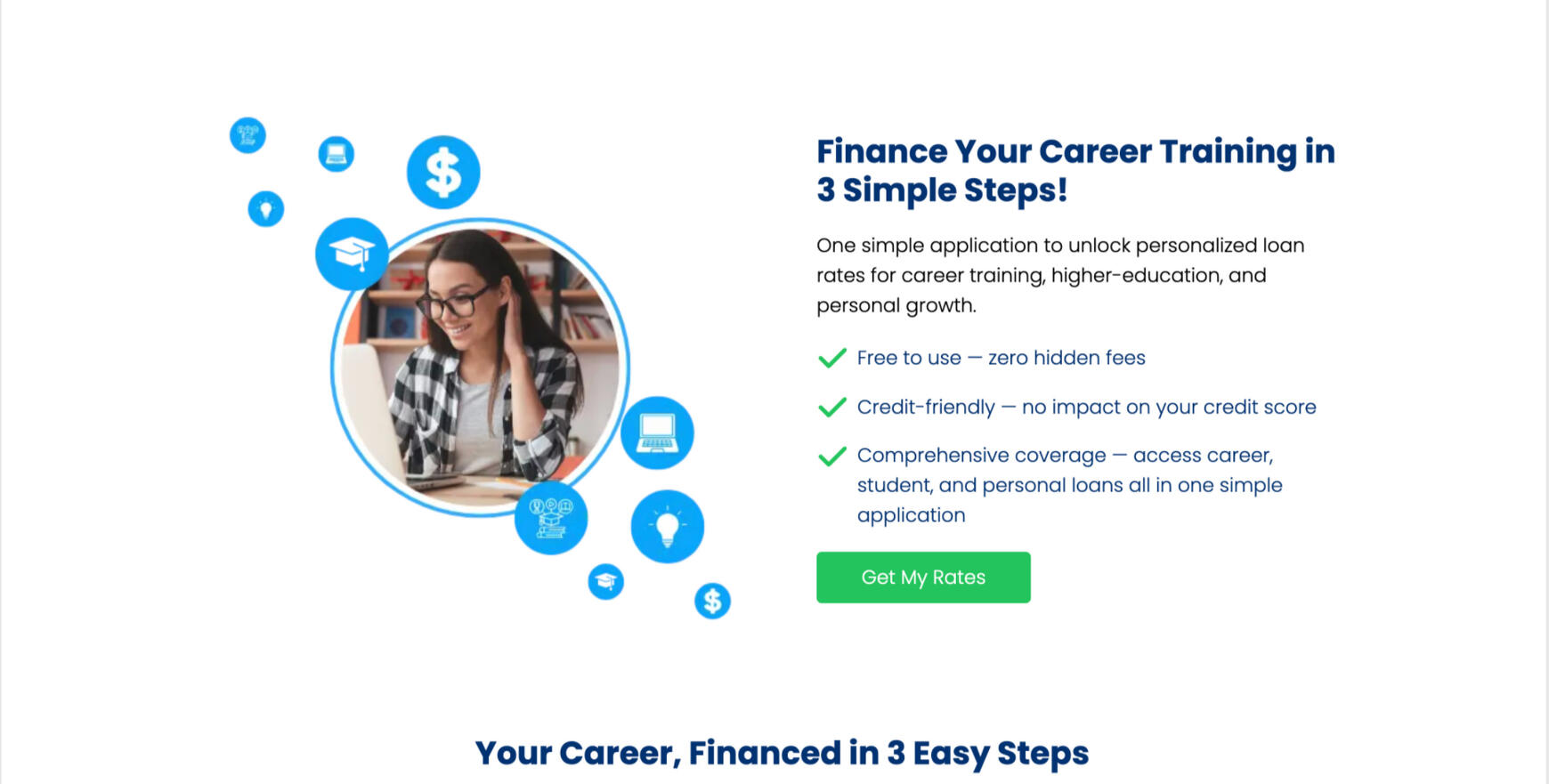
The landing page had no actionable CTAs only generic information and a single button that repeatedly led users to the personal information form.
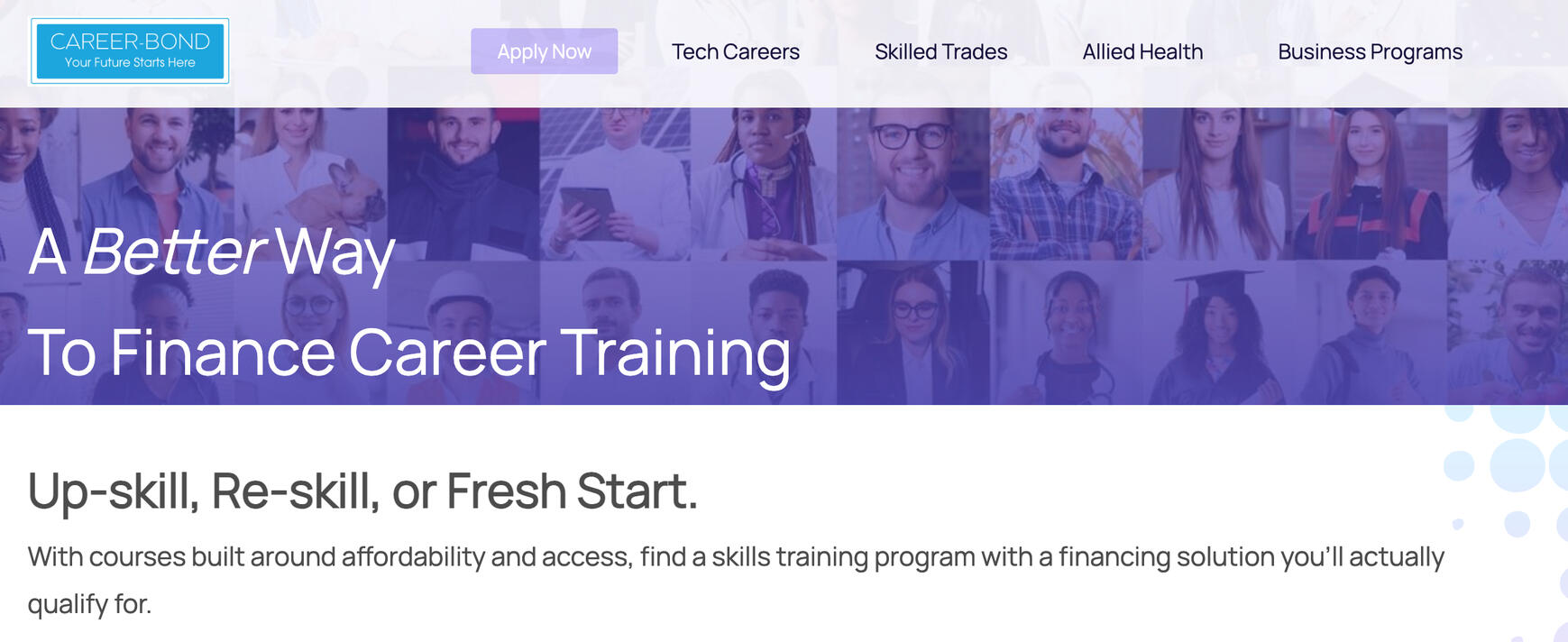
The CTA led users straight to a personal-information form without offering any real value. It looked like a three-step process, but in reality, it only collected data and after completing everything, users still had to wait for results by email.
After
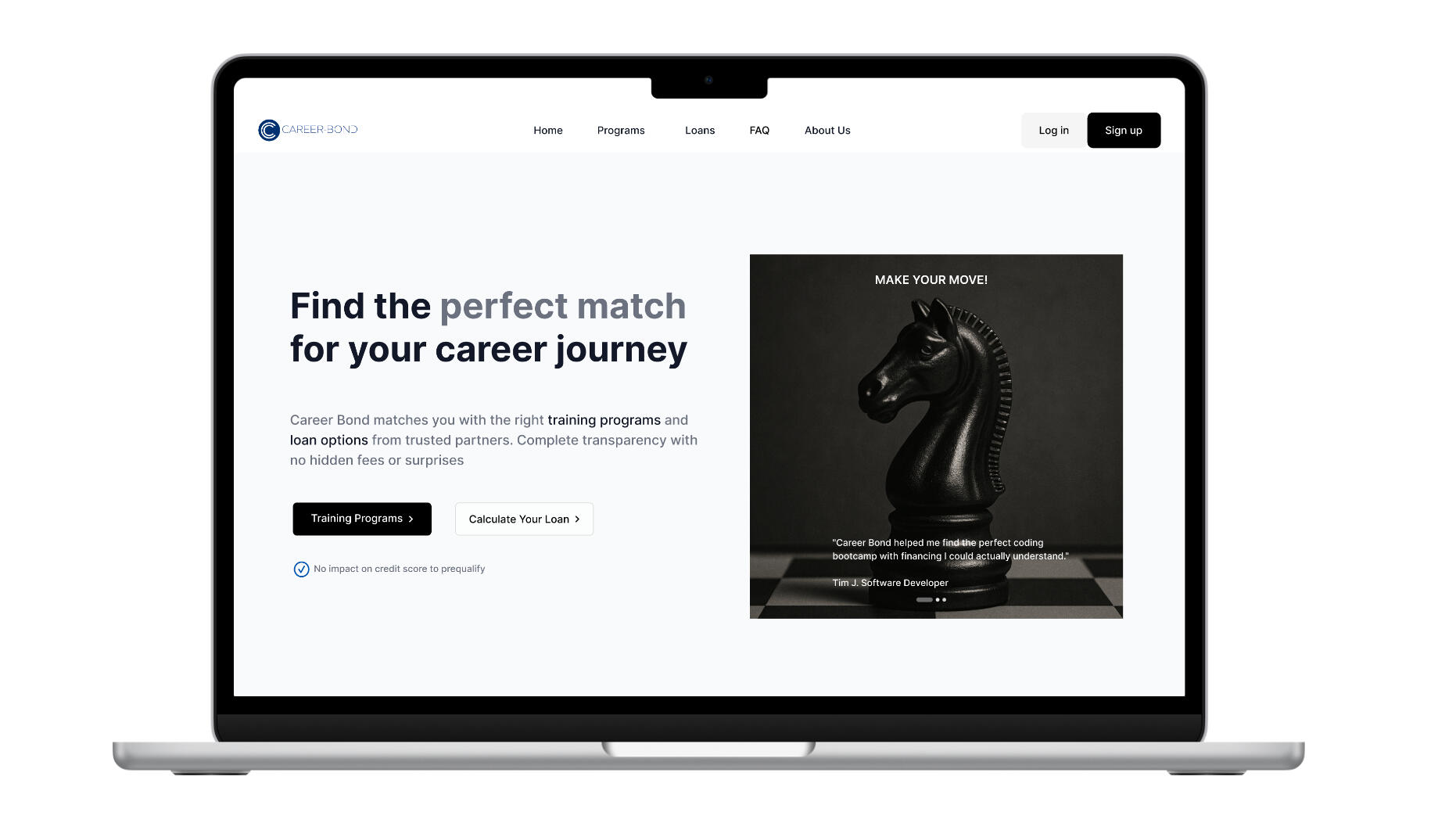
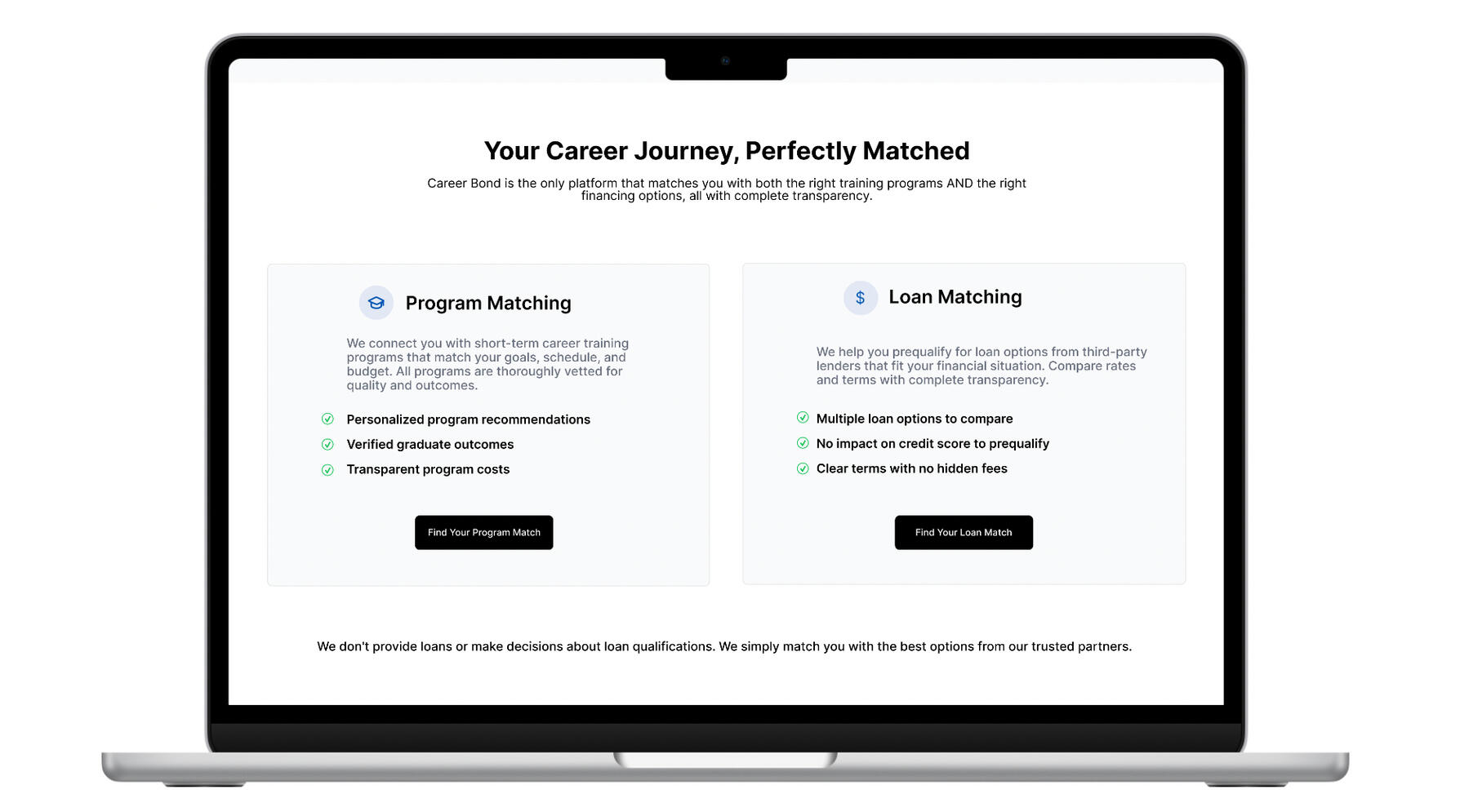
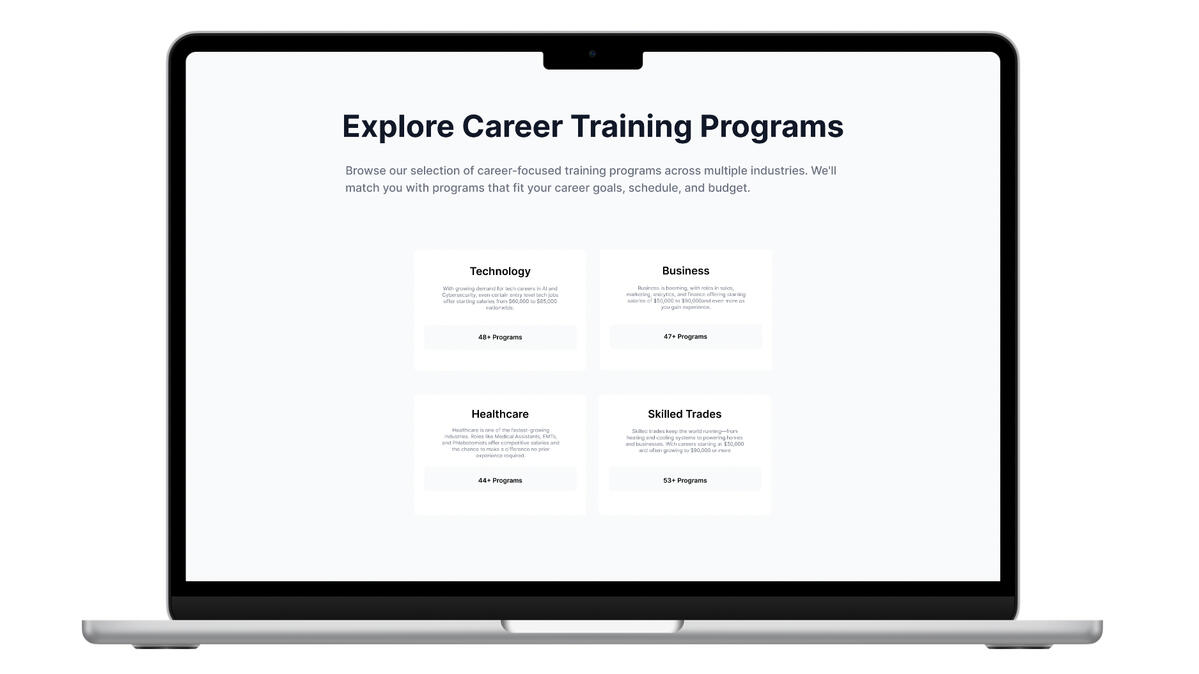
The redesigned landing page introduced clear, trust-building CTAs such as Explore Programs and Loan Calculator, offering immediate value before asking for personal data.
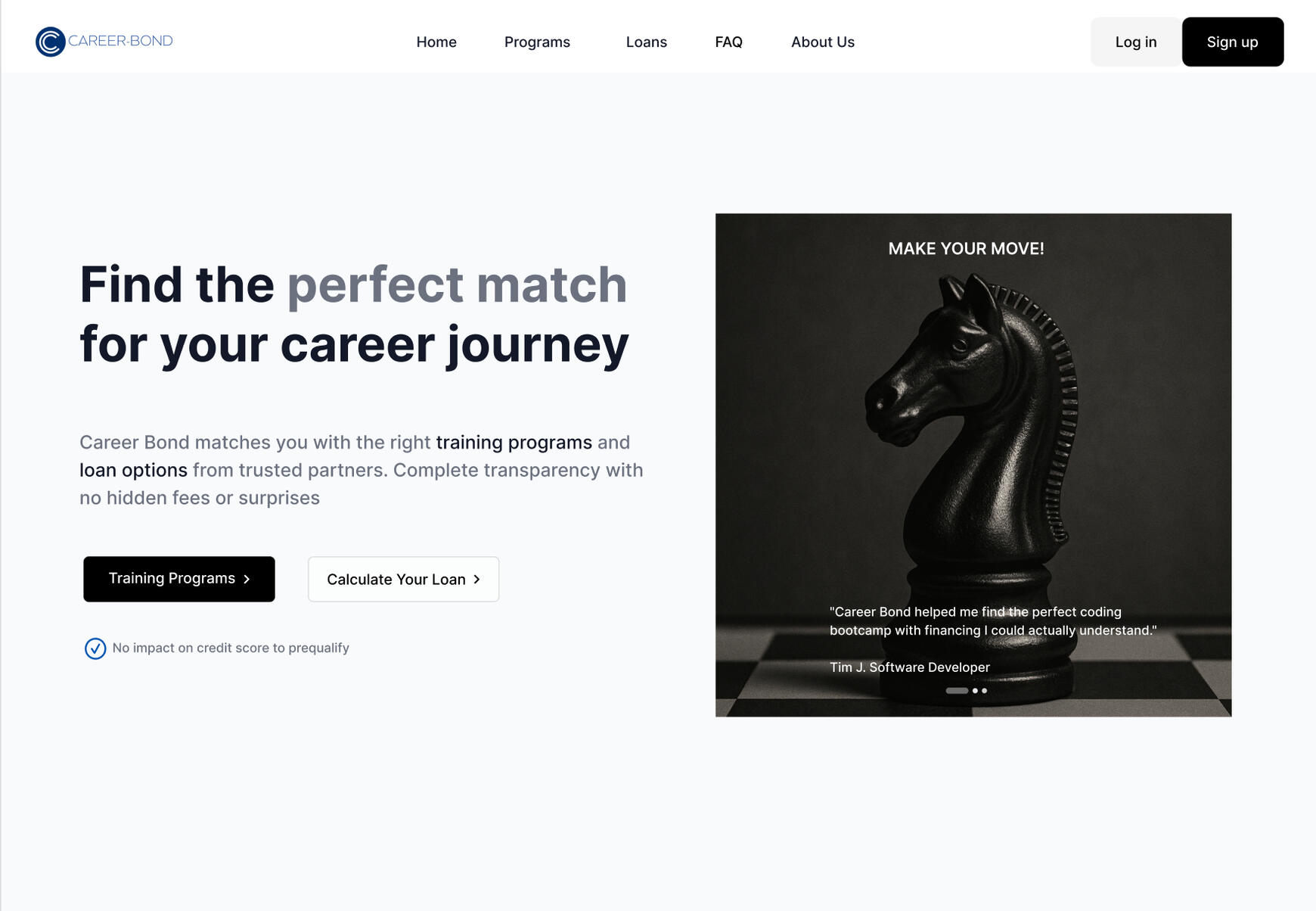
Redesigned the three-step flow to build trust and deliver value. Users can now explore Programs or Loan Matching to see which loans support each program, or vice versa. The interface displays this relationship clearly through dynamic “pill” indicators, giving instant transparency before commitment.
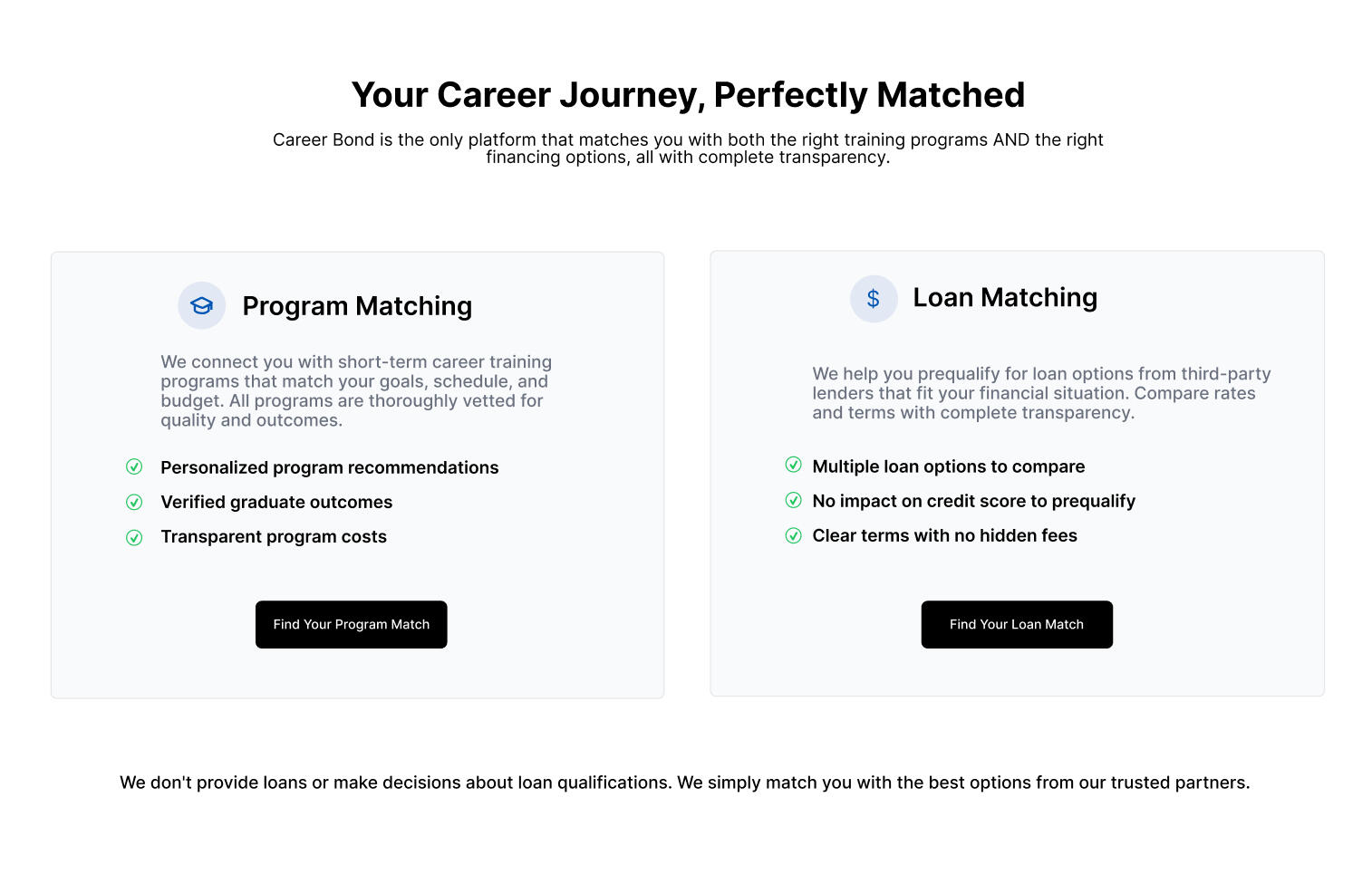
This illusion of choice eroded trust early in the journey. Users believed they were exploring tailored programs, but were instead redirected to the same generic page asking for personal details before showing any relevant information. Instead of guiding discovery,
the interface funneled every action into data capture, making the experience feel manipulative rather than supportive.
UX Insight: False Choice Destroys Trust
A key psychological trigger for distrust.
When multiple CTAs lead to the same page, users lose perceived control. Instead of feeling guided, they feel manipulated. In financial contexts, that emotion directly translates to abandonment and skepticism. True transparency isn’t about showing numbers, it’s about making every action feel honest and distinct.
The Solution
The core problem stemmed from a lack of transparency users were asked for information before receiving value.
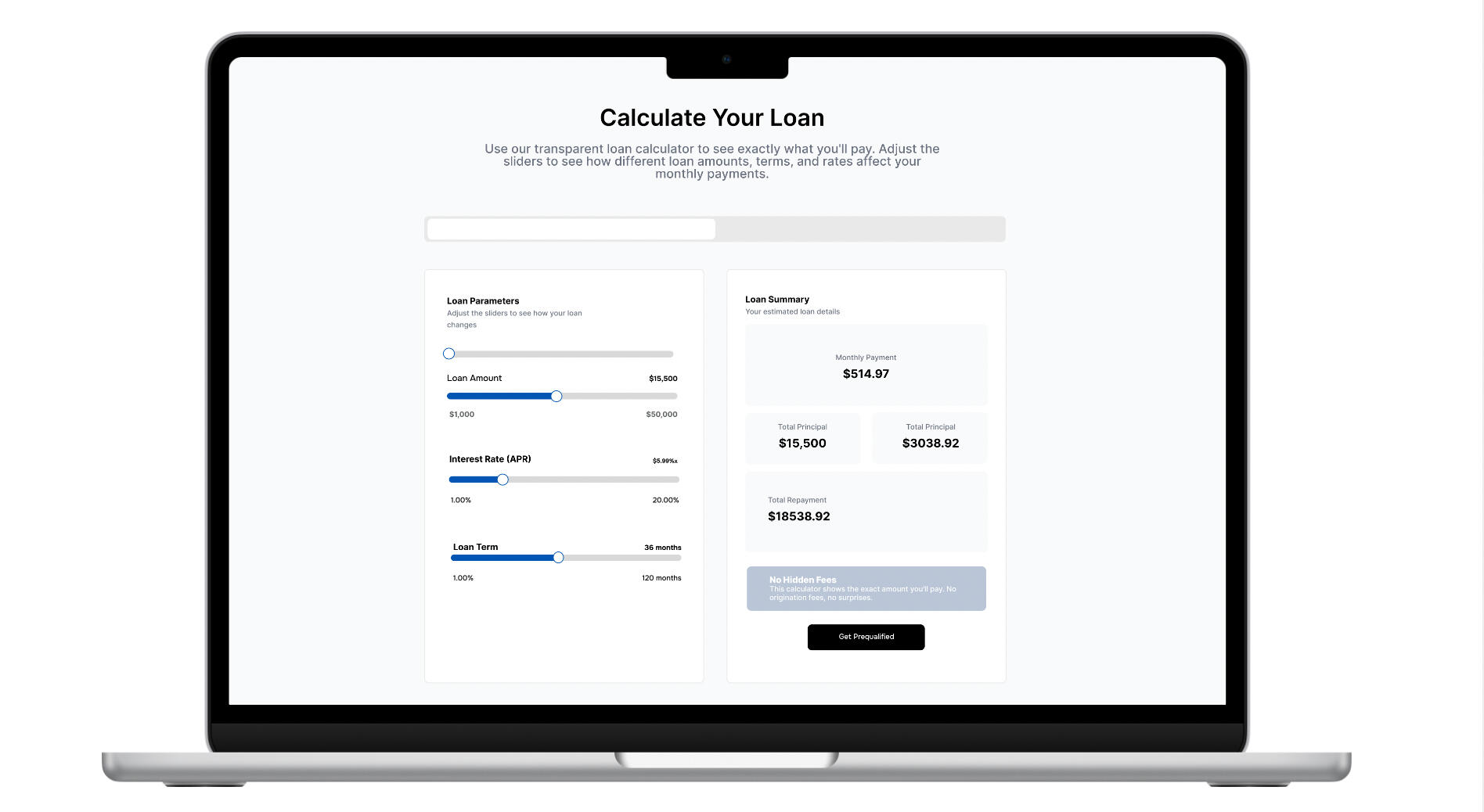
To rebuild trust, I designed an interactive loan calculator that showed real numbers upfront, helping users understand total repayment before committing. This shift from “Apply to see your rate” to “Preview before applying” created an open and confidence-driven flow.
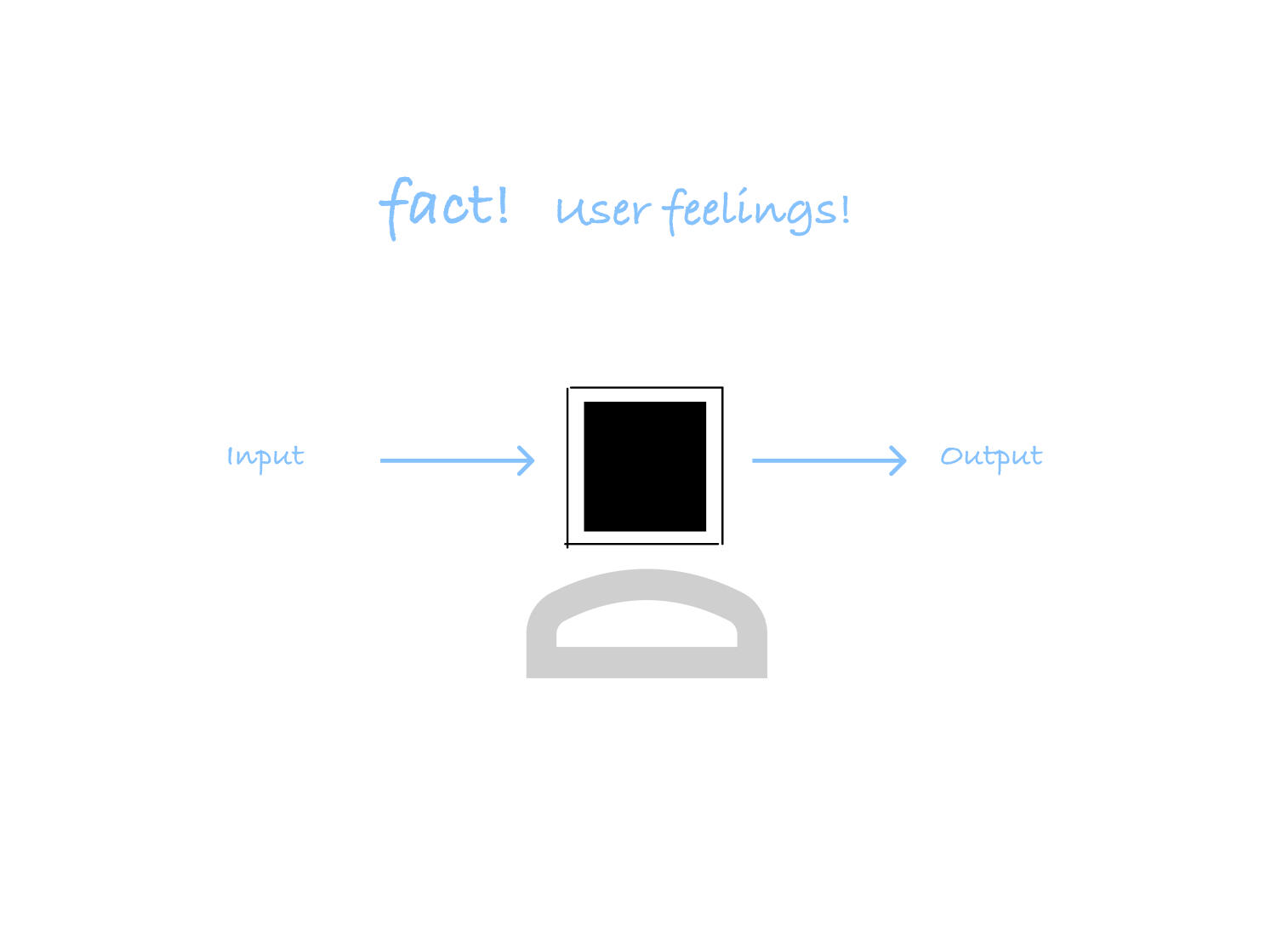
User described;
"The loan journey feels like a black box" users are unsure what to expect.
User insights revealing emotional disconnect and the need for clarity before commitment.
Feature 1: Simplified Application Entry Flow; preventing unnecessary repetition and user frustration.
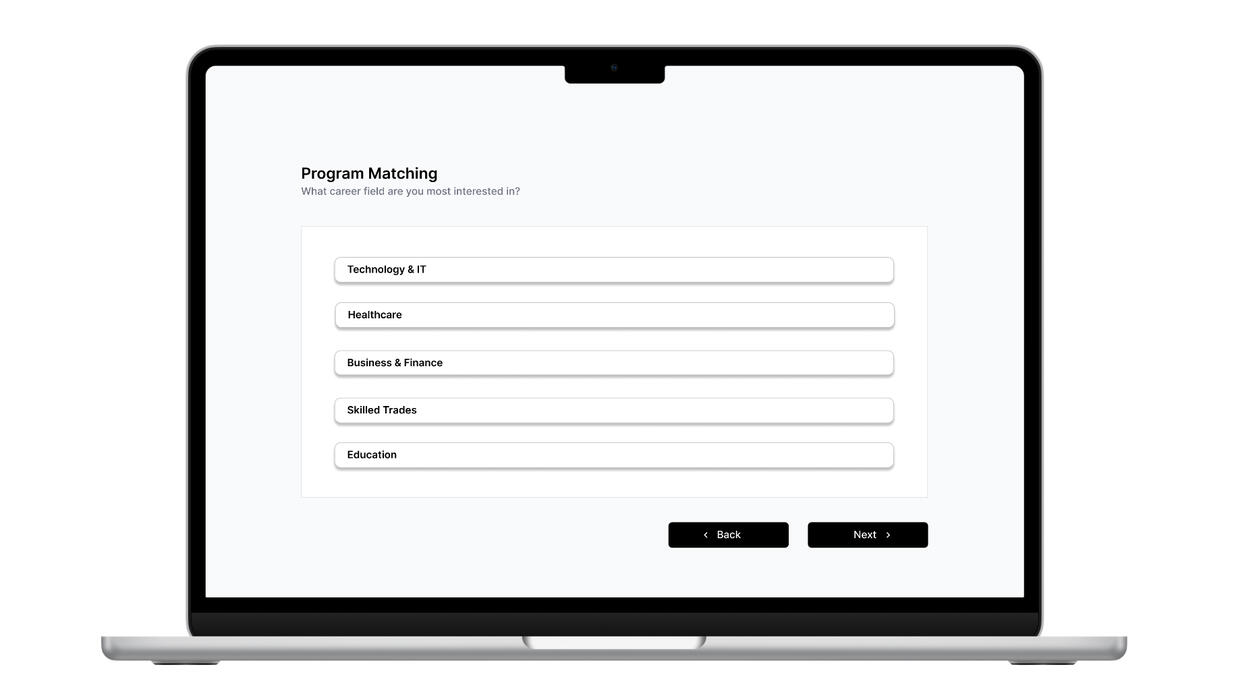
The original toolbar redirected users to the same “Career Goals” form regardless of their intent. I restructured the entry points to distinguish between program discovery and loan options, preventing unnecessary repetition and user frustration.
Feature 2: Upfront Cost Visibility; I introduced an interactive loan calculator prototype showing repayment breakdowns.
Users hesitated to proceed without understanding total program costs. I introduced an interactive loan calculator prototype showing repayment breakdowns and total costs before personal data entry.
Feature 3: Clear Navigation Hierarchy; I proposed a simplified structure where users could first explore then preview financing.
The old multi-step form and program listing caused confusion. I proposed a simplified structure where users could first explore programs, then preview financing reducing perceived friction.
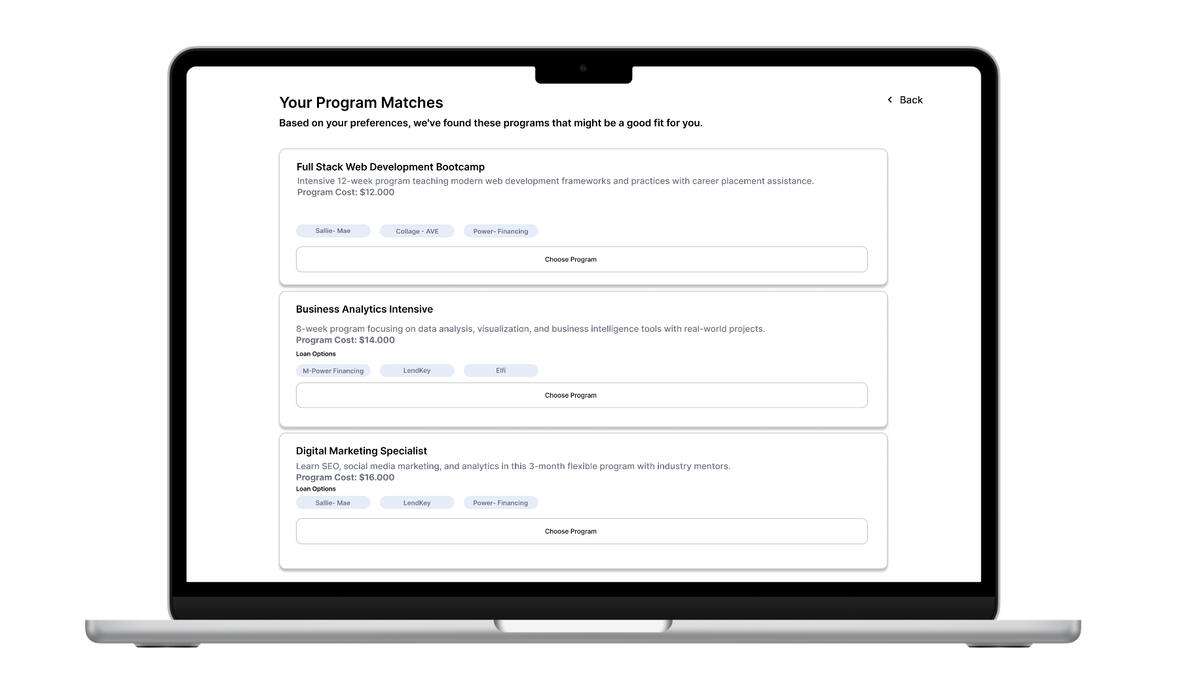
Existing interface: users struggled to locate relevant loan programs and understand repayment terms.
I designed calculator prototype with simplified breakdown and transparent costs.
Guiding users through a transparent progression with clear feedback at every stage.
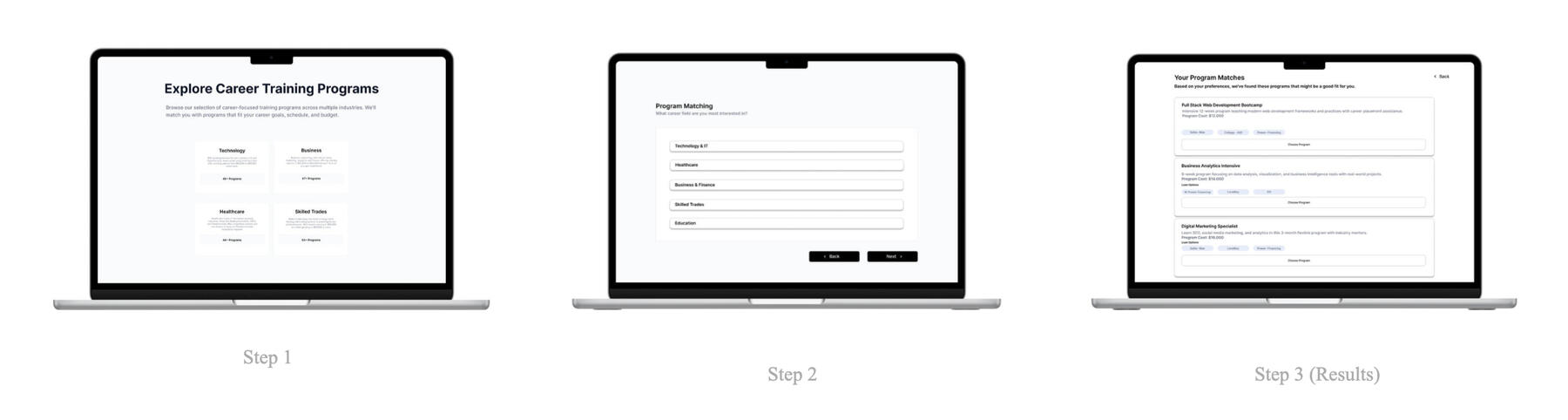
Three-step flow
Estimate, Verify, Apply.
Step 1
Step 2
Step 3 (Results)
Flow & Structure
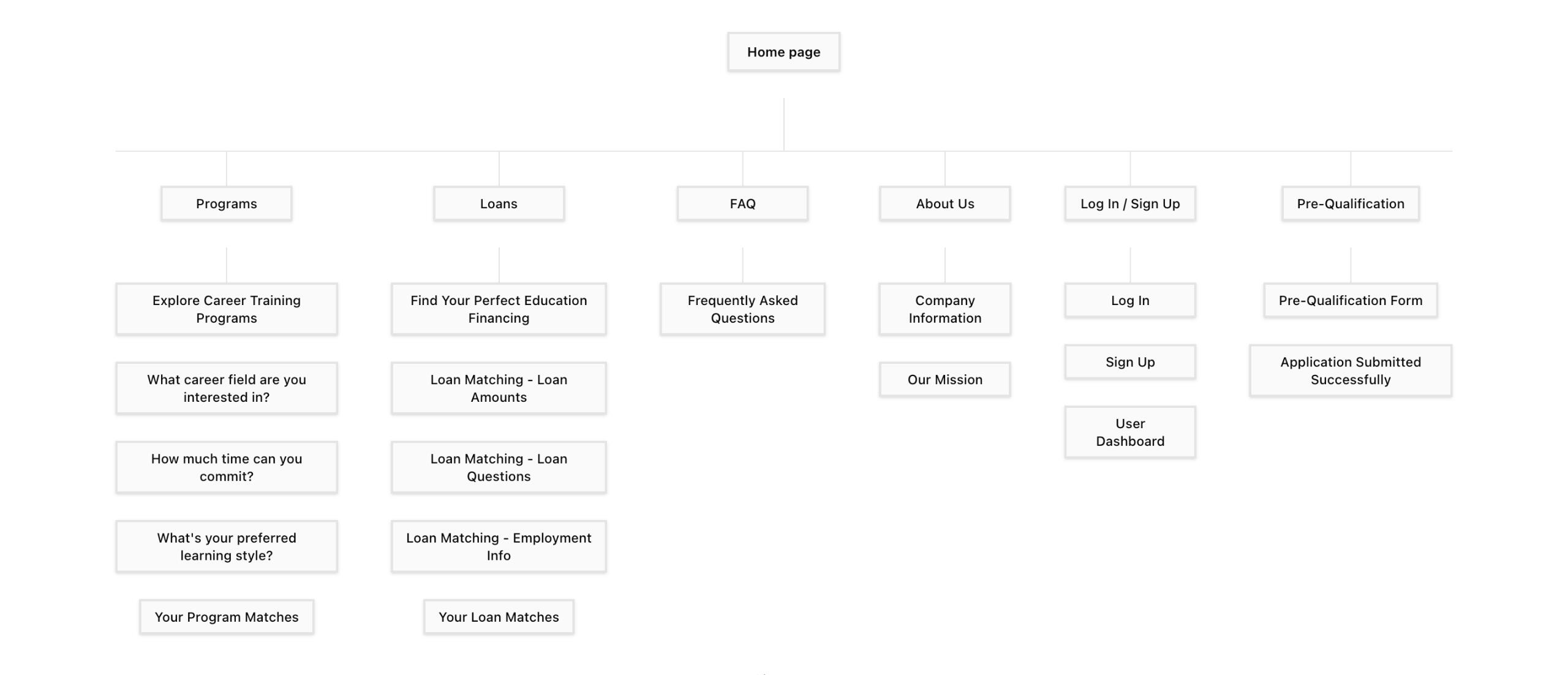
Simplified page hierarchy reduced confusion and separated program discovery from loan qualification.
The platform flow was rebuilt around clarity breaking the process into three transparent stages: Estimate, Verify, and Apply. Each stage provides visible progress and upfront information before any personal data entry.
Information Architecture
Shows simplified page hierarchy for the redesigned platform.
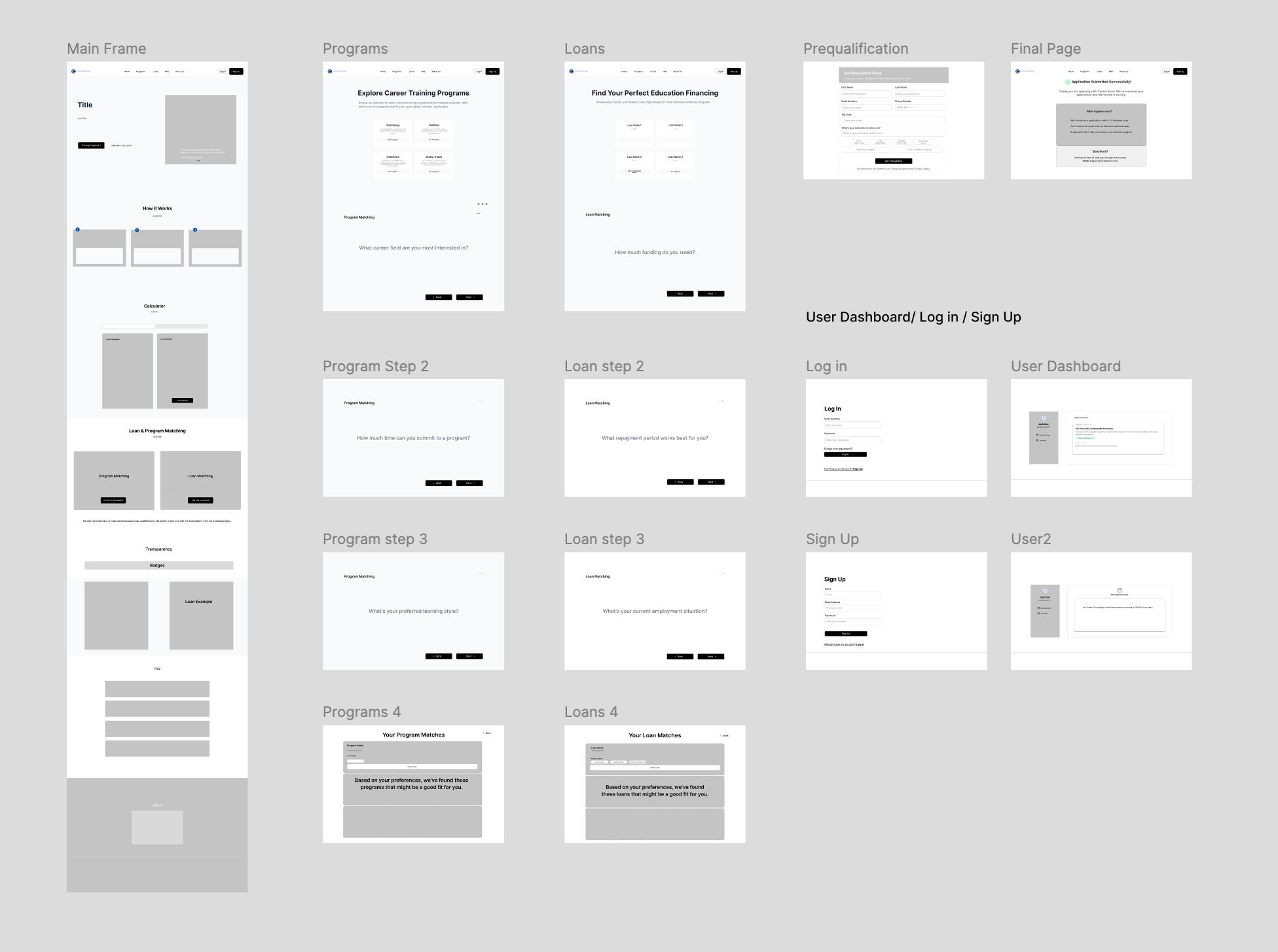
Low-Fidelity Wireframes
Early structural sketches testing information order and user navigation clarity.
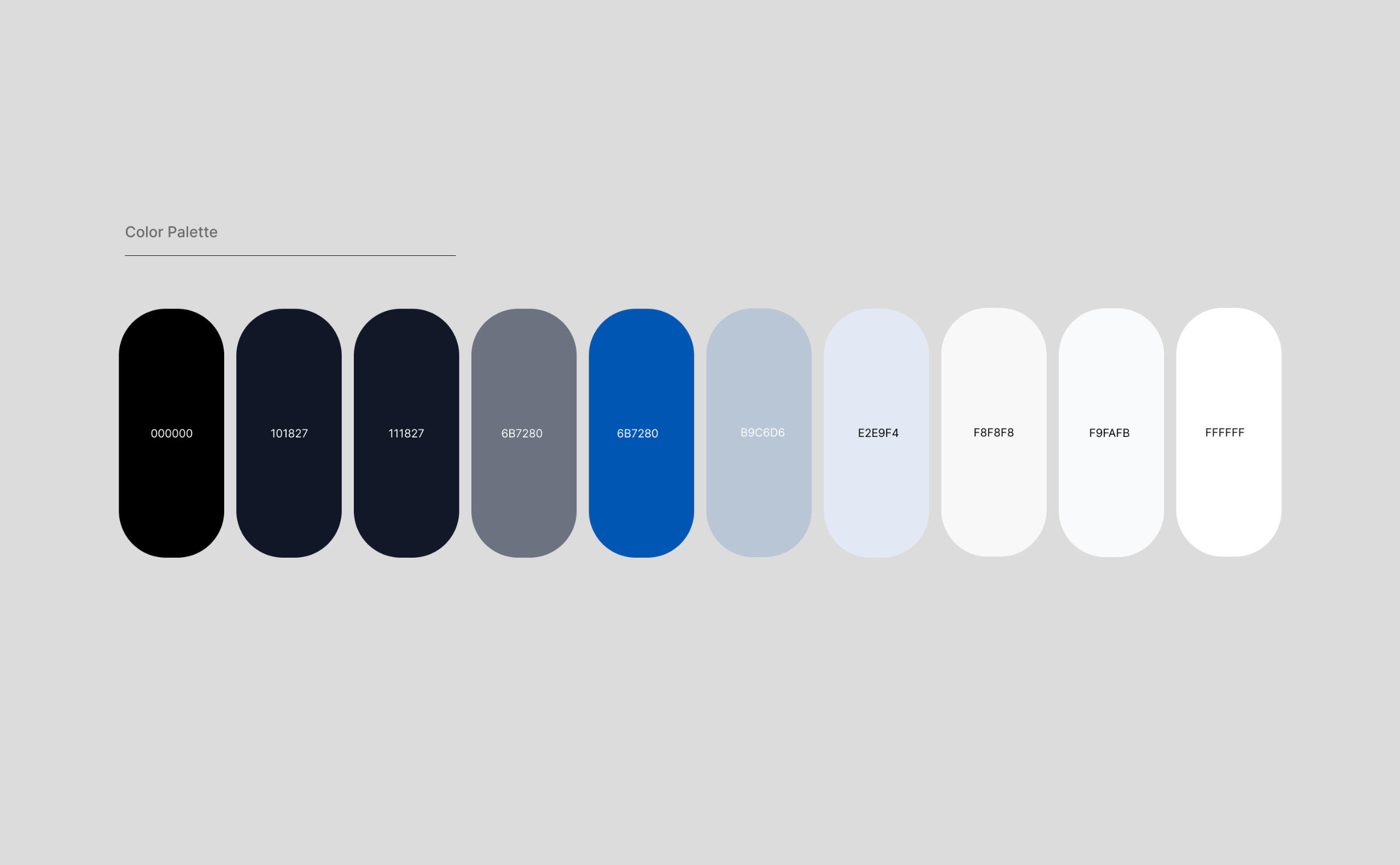
User Interface Design
The palette gives the interface a confident identity without shouting. Deep navy and black signal credibility; a restrained blue accent adds focus. Neutral grays and off-whites keep attention on content. The result is bold yet minimal aligned with CareerBond’s values of honesty and transparency.
Using a clear hierarchy of Bold, SemiBold, Medium, and Regular weights guides attention naturally.
The interface uses Inter, a modern sans-serif typeface designed for digital clarity and balance. Its geometric simplicity makes complex financial data easy to scan while maintaining a professional tone.
From key actions to supportive information ensuring a consistent and accessible reading experience across all screens.
COMPOSITIONS
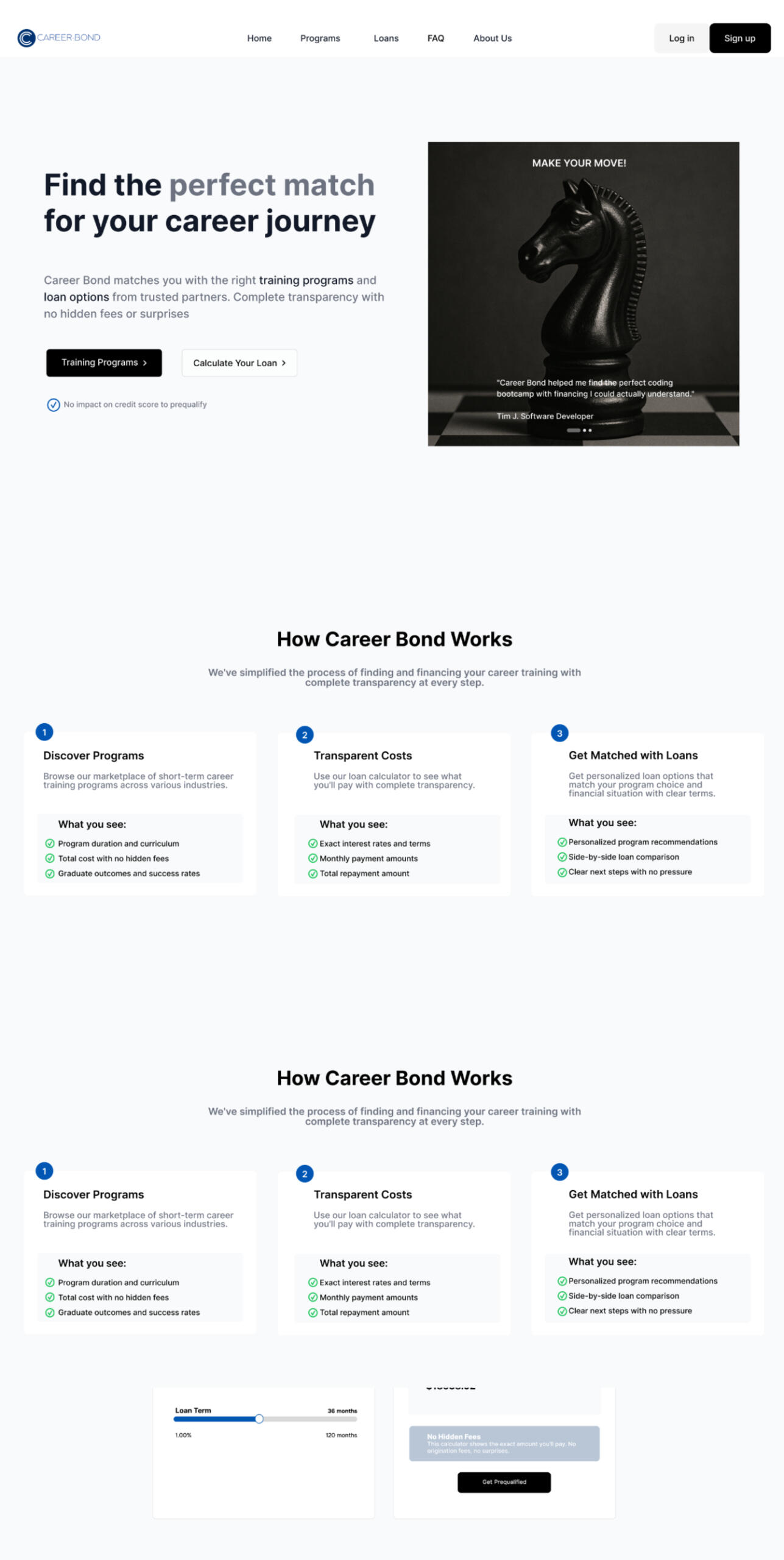
I developed desktop web compositions focused on hierarchy and ease of scanning. Each frame emphasized predictability, the psychological core of trust.
Key compositions included:
Pre-application estimator: Displayed total repayment before personal data entry. Simplified comparison view: Allowed users to understand multiple loan options at a glance. Guided input flow: Broke complex forms into calm, digestible sections. Completion screen: Framed confirmation as reassurance, not pressure.The compositions were built for clarity, not persuasion, a visual language that quietly earned belief through simplicity.
outcomes
Tested with the same 4 users before & after
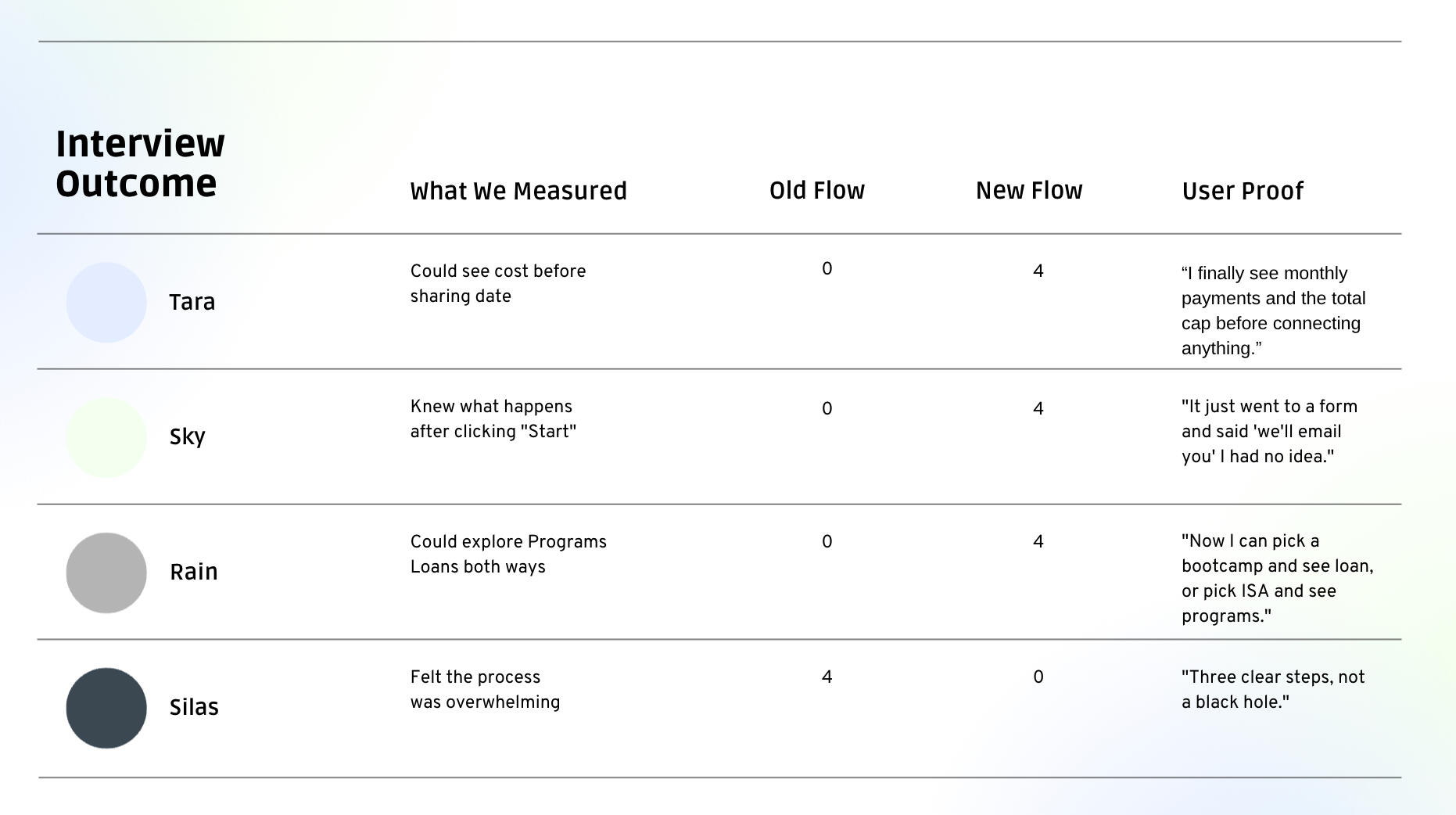
STRATEGIC IMPACTA trust-first UX framework for fintech- Truthfulness > Conversion: Built a model where users see real numbers first, not after data entry.- “Clear, honest, finally easy” direct quote from all 4 testers.- Scalable Design System:→ Transparency-first language (calculator, 2-way explore, 3-step flow)→ 4/4 testers described the new flow as 'clear, honest, easy→ Reusable for ISAs, student loans, career financing
This isn’t just a redesign, it’s a blueprint for any trust-sensitive financial product.
FINAL THOUGHTS
This project proved that great UX isn’t just about usability it’s about emotional integrity. Financial tools often fail not because users don’t understand them, but because they don’t believe them. The idea began with a coffee analogy how hidden costs shape distrust and evolved into a UX principle: when what users see is exactly what they get, trust becomes the design. That’s the benchmark I design for clarity so consistent that users never have to second-guess the product or themselves.
About
Su Barikan is a Product Designer based between New York and Istanbul, known for her work at the intersection of contemporary art, digital media, and technology.
She is the founder of Abstract State, a contemporary art publication and e-commerce platform. Barikan established Abstract State to bridge the gap between contemporary art and digital audiences, managing the platform’s end-to-end product lifecycle, from business and brand strategy to editorial design and full-stack technical execution. Her work is characterized by the seamless integration of fine arts principles with data-driven user experience and product strategy.In recognition of her contributions to the field, Barikan was awarded the classification of "Extraordinary Ability in Visual Arts and Design" by the United States government, which grants her U.S. work authorization. She works across U.S. and European time zones. Her product practice encompasses zero-to-one product development and digital strategy across various sectors, including environmental sustainability, financial technology, and wellness innovation.Barikan's educational background is multidisciplinary, combining studies in Philosophy at Istanbul University with formal training in design, computer science, and fine arts. She attended the Gerrit Rietveld Academy in Amsterdam for Art & Design and the Royal Academy of Art in The Hague, where she studied Fashion Design & Textile as a merit-based scholarship recipient.
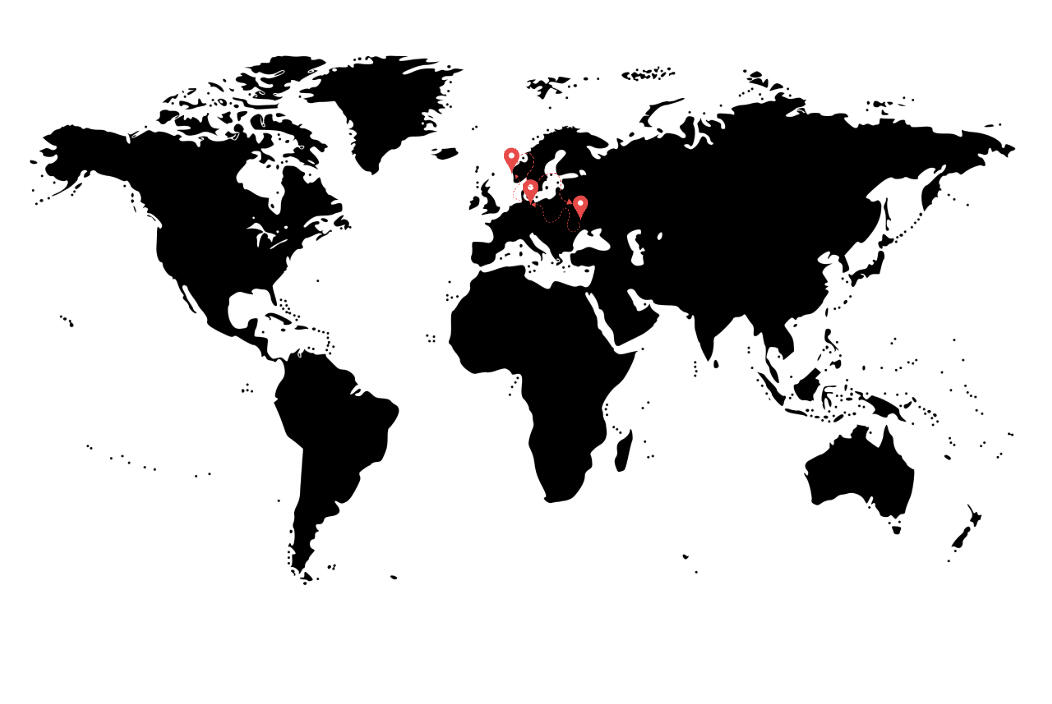
B.A in Philosophy
Istanbul University
Istanbul, TurkeyFashion Design & Textile
(Merit-based scholarship recipient)
The Royal Academy of Arts
The Hague, NetherlandsFoundation in Art & Design
Gerrit Rietveld Academy,
Amsterdam, Netherlands
Interior Design
Leonardo da Vinci Project Istituto per l'Arte e il Restauro Palazzo Spinelli
Florence, ItalyInterior Design Pera Fine Arts Institute
Istanbul, Turkey
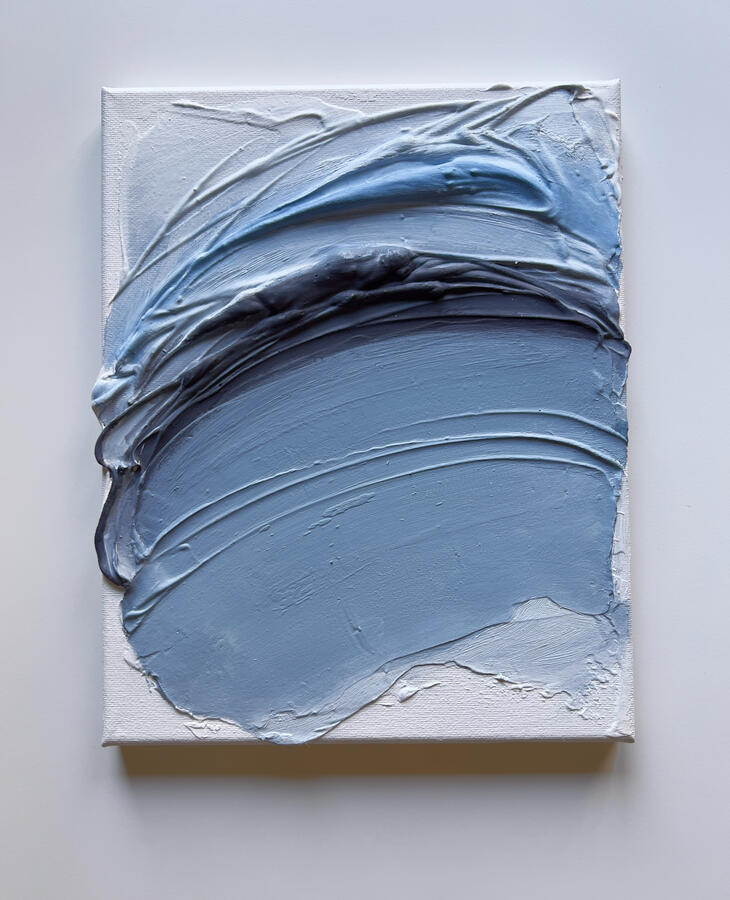
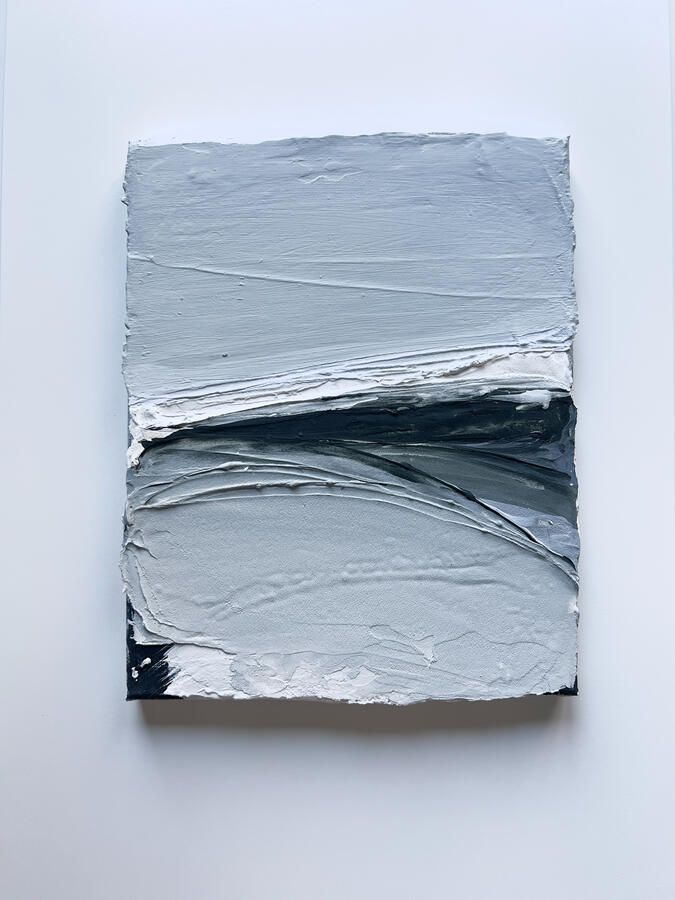
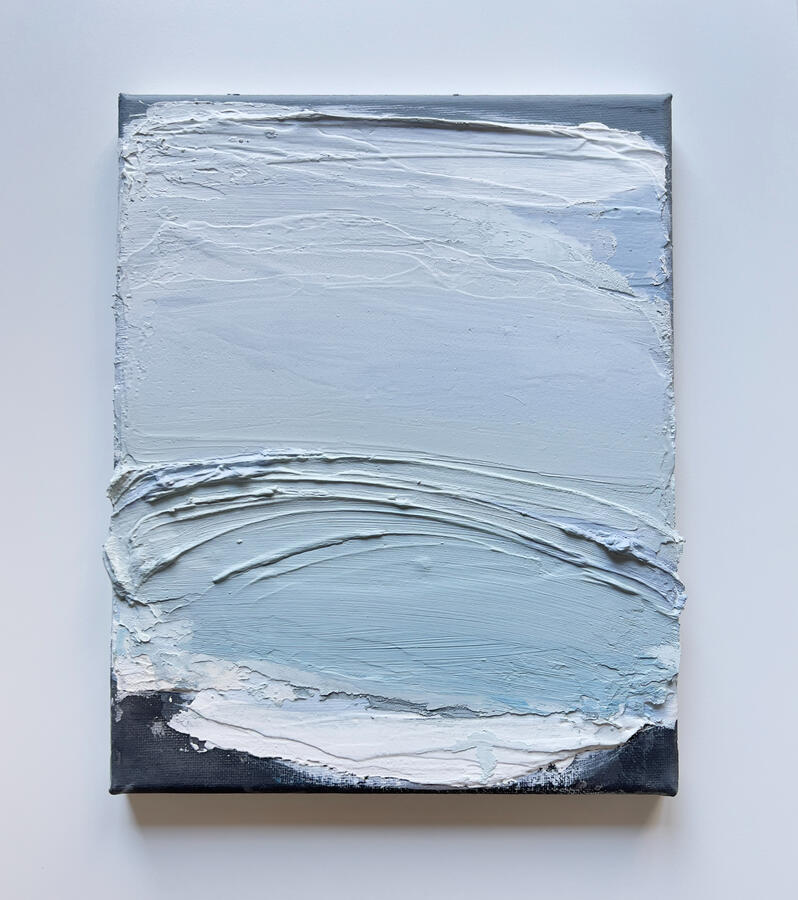
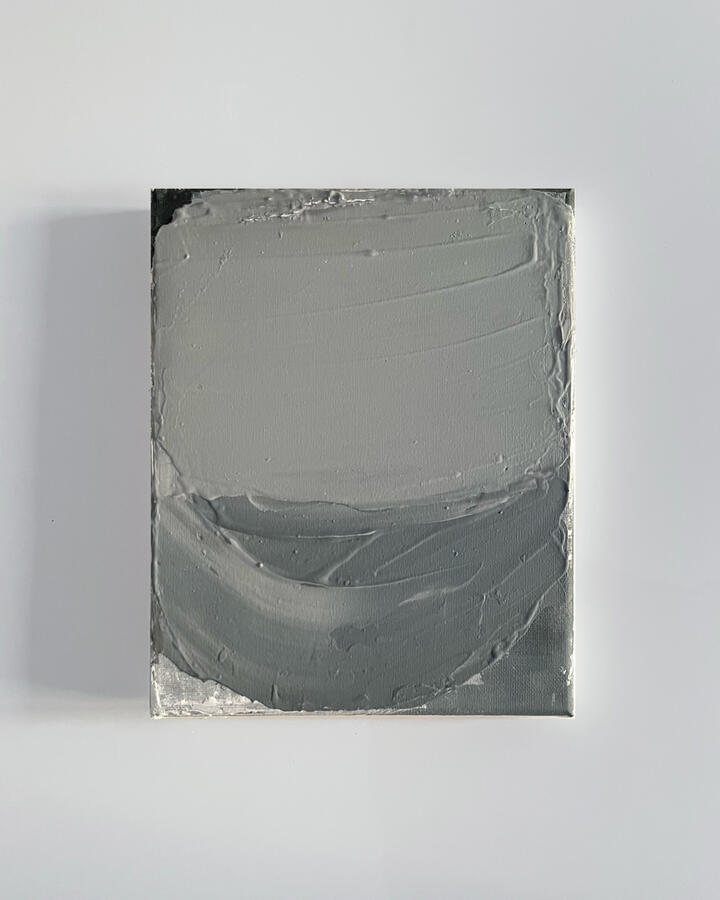
Ocean Series
The Playground
I believe playing is in our nature however in the process of growing up we replace toys with people which leads us to forget the harmless games we used to play. Suppressing our nature makes adulthood robotic instead of being poetics. But, whenever we go near the ocean, we leave ourselves in the arms of nature to our playground where we play in it, at any age. I'm creating this playground in my paintings to remind you to be poetic, to play, to be harmless.
MANHATTAN COLLECTION
Size 18x24" Oil/Mixed media Paintings

No:20 M

No:22 M

No:27 M

No:28 M
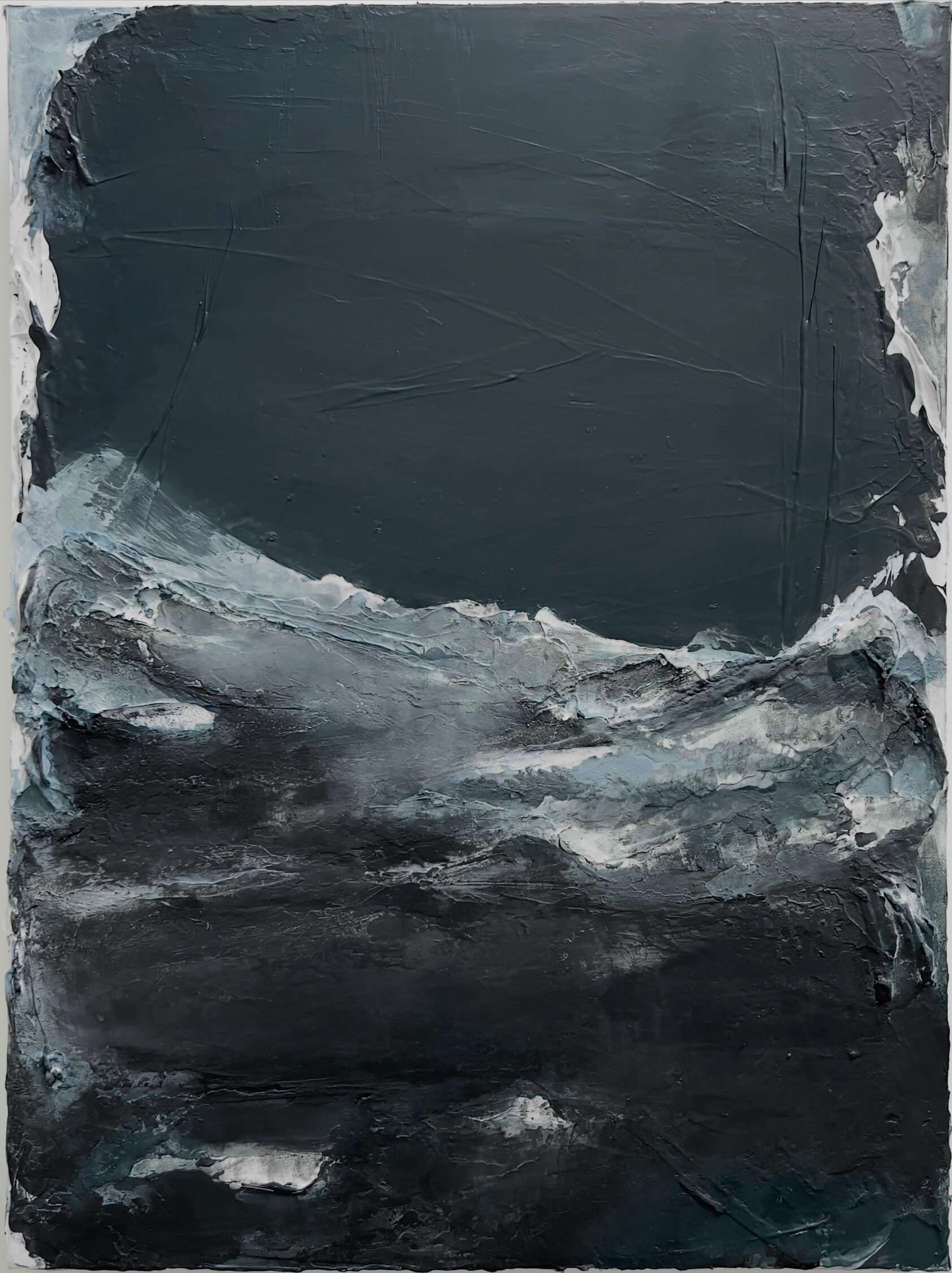
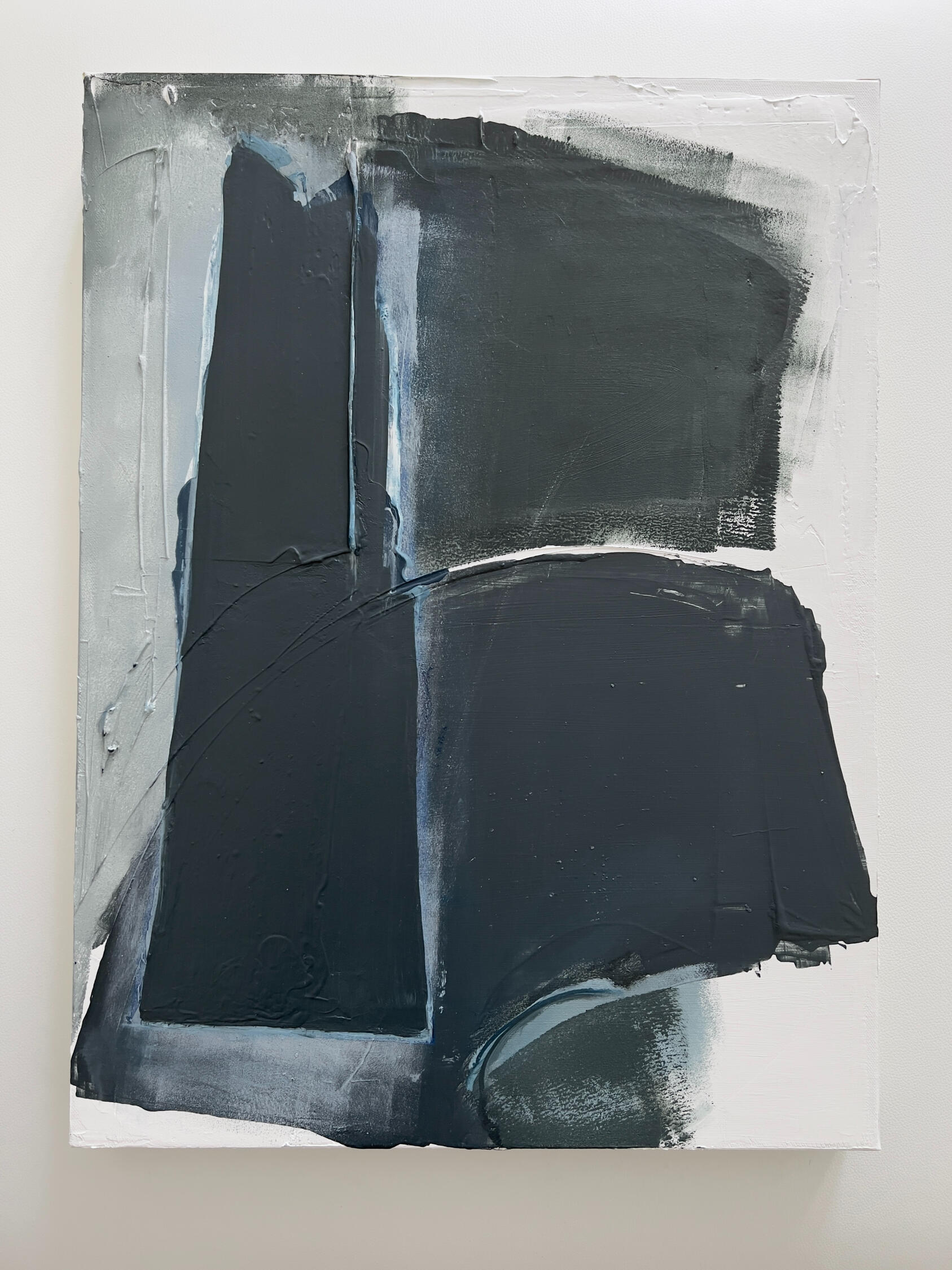
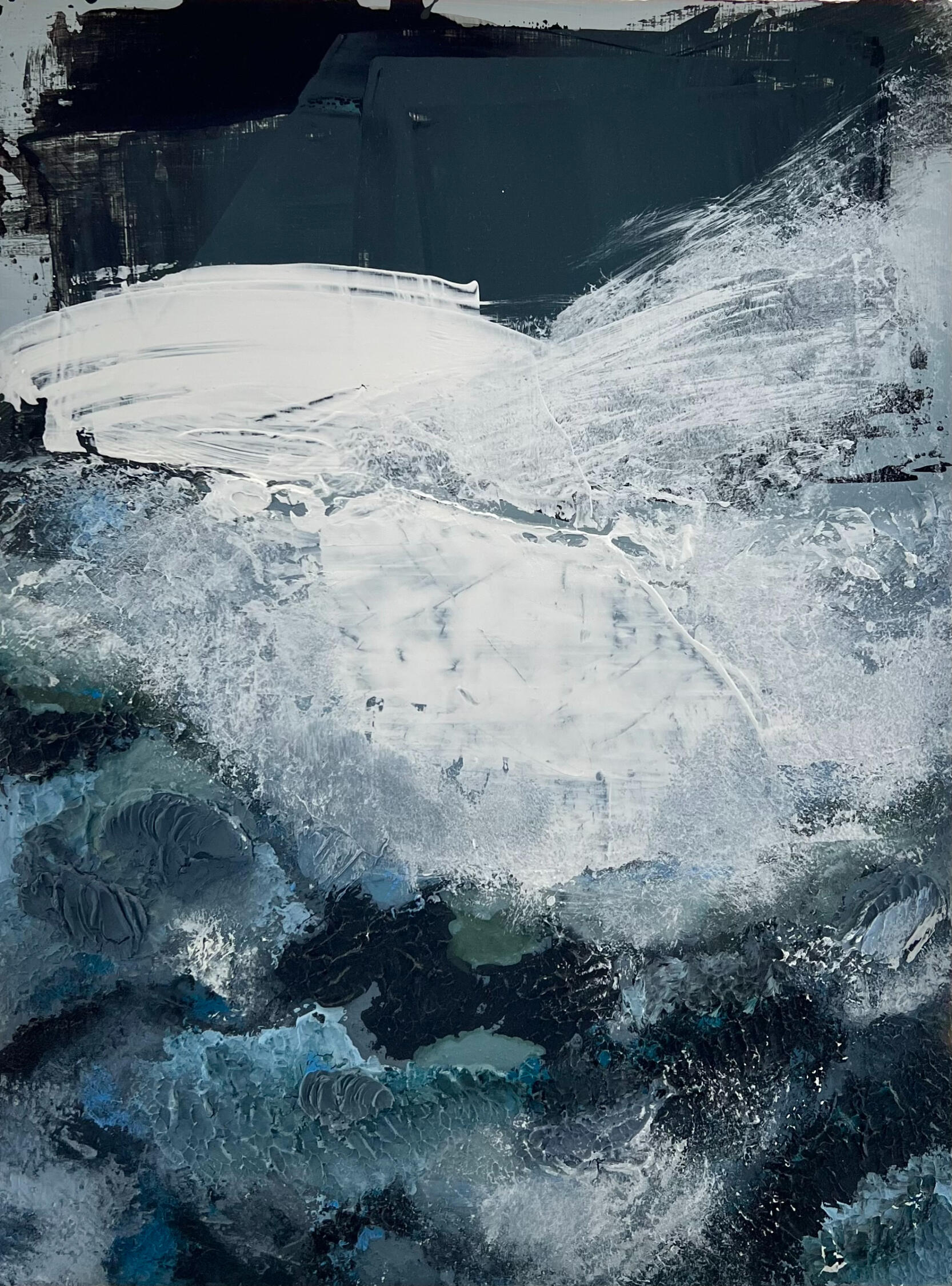
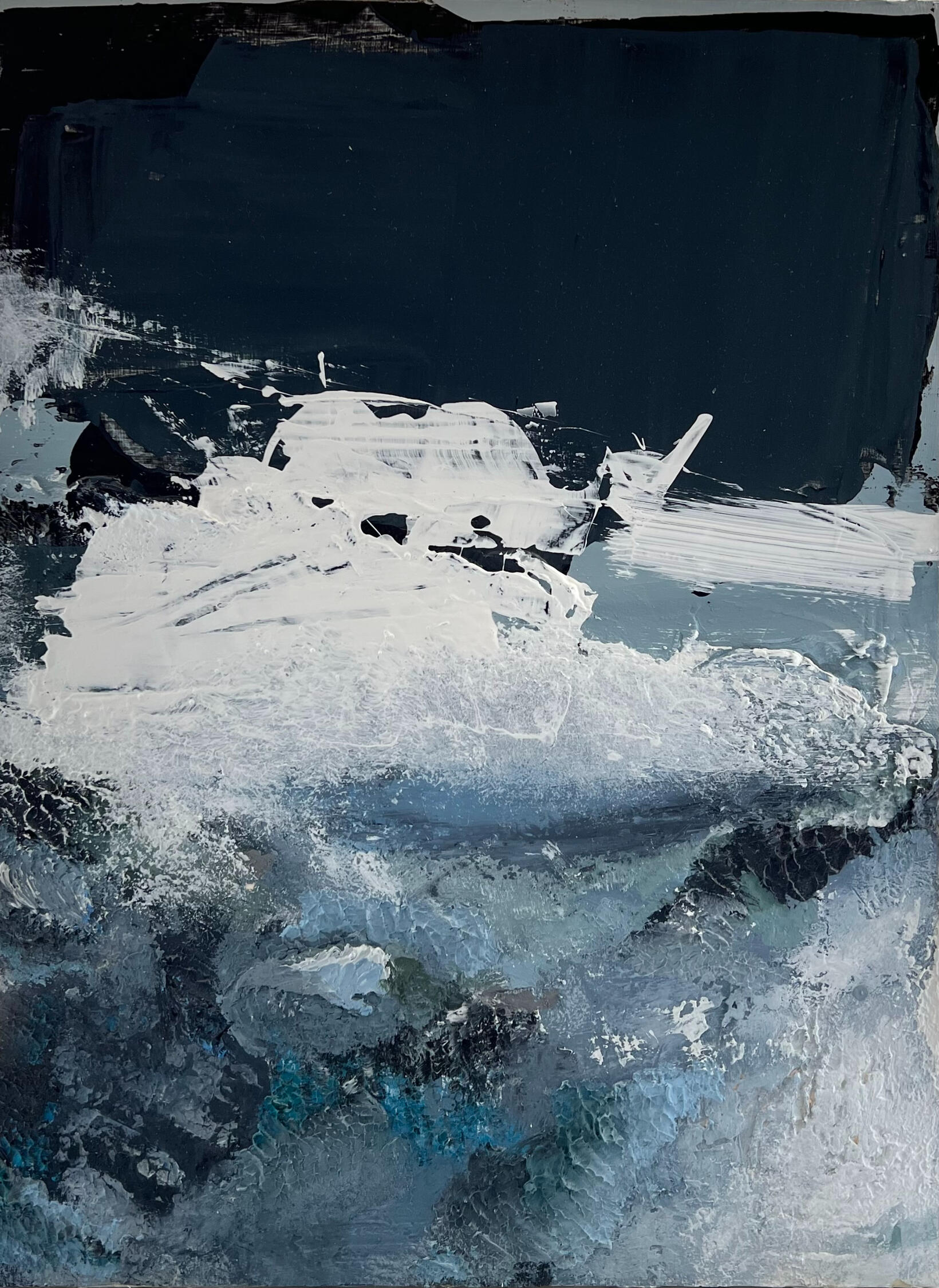
Size 8x8" Oil/Mixed media

Sold

No:2 M

No:3 M

No:4 M

No:7 M
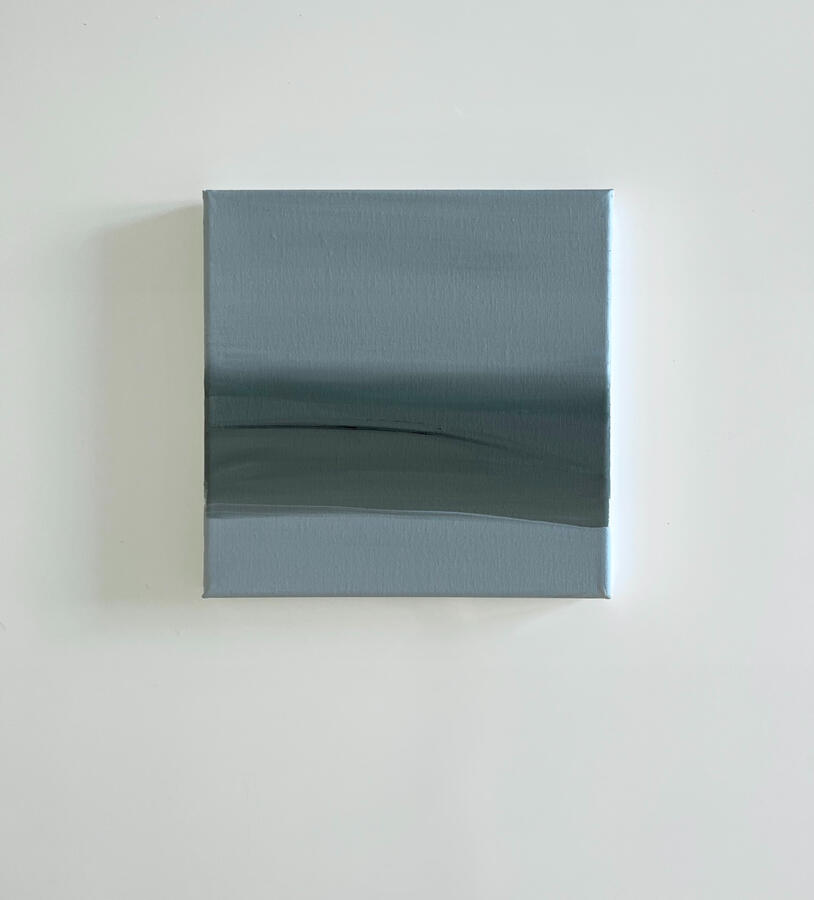
No:8 M
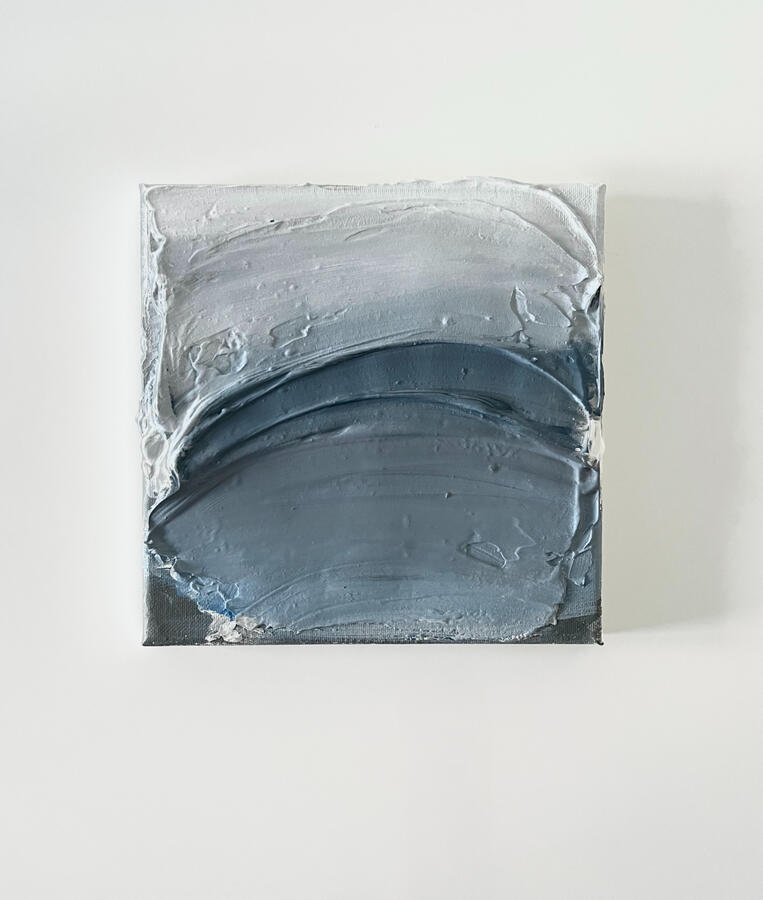
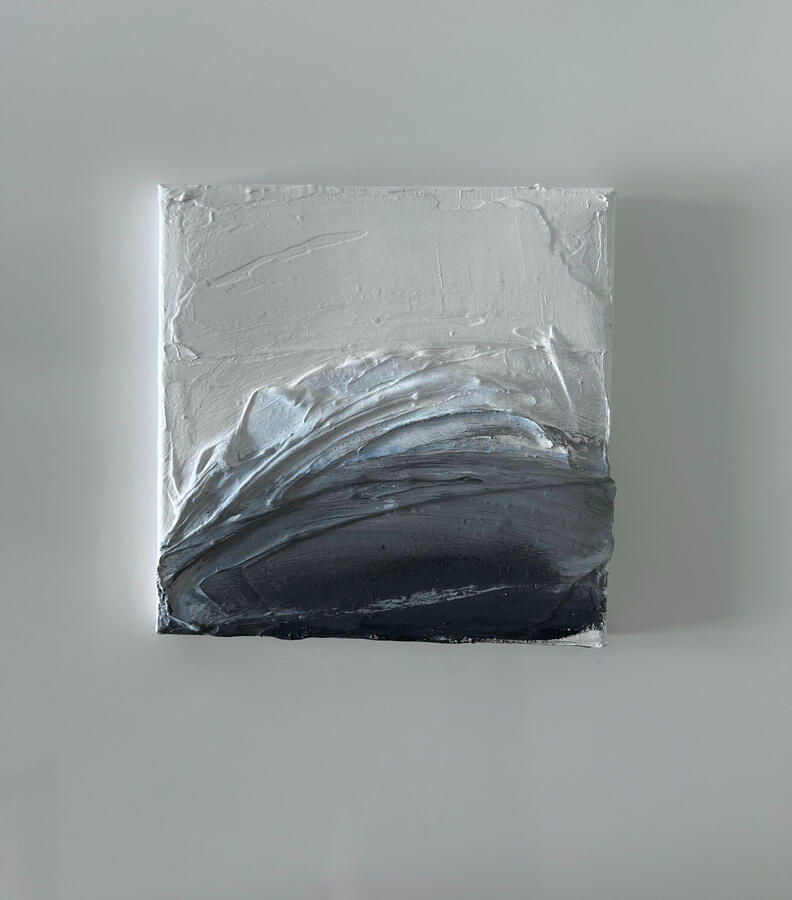
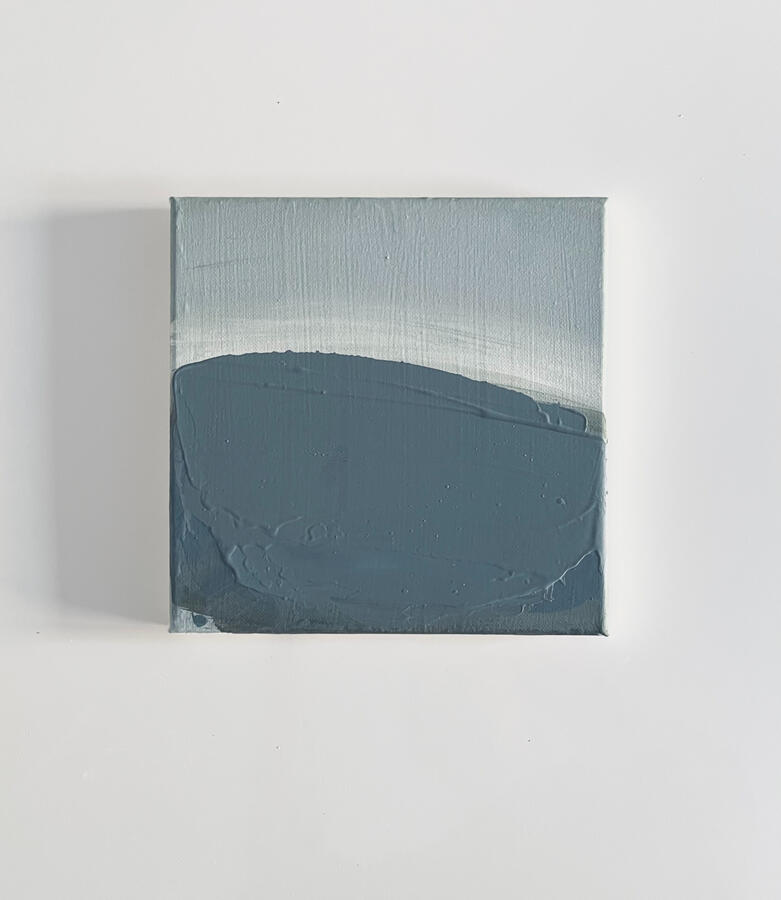
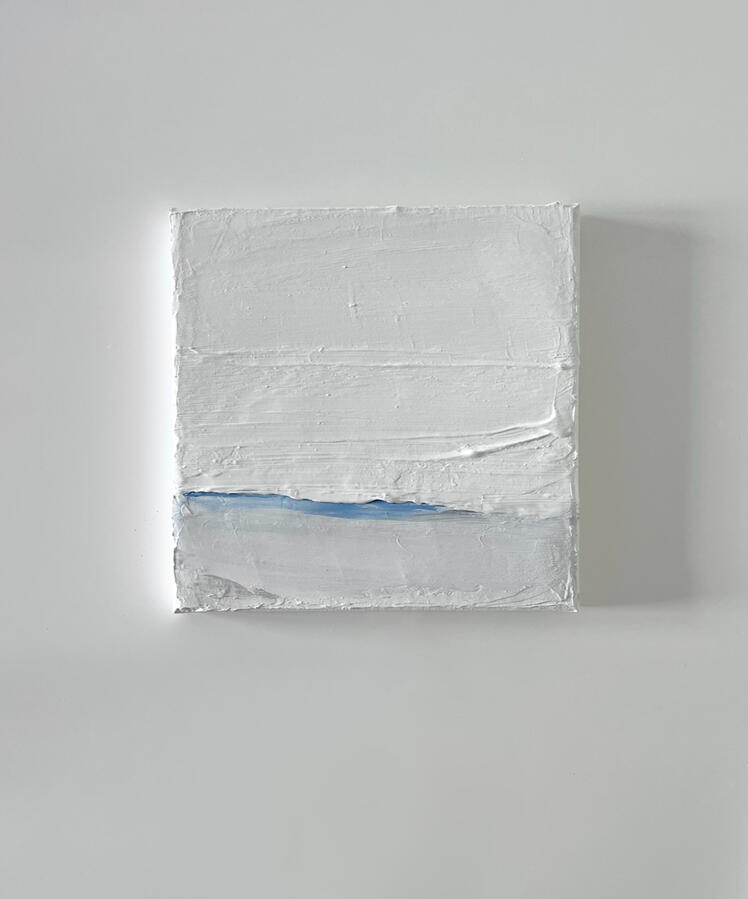
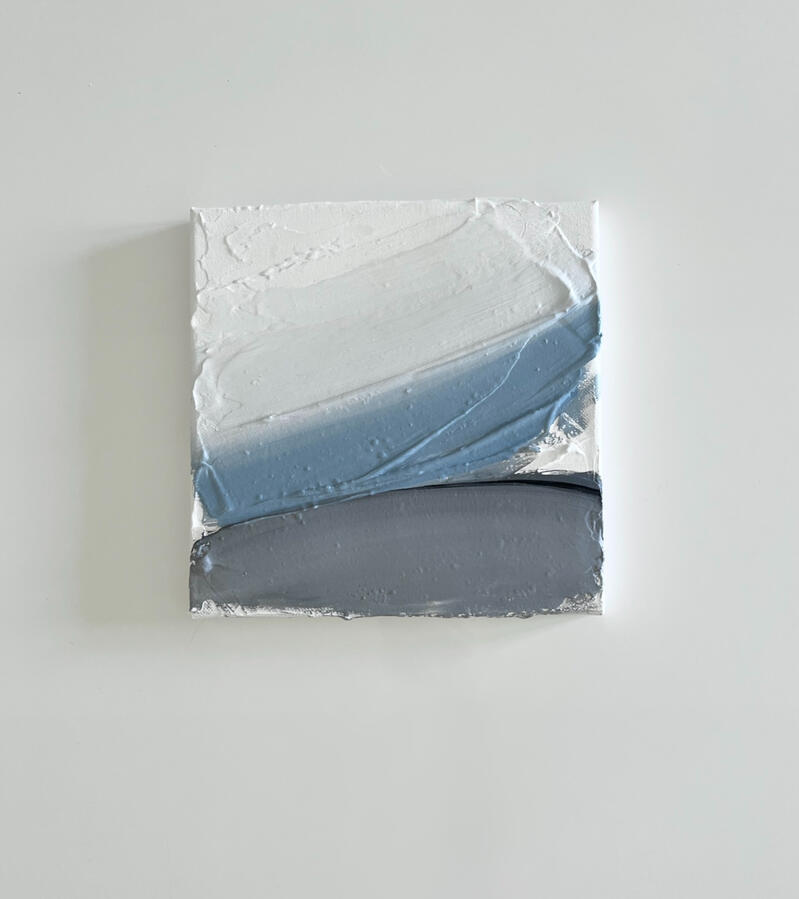
Size 8x10" Oil/Mixed media

No:13 M

No:14 M

No:15 M

No:16 M

No:17 M

No:5 M
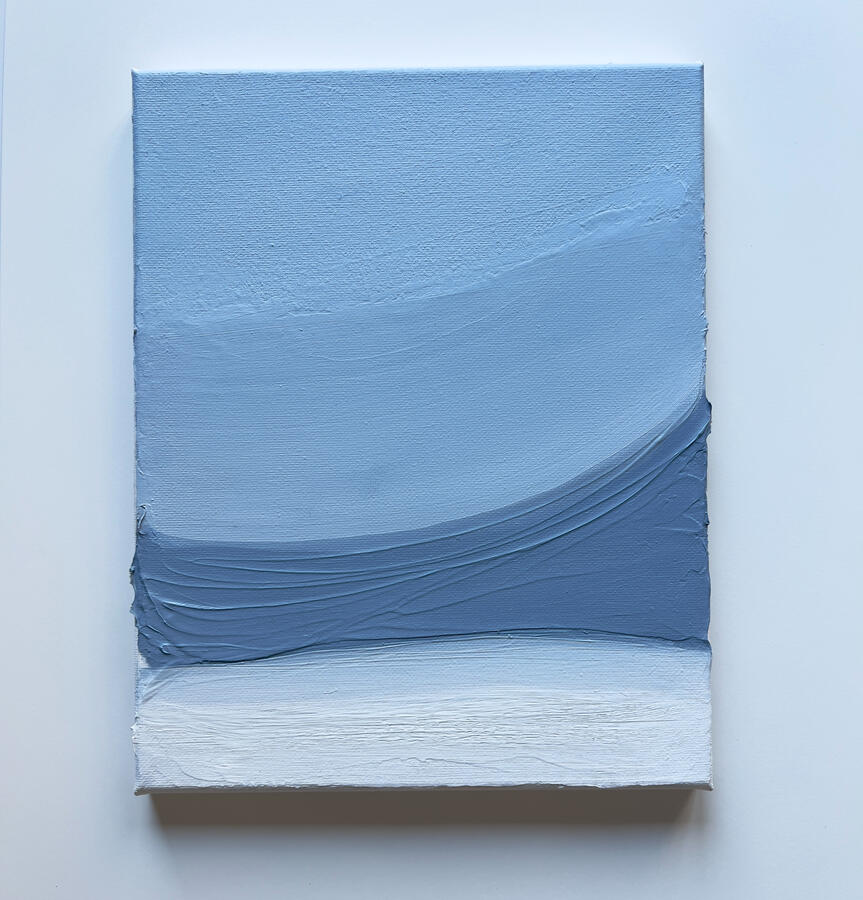
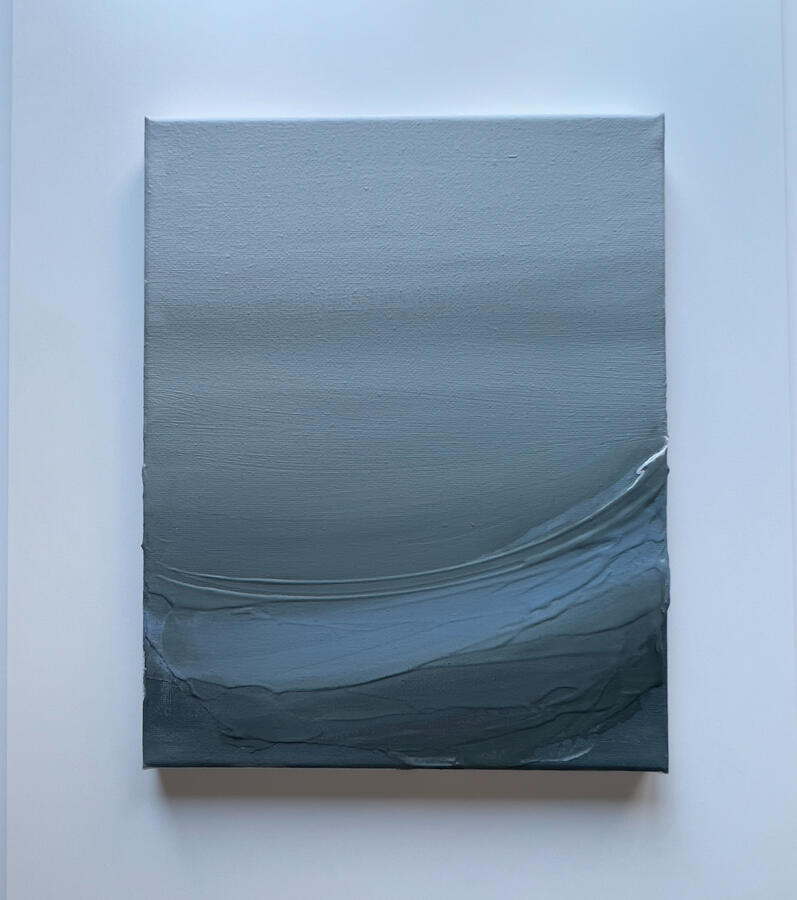
2026
27 MAR - 29 MAR, (EuroExpoArt) Vernice Art Fair, Forlì, Italy
2025
14 FEB - 16 FEB Arte Genova (Genova Art Fair) , Genova GE, Italy28 MAR - 30 MAR, Vernice Art Fair, Forlì, Italy24 MAY - 7 JUN, Dialogues With Time, Mega Art & AroundArt, Corchiano, Italy
2024
12 JAN - 17 JAN, Dreams & Nightmares 2nd Edition, Boomer Gallery, London, UK9 FEB - 14 FEB, The Dark Side, First Edition, Boomer Gallery, London, UK8 MAR - 13 MAR, The Inner World, Boomer Gallery, London, UK2 APR - 17 APR, DREAMS & NIGHTMARES 3RD EDITION, Boomer Gallery, London, UK20 APR - 28 APR, A Window on International Contemporary Art - Crema 2024, TD Art Gallery, Crema, Italy25 MAY - 7 JUN, SINTESI XIII Harmonies and Divergences Istanbul, Turkey
INTERVIEW
https://www.artistcloseup.com/blog/interview-su-barikanPRESS17 APR, Collect Art, Book Edition30 APR, Collect Art, Special Edition1 MAY, Artistcloseup Magazine, Issue 612 MAY, Al- Tiba9 Magazine, Issue 1327 JUL, Artist Talk Magazine, Issue 26
2023
MAR
3 MAR - 13 MAR, Of Integration, Van Der Plas Gallery, New York, USA13 MAR - 13 APR, The Holy Art Gallery, London, UK26 MAR - 23 APR, Royal Blue Gallery, UKAPR15 APR - 22 APR, All the Colors of The Art, Mega Art Gallery, Corchiano, Italy29 APR - 29 MAY, Collect Art, Tbilisi, GeorgiaMAY- JUNE5 MAY - 10 MAY, Walking With Giants, Boomer Gallery, London, UK23 MAY - 23 JUN, Untitled, Monat Gallery & Artsper, Madrid, Spain24 MAY - 2 JUNE, International Contemporary Art, Mega Art & Mo. C. A. Gallery, Rome, Italy26 MAY - 4 JUNE, The Bridge, Van Der Plas Gallery, New York, USAJUNE
9 JUN - 14 JUN, Vogue 6th Edition, Boomer Gallery, London, UK9 JUN - 11 JUN, ArtsLibris Barcelona, Artist's Book Fair, Al- Tiba9, Barcelona, SpainJULY6 JUL - 12 JUL, 1st. Contemporary Art Exhibition, Mega Art & Studio D'Arte Larkina Loreta, Venice, Italy7 JUL - 12 JUL, The New Renaissance, Boomer Gallery, London, UK13 JUL - 19 JUL, 2nd. Contemporary Art Exhibition, Mega Art & Studio D'Arte Larkina Loreta, Venice, Italy
6 JUL - 12 JUL, 1st. Contemporary Art Exhibition, Mega Art & Studio D'Arte Larkina Loreta, Venice, Italy7 JUL - 12 JUL, The New Renaissance, Boomer Gallery, London, UK13 JUL - 19 JUL, 2nd. Contemporary Art Exhibition, Mega Art & Studio D'Arte Larkina Loreta, Venice, ItalyAUG11 AUG - 16 AUG, The New Artist | 5th Edition, Boomer Gallery, London, UK16 AUG - 31 AUG, Panorama, Monat Gallery, Spain25 AUG - 27 AUG, Monaco Art Fair, MonacoSEP8 SEP - 13 SEP, What is Art | 6th Edition, Boomer Gallery, London, UK15 SEP - 29 SEP, Contea Caravaggio Museum, Mega Art Gallery, Sicily, Italy23 SEP - 29 SEP, Sintesi 2023 - Contaminations in Contemporary Art, Crocetti
Museum, Rome, ItalyOCT13 OCT - 18 OCT, Dreams & Nightmares 1st Edition, Boomer Gallery, London, UKNOV8 NOV - 17 NOV, Spazio Arte Tolomeo, Milano, Italy10 NOV - 15 NOV, Why do you do it | 1st Edition, Boomer Gallery, London, UKDEC15 DEC - 20 DEC, The New Artist | 6th Edition, Boomer Gallery, London, UK